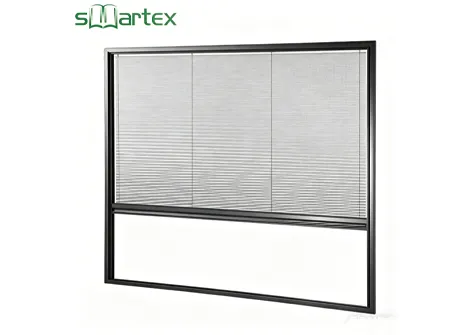
Fliegengittertür repair usually comes down to three components: replacement mesh, spline sized to the frame channel, and repair tape for small punctures. A full mesh swap takes roughly 30–60 minutes per panel with basic hand tools. For a hardware buyer, stocking the right mix of these three items covers most customer repair requests without needing to sell a replacement door.
Where Screen Door Damage Actually Starts
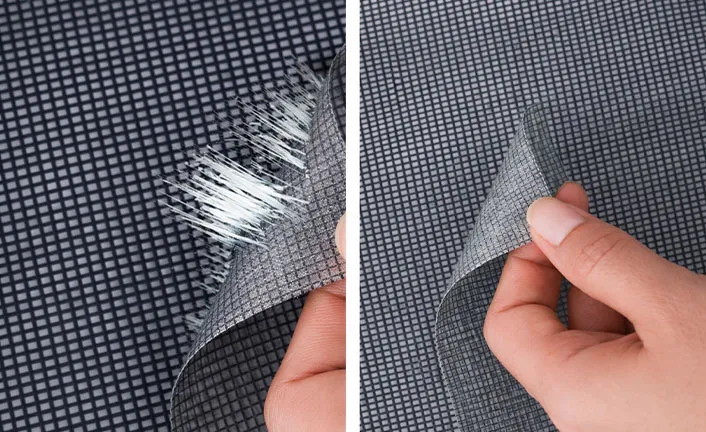
Most service requests fall into three categories: a puncture or tear from a pet or a dropped object, mesh that has gone brittle from UV exposure and sags or crumbles at the edges, and a spline groove that has loosened so the screen bulges out of the frame even though the mesh itself is intact. These three failure modes call for different fixes — tape covers the first if the tear is small, a mesh swap covers the second, and re-rolling the spline covers the third without touching the mesh at all. Customers who bring in a screen assuming they need a new door frequently only need one of these three.
One mistake shows up often enough to flag on its own: pulling the mesh tight by hand before rolling in the spline. The spline roller is designed to create tension as it seats the spline into the groove. Hand-tensioning on top of that can bow a lightweight aluminum frame, especially on wider door panels, and the frame ends up requiring replacement even though the mesh itself was fine.
The Repair Sequence, Step by Step
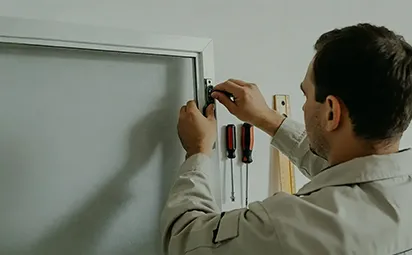
Confirm the frame is still usable. Lay the door flat and check that the corners are square, the spline groove isn’t cracked, and the rollers or hinges move freely. If any of those fail, skip to the replace-vs-repair section below before buying materials.
Remove the old spline and mesh. Pry up one end of the spline with a flathead screwdriver, then pull it out by hand around the full perimeter. The old mesh lifts away once the spline is out. Wipe the empty channel clean before laying new material — leftover grit is a common reason new spline won’t seat evenly.
Match the spline to the channel width. Spline diameter is not universal; using one that’s too thick can bow the frame during installation, and one that’s too thin lets the mesh sag within a season. Take a short piece of the old spline to match against replacement stock rather than guessing by eye.
Choose the mesh by damage cause, not by habit. A pet-damaged screen calls for a heavier, functional mesh rather than standard fiberglass replaced with more standard fiberglass. Section four below breaks down the material options Smartex supplies for this step.
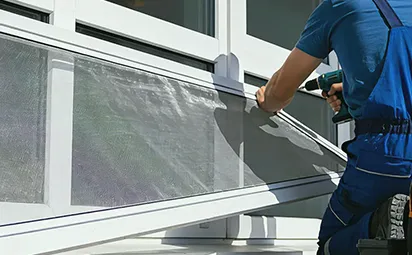
Lay the mesh, then roll the spline. Center the new mesh over the frame with roughly an inch of overhang on every side, and clamp or tape the bottom edge so it can’t shift. Starting at one corner, use the roller to press the spline into the channel — let the roller’s pressure set the tension rather than pulling the mesh taut by hand first.
Trim and inspect. Cut the excess mesh flush with the outer edge of the spline channel using a fresh utility blade, angled away from the screen so a slip doesn’t cut into the new mesh. Check all four corners for gaps before considering the repair finished.
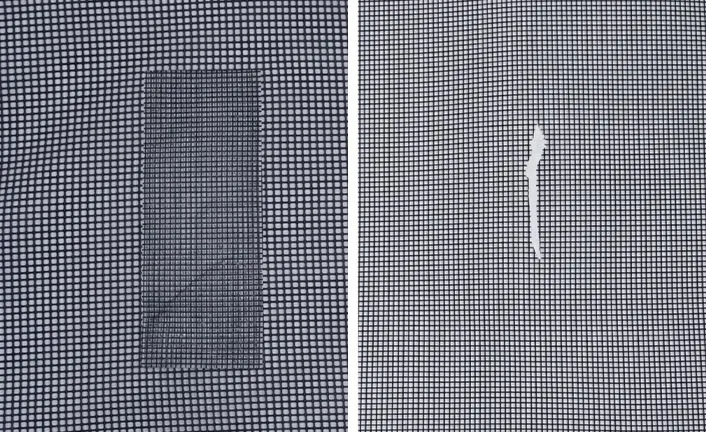
If the tear is under about two inches and isolated to the open field of the mesh, repair tape applied to both sides of the puncture can skip steps 2 through 6 entirely. That’s the call a store associate can make at the counter rather than sending a customer home for a weekend project.
Repair vs. Replace: Where the Line Sits
Repair, whether tape or a mesh swap, is the right recommendation when the frame is still square, the corners are tight, and the rollers or hinges work. That covers the large majority of walk-in requests.
Replacement becomes the better recommendation once the frame itself is compromised: a bowed or twisted frame from over-tensioning, cracked or broken corner joints, a spline channel that no longer holds spline at all, or rollers and hinges that are seized beyond a simple clean-and-lubricate. Re-screening a frame that can’t hold tension evenly just moves the same complaint back to the counter within a season. This is also the point where recommending a private-label finished door kit, rather than loose repair components, better matches what the customer actually needs.
What to Stock: Mesh and Tape Specifications
For the repair workflow above, two Smartex-supplied materials cover most of the SKU decision: replacement screen mesh and screen repair tape.
Replacement mesh. Standard fiberglass insect screen mesh is available in custom weight options generally within an 80–140 g/m² range depending on the specific product, with a stiffer 0.28 mm option for roller and self-supporting screen types. For pet-damaged panels, we also produce pet-resistant and other functional mesh (heavier, more puncture-resistant fabric built for repeat-damage locations) without a numeric strength claim attached, since no independently verified test report currently supports one for this category. Mesh count, roll width, roll length, and color are customizable per order, and REACH and RoHS compliance applies to these screen fabrics.
Screen repair tape is part of our finished-screen product line for smaller, isolated punctures where a full re-screen isn’t warranted. Width, adhesive type, and packaging format for this SKU should be confirmed against the specific order before it’s quoted or listed with exact specifications.
Sourcing terms. Screen mesh is quotation-based and depends on material, mesh count, weight, roll dimensions, color, and order quantity; the publicly referenced starting point for standard screen mesh orders is approximately 5,000 m², and paid sample fees for customized materials generally run in the USD 50–200 range. Repair tape pricing and minimum order quantities are order-specific and require a quotation rather than a published range.
Mesh Option Comparison
| Netzart |
Typical Weight |
Am besten geeignet für |
Note |
| Standard-Fiberglas |
~80–140 g/m² (product-specific) |
General tears, UV-degraded screens |
Most common replacement, custom mesh count available |
| Stiff/roller fiberglass |
0.28 mm thickness reference |
Roller and self-supporting screen frames |
Distinct product from flexible fiberglass mesh |
| Pet-resistant/functional |
Product-specific, heavier than standard |
Repeat pet-damage locations |
No numeric strength multiplier published |
Compared with generic hardware-store mesh sold as a single all-purpose roll, sourcing fiberglass, stiff, and pet-resistant mesh as separate SKUs lets a retailer match the material to the reported cause of damage instead of selling one product for every repair.
FAQ
What size spline do I need for a screen door repair?
Spline sizing varies by frame channel width, and there’s no single universal size. The reliable method is to bring a short section of the removed spline to match against replacement stock rather than estimating by eye.
Can I repair a screen door without replacing the whole mesh panel?
Yes, for small, isolated punctures, generally under about two inches, repair tape applied to both sides of the tear is usually sufficient and skips the full removal-and-re-screen process.
How do I know if I need pet-resistant mesh instead of standard fiberglass?
If the damage location has been punctured more than once by an animal, a heavier functional mesh built for repeat impact is a better match than replacing standard fiberglass with more standard fiberglass in the same spot.
Why does a screen door frame bow after a repair?
This is usually caused by hand-tensioning the mesh before rolling in the spline. The spline roller is designed to create the correct tension as it seats; pulling the mesh tight first adds extra force the frame wasn’t built to hold.
Is screen mesh sold in bulk for hardware store stocking programs?
Yes. Screen mesh is supplied on a quotation basis with an approximate 5,000 m² standard order reference point, with roll width, length, weight, and color customizable per order.
Does replacement mesh need any specific certification?
REACH and RoHS compliance applies to Smartex screen fabrics. Certificate numbers, issuing bodies, and exact product scope should be confirmed for the specific model before being cited in a listing or tender document.
Retailers weighing a repair-parts program against a finished-kit program should compare order minimums for both before committing shelf space — that’s a sourcing conversation, not a repair-technique one, and it’s worth having separately from this guide.






















 10:42
10:42