Explora más categorías de productos que abarcan cerramientos para exteriores, soluciones de sombra, mosquiteros para puertas y ventanas, y otras soluciones para distintas necesidades del mercado y de cada proyecto.
Explora más categorías de productos para cerramientos exteriores, protección solar, puertas mosquiteras, mosquiteros para ventanas, pérgolas y soluciones de persianas enrollables con cremallera para distintas necesidades de mercado y de proyectos.
Puerta mosquitera magnética: Guía de productos de marca propia
27
2026.09
Puerta mosquitera magnética: Guía de productos de marca propia
10:08
Puerta mosquitera magnética: Guía de productos de marca propia
Equipo Técnico y de Producto de Smartex Screen | Insect Screen and Sun-Shading Product Development Team | Updated September 27, 2026
A magnetic screen door is a flexible doorway screen with paired panels that separate for passage and reconnect through a magnetic center seam. Private-label buyers should control the size ladder, magnet map, mesh, edge binding, attachment kit, pet claims, packaging, barcode, instructions, and inspection criteria for each SKU.
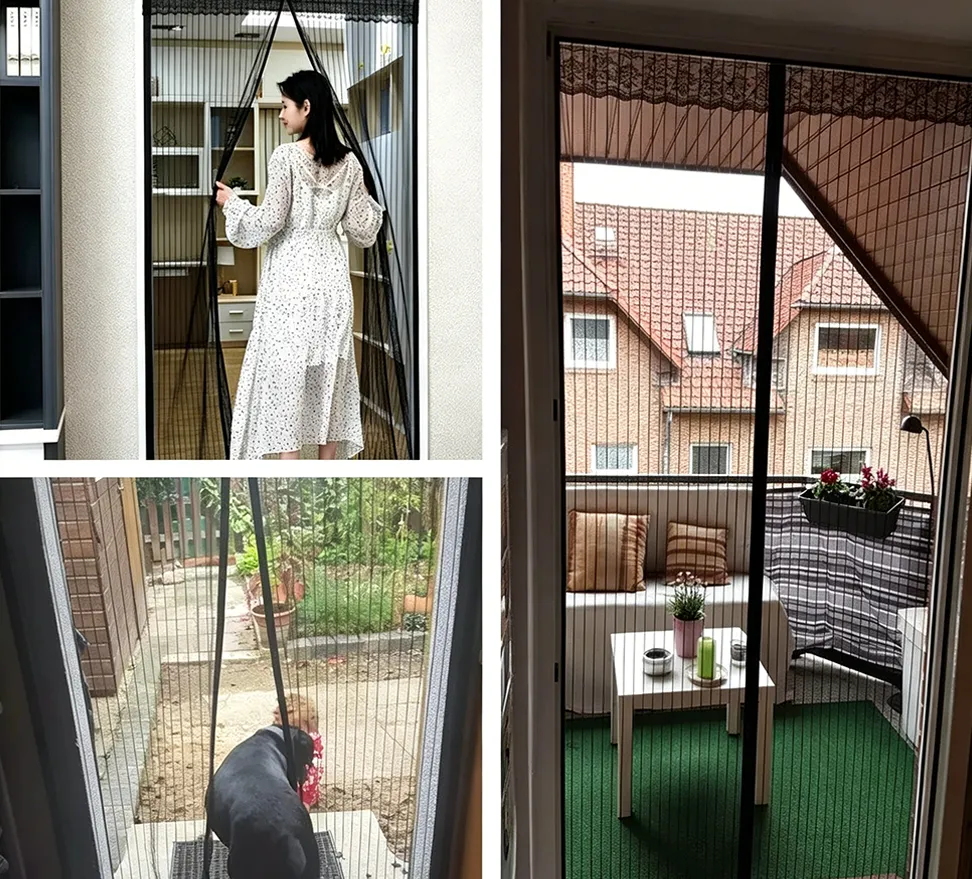
A breathable polyester magnetic screen door from the Smartex media library.
This guide focuses on turning a screen-door concept into a controlled retail range. It is not a substitute for the specification, approved sample, artwork, and inspection limits for a particular model. Products that share a similar photograph can differ in fit, magnet arrangement, mesh, stitching, accessories, and pack-out.
Start with a deliberate magnetic screen door assortment
A private-label program needs a reason for every SKU. Adding similar products without a clear use case creates duplicated stock, confusing listings, and inconsistent claims. Define the doorway, traffic pattern, expected contact, installation surface, price position, and sales channel before selecting the construction.
Construction and accessory pack developed for a stated use condition
Stitching, binding, mesh, magnets, frame attachment, and packed-product test
“Heavy duty” without measurable acceptance limits
Patio or wider-door model
Size, panel balance, seam position, and fastening layout matched to the opening
Full-size installation, opening path, edge gaps, closure, and carton protection
Extending a small-door test result to a wider product
Compared with marketplace ranges that change only the product name or photograph, a useful private-label lineup gives each SKU a documented fit range, construction, accessory pack, verification method, and channel purpose.
Model reference: breathable polyester magnetic screen door
El Smartex Puerta mosquitera magnética de poliéster transpirable provides a model-specific reference. The public page identifies model SMT-M-002, a standard size of 1.00 m wide by 2.20 m high, black 100% polyester mesh, magnetic opening, fixed-size purchase mode, and front fixing without screws. Its material list includes mesh, hook-and-loop fastening tape, magnet strip or magnets, and a PVC strip cover.
These values belong to SMT-M-002. They do not define every magnetic screen door and should not be copied into another SKU without confirmation. The model also demonstrates why the carton must distinguish screen size from compatible doorway size and state the included fixing components.
Build the size ladder from real doorway conditions
Size selection should begin with the clear opening and the flat surface available for attachment. Measure width at the top, middle, and bottom, then measure height at both sides. Record trim, thresholds, handles, door closers, hinges, uneven jambs, and surfaces that may not accept an adhesive fastening system.
Define whether the SKU size means mesh dimensions, outer binding, or compatible doorway range.
Set the required overlap on the head and both sides of the opening.
Position the center seam on the normal walking path and check the lower edge against the threshold.
Install each proposed size on the smallest and largest doorway within its stated range.
Record the approved measurement diagram on the carton, instruction sheet, and online listing.
Keep size names, barcodes, labels, and inner-product identifiers synchronized.
An edge case is a doorway that matches the nominal width but has raised decorative trim. The attachment tape may bridge a recess instead of lying flat, which can pull the screen out of alignment. A fit chart based only on the clear opening will miss that failure.
Control the magnet map and closure test
The magnet system includes the quantity, type, polarity, spacing, pockets or carriers, seam position, panel weight, bottom treatment, and installation alignment. More magnets are not automatically better. Higher attraction can increase opening force, while irregular spacing can create gaps or cause one panel to lead the other.
A related self-closing magnetic screen door shows the full-length seam concept, but closure performance still has to be approved for the actual size and construction.
Install a production-representative sample on the approved frame fixture.
Mark the screen centerline and confirm the magnet pairs meet without manual correction.
Define one passage cycle, user or test fixture, speed, pause, and total repetitions.
Inspect the top, middle, bottom, outer attachment edges, and magnet retention at agreed intervals.
Record opening force or an approved practical limit, seam recovery, visible gaps, twisting, and detachment.
Repeat after the packed product has been unfolded and conditioned for the agreed period.
The acceptance record should identify the SKU, size, sample revision, components, installation method, and test date. “Closes well” is not an inspection criterion.
Mesh, binding, and stitching determine how the product ages
The mesh must work with the magnets and attachment method as an assembly. Polyester is used in the referenced model, while other constructions may be available for selected products. A heavier or stiffer material can change folding, opening effort, seam recovery, and the load carried by the attachment perimeter.
Inspect the mesh surface, cut edges, binding width, seam straightness, stitch density or joining method, magnet pockets, corner reinforcement, and lower-edge treatment. The buyer should define what counts as a loose thread, open seam, displaced magnet, visible hole, or unacceptable distortion. Those limits belong in the signed sample and inspection sheet.
El Smartex heavy-duty magnetic screen door represents another category position. “Heavy duty” should remain a model name or supported claim, not a universal promise. Tie it to the tested construction and stated use condition.
Pet use needs a claim-to-test link
Pet traffic can concentrate wear near the lower seam and attachment edge. A pet-oriented SKU should define the intended animal-size range, passage path, mesh, binding, lower-edge components, attachment method, and test sequence. Test normal passage and foreseeable rubbing or claw contact without presenting the product as indestructible.
La Cortina magnética para la puerta mosquitera apta para mascotas is a useful format reference. The final claim set still depends on the approved product and evidence. Avoid “pet proof,” “tear proof,” or suitability for every pet unless a specific test and scope support that wording.
Attachment kits and surface limits belong on the pack
A no-screw curtain often relies on hook-and-loop fastening tape and may include model-specific accessories. Adhesive behavior changes with dust, moisture, temperature, texture, paint condition, and dwell time. Pins or tacks, where supplied, may be suitable only for stated frame materials.
The parts list should show each component, quantity, location, and replacement path. Instructions need a surface-preparation step, product orientation, top-center positioning, progressive attachment sequence, seam-alignment check, adjustment method, removal method, cleaning guidance, and surface limitations. Do not promise damage-free removal on every coating.
Packaging is part of the product specification
Compact folding helps retail and e-commerce handling, but it can introduce creases and can place accessories against the mesh. Approve the fold pattern, protective insert, accessory bag, carton dimensions, storage orientation, and recovery expectation. Open the packed sample, inventory the parts, install it using only the supplied instructions, and compare the result with the retained approval sample.
Pack element
Controlled information
Release check
Front panel
Exact format, SKU, size, color, representative installed image, and supported claims
Mesh curtain, fastening tape, magnets or strips, covers, pins or accessories where applicable
Matches physical pack count
Instruction insert
Surface preparation, installation sequence, alignment, adjustment, care, removal, warnings
Installation succeeds from the packed sample
Identification
Brand, SKU, barcode, batch or lot reference, size, color, language version, supplier contact path
Scans and matches master data
GS1 US explains that a product barcode starts with a unique product identifier rather than a graphic copied between items; see its official Get a Barcode guidance. A size or color variant should not inherit another SKU’s identifier simply because the carton layout is similar.
Manage multilingual instructions as controlled files
Translation should follow the approved English master and the exact product revision. Keep units, size definitions, accessory names, warnings, installation sequence, diagrams, and contact information consistent. A translation table with stable term choices helps prevent one language from describing a pin-fixed product while another describes adhesive-only installation.
Release files by SKU and language code. Check text expansion, font support, line breaks, barcode quiet zones, diagram labels, and reading order on the printed proof. Online instructions and marketplace content should use the same revision as the carton.
Use a claim-to-evidence matrix before artwork approval
Every measurable or comparative statement should point to a record for the exact product. This applies to fit, self-closing behavior, pet use, durability, installation time, material, certifications, ultraviolet exposure, and service life. A certificate for mesh does not automatically cover magnets, binding, adhesive tape, or the finished door curtain.
Proposed claim
Minimum supporting record
Release decision
Fits stated doorway range
Dimension drawing plus installation on range limits
Use only the tested range and measurement method
Self-closing
Defined passage and closure test for each relevant size
State the product format without inventing a cycle result
Pet friendly
Defined pet-use scope and repeated-passage assessment
Avoid universal pet or tear claims
Material statement
Bill of materials and supplier record for the production SKU
Print the exact verified material
Certification or compliance
Current document naming the product, model, standard, holder, and scope
Do not transfer portfolio-level claims
Approve the sample, inspection sheet, and master data together
A production-ready approval set includes the finished sample, dimensions, bill of materials, magnet map, accessory list, packaging, artwork, instructions, barcode data, claim matrix, and inspection plan. Inspect dimensions, color, mesh appearance, binding, stitching, magnet position, seam alignment, accessory count, labels, barcode readability, carton condition, and installed function.
Smartex does not publish one universal magnetic screen door price. Pricing is quotation-based and can depend on model, dimensions, mesh, magnet system, binding, accessories, color, packaging, artwork, quantity, tooling, shipping terms, and destination. Send the size ladder, target market, trial quantity, annual estimate, packaging format, languages, artwork, inspection needs, and delivery terms for quotation.
Smartex supports samples, product customization, packaging, barcodes, multilingual instructions, private labels, quality inspection, and export coordination according to the approved order scope.
Preguntas frecuentes
Can one magnetic screen door size fit every doorway?
No. Opening dimensions, trim, attachment area, overlap, threshold, handles, and surface condition affect fit. Use a measured compatibility range for each SKU.
Does adding more magnets always improve closure?
No. Magnet type, polarity, spacing, panel weight, seam construction, lower edge, and installation alignment work together. Test the complete product.
What should a pet-friendly claim cover?
Define the intended pet-size range, passage method, mesh, binding, lower section, attachment, and test sequence. Avoid implying that the screen is indestructible.
Should every size and color have its own barcode?
Retail identification should follow the brand owner’s GS1 and channel rules. Do not copy one product identifier across variants without confirming the applicable master-data requirement.
How is a private-label magnetic screen door priced?
Pricing is by quotation and depends on the product construction, size, components, packaging, quantity, tooling, shipping terms, and destination.
To build a magnetic screen door private-label range, send the target doorways, proposed SKU count, mesh and closure requirements, packaging, languages, quantities, artwork, and inspection plan through the Página de consultas sobre Smartex Screen.
Sobre el autor: El equipo técnico y de producto de Smartex Screen ofrece apoyo en la selección de tejidos para mallas, el desarrollo de sistemas de mallas acabados, la personalización de materiales, la preparación de muestras, el desarrollo de prototipos, el diseño de embalajes, la producción bajo marca propia, el control de calidad y la coordinación de exportaciones para compradores B2B de todo el mundo.
Le responderemos en un plazo de 24 horas. Si es un caso urgente, por favor añada WhatsApp/WeChat: +86 186 6025 8307,. O llame directamente al +86 – 532 – 8562 3071.
*Respetamos su confidencialidad y toda la información está protegida.
Solo utilizaremos su información para responder a su consulta y nunca le enviaremos correos electrónicos no solicitados ni mensajes promocionales.























 10:08
10:08