



















ROTOLI SFUSI · FORNITURA OEM · MERCATI EUROPEI
Produttore di reti antinsetto per marchi e distributori
Per marchi, distributori, importatori e produttori di sistemi per zanzariere.

Smartex è un produttore di reti per zanzariere che fornisce materiali per sistemi di protezione da insetti destinati a finestre, porte e strutture chiuse. Confronta le reti in fibra di vetro, poliestere, plissettate e metalliche per la tua gamma di prodotti, poi parla con il nostro team di rotoli all’ingrosso, requisiti dei sistemi e confezionamento OEM.
Per marchi, distributori, importatori e produttori di sistemi per zanzariere che si riforniscono per i mercati europei, un preventivo utile parte dalla scelta del materiale giusto e dalla definizione condivisa delle specifiche. Dicci come verrà lavorata la rete, quale mercato servi e quali dimensioni dei rotoli ti occorrono.
Produzione e fornitura OEM per la tua gamma di reti
SMARTEX was established in 2005. Our manufacturing background includes fiberglass yarn coating, weaving and heat setting, with later development of stiff and pleated screening materials. For a mesh buying programme, these processes provide specific points to review during sample approval and a factory discussion.
| Capability | Published manufacturing information | How it supports your enquiry |
|---|---|---|
| Weaving and coating | Company information lists 120 looms and 16 PVC coating lines | Discuss the selected yarn, weave and coating construction |
| Heat setting | In-house heat-setting development is described in our company history | Review mesh stability and handling in your intended system |
| Fornitura in rotoli | Opzioni di rotoli corti e industriali specifiche per il prodotto | Adatta larghezza utile, anima e formato del rotolo alle tue attrezzature di taglio o trasformazione |
| Supporto OEM | Private label, packaging e progettazione di manuali di istruzioni | Prepara una gamma a marchio per la distribuzione |
| Percorso di sviluppo | Analisi dei requisiti, sviluppo dei campioni, ordine di prova e produzione | Approva il materiale e l'imballaggio prima di un programma di ordini ricorrenti |
I dati relativi agli impianti descrivono la configurazione produttiva pubblicata; l'assegnazione dell'ordine e le tempistiche di consegna vengono confermate per il prodotto e la quantità selezionati. Scopri la nostra company and manufacturing history and OEM development process.


Che cos’è una rete per zanzariere?
Insect screen mesh is a woven screening material used in window screens, screen doors and other framed or retractable screening systems. Its openings allow ventilation while helping to restrict insects. Material, yarn diameter, mesh count and the fit of the finished system all affect performance.
This catalogue focuses on mesh supplied for fabrication and distribution. Buyers looking for complete assemblies can also explore our window screen solutions and screen door solutions.
Esplora la nostra gamma di reti per zanzariere

Rete standard in fibra di vetro per zanzariere
PVC-coated fiberglass mesh is a starting point for fixed-frame window and door screening. When comparing fiberglass insect screen rolls, check mesh count, yarn diameter, finished width and surface quality together. The mesh must suit your frame, spline and handling process.

Rete rigida in fibra di vetro per sistemi avvolgibili
Roller and retractable screens need fabric that behaves consistently as it winds and unwinds. Evaluate a stiff fiberglass screen sample in your cassette and guide system, checking flatness, edge behaviour, tracking and the appearance after repeated operation.

Zanzariera in fibra di vetro ad alta visibilità
For product lines that prioritise outward views, compare a high-visibility mesh with your current fabric under the same lighting. View quality, opening area and handling strength should be considered together; a lighter appearance alone does not establish suitability for every screen system.
Reti funzionali e resistenti agli animali domestici
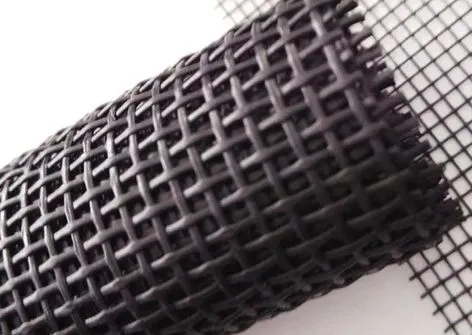
Pet-resistant mesh is an option to evaluate for doors and other areas where the screening may face scratching or frequent contact. Check tear performance, fabric thickness and frame compatibility. Pollen-control screening is a separate functional option and should be assessed against a defined filtration test and airflow requirement.
Explore zanzariera resistente agli animali domestici and pollen-control screening. La resistenza agli animali domestici descrive le prestazioni del tessuto; non rende una zanzariera una barriera di sicurezza.

Reti per zanzariere in poliestere e PET
Le reti a base di poliestere offrono ulteriori opzioni per lo sviluppo di sistemi di schermatura. La sigla PET identifica un materiale polimerico; ciò non significa che ogni rete in PET sia resistente agli animali domestici. Richiedete dettagli su struttura, rivestimento e destinazione d'uso dello specifico prodotto prima di confrontarlo con la fibra di vetro o altre tipologie di poliestere.
Explore rete in tessuto di poliestere and Rete in PET.

Rete plissettata
La rete plissettata per zanzariere viene utilizzata nei sistemi a scomparsa o pieghevoli. La nostra gamma di prodotti comprende soluzioni plissettate in poliestere rivestito in PVC, poliestere e PP/PE. Confrontate altezza della piega, dimensioni finite, memoria di forma della piega e finitura dei bordi con i requisiti del vostro telaio e sistema di azionamento.
Iniziate con rete zanzariera plissettata, poi esamina rete plissé in poliestere rivestito in PVC, rete plissé in poliestere and rete plissé in PP/PE.
Rete metallica per zanzariere
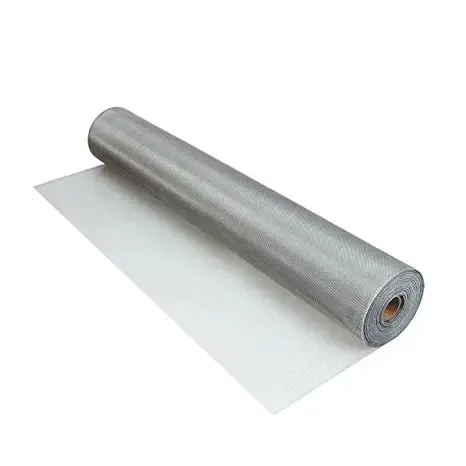
Aluminium and stainless steel screening are additional material options for window and door product lines. Specify the alloy or grade, wire diameter, weave, finish and exposure conditions. Fabrication methods differ from flexible coated mesh, so sample testing should include cutting, fixing and finished-panel appearance.
Explore aluminium screen and stainless steel insect screen.
Riferimenti prodotto e specifiche pubblicate della rete
Start your insect screen mesh enquiry with a named product and construction. The references below connect our product range to published specifications, so brands and distributors can shortlist samples before requesting a bulk-roll quotation.
| Product reference | Materiale | Densità della maglia | Diametro del filato | Nominal weight | Published dimensions |
|---|---|---|---|---|---|
| Fibra di vetro standard | PVC-coated fiberglass | 18×16 | 0.28 mm | 115 ± 5 g/m² | 0.4–3.2 m; 30 / 183 / 300 / 500 m; mini rolls also listed |
| Fibra di vetro rigida standard | PVC-coated fiberglass | 18×16 | 0.28 mm | Non specificato per questa variante | 0,4–3,2 m; lunghezze selezionate fino a 1.000 m |
| Rete ad alta visibilità: opzione 18×18 | Vedere la struttura selezionata | 18×18 | 0,23 mm | Non specificato per questa opzione | 0,4–3,2 m; mini / 30 / 183 / 300 / 500 m |
| Rete resistente agli animali domestici | Poliestere rivestito in vinile | 15×10 o 17×10 | 0,55–0,60 mm | 365–370 g/m² | 0,60–2,6 m; opzioni da 30 / 50 m |
| Plissé in poliestere: opzione 18×16 | Poliestere | 18×16 | Confermare con campione | 80 g/m² | Altezza rete 1,5–3 m; lunghezza 20–30 m |
| Plissé in poliestere: opzione 19×20 | Poliestere | 19×20 | Confermare con campione | 47 g/m² | Altezza rete 1,5–3 m; lunghezza 20–30 m |
| Plissé in poliestere: opzione 20×20 | Poliestere | 20×20 | Confermare con campione | 85 g/m² | Altezza rete 1,5–3 m; lunghezza 20–30 m |
I valori sono tratti dalle specifiche di prodotto SMARTEX collegate. Descrivono le varianti indicate, non misurazioni di lotto o tutti i prodotti di una famiglia di materiali. Verificare la combinazione di materiale, dimensioni e tolleranze sul preventivo e sul campione approvato. I nomi dei prodotti sono utilizzati come riferimento qualora non sia fornito un codice SKU pubblico.
Per le opzioni in poliestere plissé sopra riportate, le altezze delle pieghe indicate sono 15, 16, 18 e 20 mm. Selezionare prima la combinazione di maglia e grammatura, quindi confermare l'altezza della piega e le dimensioni finite per il proprio sistema pieghevole.
Confronta i materiali prima di selezionare un grado
La tabella sottostante è una guida alla selezione. Le specifiche definitive fanno riferimento al singolo prodotto e al campione approvato.
| Famiglia di prodotti | Starting application | Evaluate in a sample | Include in your enquiry |
|---|---|---|---|
| Fibra di vetro standard | Fixed window and door screens | Weave consistency, appearance, frame fit | Mesh count, yarn diameter, roll dimensions |
| Stiff fiberglass | Sistemi avvolgibili e retrattili | Tracking, flatness, winding behaviour | Cassette and guide details, finished width |
| Rete ad alta visibilità | Screens prioritising outward views | View under comparable light, handling performance | Target appearance and system type |
| Pet-resistant or functional mesh | Defined durability or filtration needs | Applicable test results and frame compatibility | Required function, thickness limits, test criteria |
| Polyester / PET | Selected fabrication and screening uses | Construction, coating, processing behaviour | Material specification and intended use |
| Pleated mesh | Folding window and door systems | Fold recovery, height, edge behaviour | Pleat and frame dimensions |
| Metal mesh | Selected fixed-frame products | Alloy/grade, finish, cutting and fixing | Wire diameter, weave, environment |
Abbina la rete al tuo sistema di zanzariera
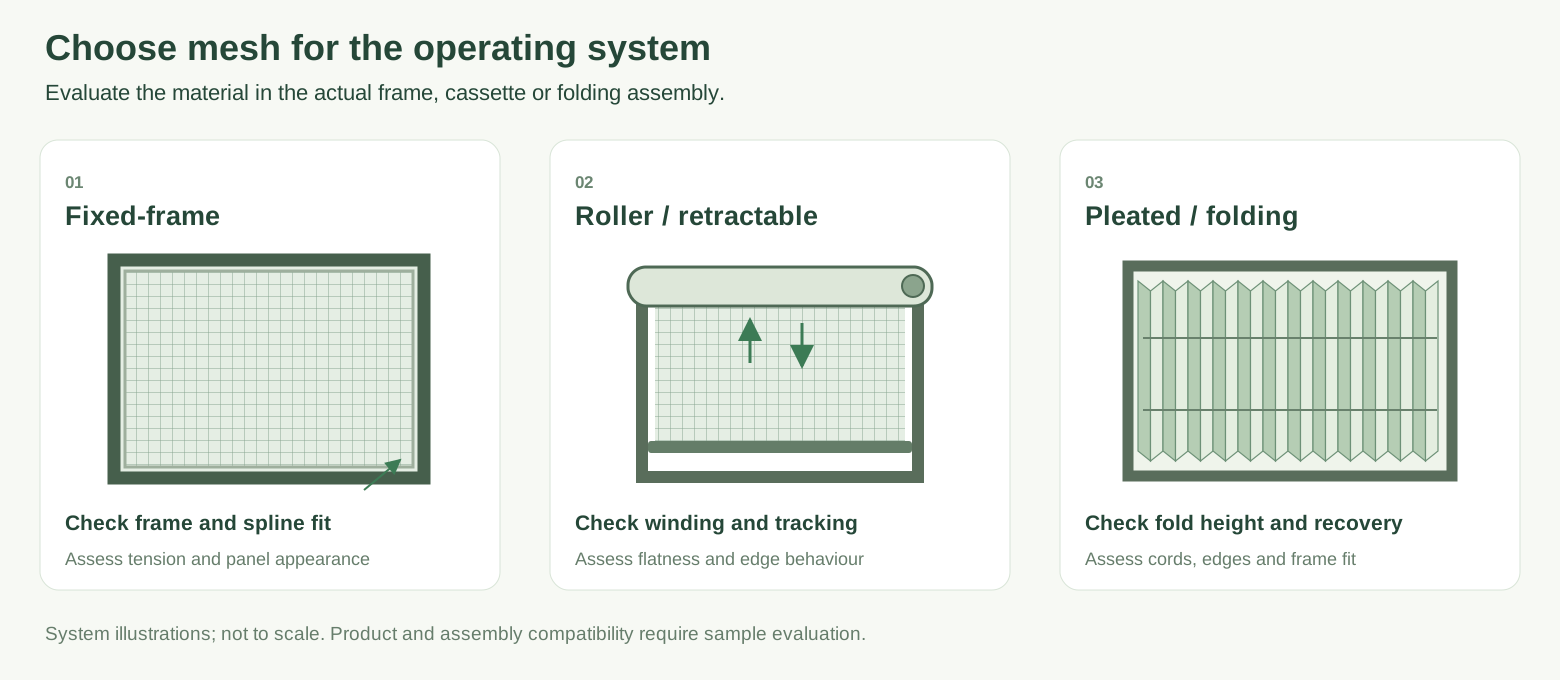
System illustrations; not to scale. Evaluate the mesh in your actual assembly.
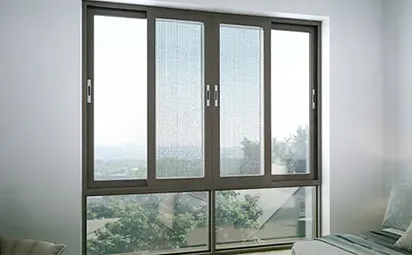
Fixed-Frame Windows and Doors
Iniziate dal profilo del telaio e dal metodo di fissaggio. Verificate il campione con il cordoncino o il componente di ritenuta previsto, quindi ispezionate il tensionamento e l'aspetto del pannello finito. Per le gamme destinate alla distribuzione, scegliete larghezze del rotolo adatte alle dimensioni dei pannelli che i vostri clienti fabbricano regolarmente.
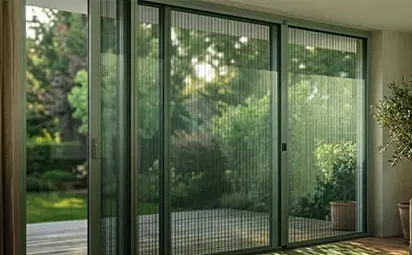
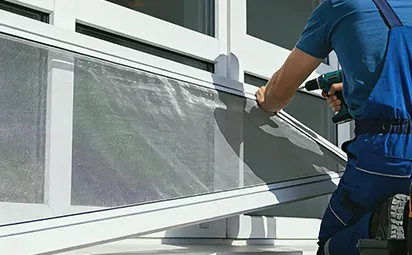
Schermi a rullo e retrattili
Utilizzate un campione funzionante per valutarne l'adattabilità. La rigidità della rete, lo spessore e il comportamento dei bordi possono influire sull'avvolgimento e sullo scorrimento, mentre la larghezza finita deve corrispondere al sistema. Approvate la rete nell'assemblaggio effettivo prima di confermare un ordine di grandi volumi.
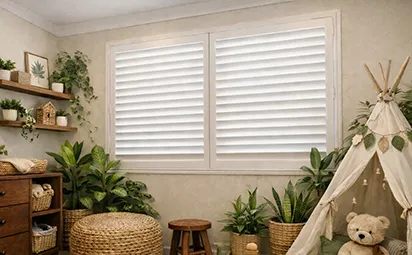
Finestre e porte plissettate
Concordate l'altezza della piega e i requisiti di lavorazione prima della campionatura. Verificate il pacco pieghe, il recupero dopo l'azionamento e l'interazione tra rete, cordini e telaio. Un colore o un nome di materiale simile non sono sufficienti per accertare la compatibilità.
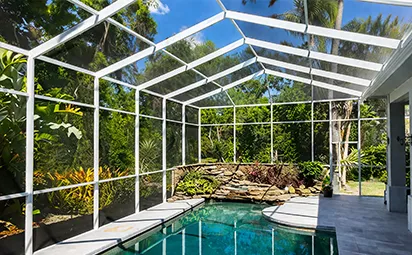
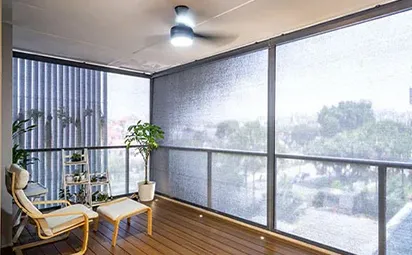
Chiusure per esterni e sistemi per patio
Per la schermatura delle chiusure esterne, verificare le condizioni di esposizione, le dimensioni dei pannelli e il metodo di fissaggio insieme alle specifiche della rete. La nostra guida alle reti per patio e piscina illustra i diversi criteri di selezione per queste applicazioni.
Leggi le specifiche della rete prima di confrontare i prezzi
Le specifiche delle reti descrivono proprietà diverse. Registrarle separatamente in modo che un nome prodotto o una grammatura simili non nascondano differenze che incidono sulla produzione.
| Specifica | What it describes | Purchasing question |
|---|---|---|
| Densità della maglia | The count in each direction over a stated length, normally an inch | Are both directions stated, such as 18×16? |
| Diametro del filato o del filo metallico | The size of the yarn or wire forming the mesh | Does the value describe the finished coated yarn or another stage? |
| Aperture | The clear opening between adjacent yarns or wires | What is the opening size in each direction? |
| Area aperta | The proportion of projected area occupied by openings | Il valore è calcolato o misurato, e per quale costruzione? |
| Peso del tessuto | Massa per metro quadrato | Qual è il valore nominale e la tolleranza concordata? |
| Larghezza utile | Larghezza disponibile per la lavorazione prevista | I bordi, la rifilatura e le tolleranze dimensionali sono inclusi? |
L'apertura e l'area aperta aiutano a comprendere la struttura, ma non stabiliscono di per sé le prestazioni misurate in termini di flusso d'aria o di protezione dagli insetti. Confrontare i campioni e le condizioni di prova quando tali proprietà costituiscono requisiti d'acquisto. Per la terminologia di riferimento, consultare questa guida alla terminologia delle schermature.
Acquisti per un marchio, un distributore o un produttore di sistemi?
Per un marchio: definire la gamma di materiali, i codici prodotto, la lingua delle etichette e le informazioni di imballaggio necessarie per presentare un'offerta coerente ai vostri clienti.
For a distributor or importer: identify the roll sizes your trade customers use, the information needed for warehousing and resale, and the documentation required for your market.
For a screen-system manufacturer: start with your frame, operating mechanism and production process. Include the requirements used to accept or reject a mesh sample, so qualification can focus on the properties that matter to your assembly.
Rotoli di rete all'ingrosso e requisiti OEM
When sourcing insect screen mesh wholesale, define the product and packing requirements together. A competitive roll price is useful only when the material fits your production and distribution process.
| Requirement | Details to share |
|---|---|
| Material and construction | Fiberglass, polyester/PET, pleated or metal; coating and finish if specified |
| Mesh specification | Mesh count and yarn/wire diameter, or your existing approved specification |
| Dimensioni del rotolo | Usable width, roll length and acceptable tolerances |
| Colour | Reference sample or agreed colour reference |
| Processing | Fixed, roller or pleated system; cutting and edge requirements |
| Packing and branding | Labels, barcode content, carton requirements and private-label artwork |
| Commercial scope | Estimated quantity, repeat-order needs and destination country |
| Documentation | Product tests or market requirements to review before quotation |
Custom sizes, colours and packaging are subject to the selected material, production feasibility and order quantity. Minimum order quantities, sample arrangements and production lead times are confirmed in the quotation. See our OEM and ODM services for project discussions.
Compare Wholesale Quotes on the Same Basis
Compare the same material, mesh construction, nominal weight, usable width and agreed tolerances. Confirm roll length, labels and packing as well as price. Where dimensions differ, convert the material price to a common area basis: price per roll ÷ (usable width in metres × roll length in metres).
For example, a 1.2 m × 30 m roll contains 36 m² before cutting losses. Compare delivery terms, freight and any separate packing or development charges consistently. This creates a clearer purchasing comparison than price per roll alone. Your own panel sizes and cutting plan determine how much of the roll becomes saleable product.
Imballaggio dei rotoli, etichette e approvazione dei campioni
We support private-label and packaging development through our OEM service. Agree the roll format and packing as part of the product specification, rather than treating the carton as a separate decision after fabric approval.
- For factory conversion: provide your core requirements, maximum roll diameter or handling limits, unwind direction and usable width.
- For branded distribution: provide your label language, product reference, size description, barcode artwork and carton marking requirements.
- For approval: compare the mesh sample and proposed packed format against the written specification before placing the bulk order.
One published packing example is our rete zanzariera plissettata: two pieces per bundle and five bundles per carton. This is a product-specific packing reference; other fabrics and roll formats need their own packing agreement.
Our OEM process descrive lo sviluppo dei campioni, il feedback del cliente e una fase di ordine di prova prima di ordini più consistenti. Per i criteri di accettazione dei rotoli, consultare la guida alle specifiche e all'imballaggio dei rotoli per zanzariere.
Dalla valutazione del campione alla specifica concordata
1. Definire l'applicazione. Comunicateci la tipologia di prodotto, il mercato di destinazione e le specifiche attuali, oppure inviate un campione di riferimento per discuterne.
2. Valutare il materiale. Verificate l'aspetto e le dimensioni, quindi testate il campione nel telaio o nel sistema operativo previsto. Individuate gli eventuali test di prodotto richiesti dal vostro team acquisti.
3. Confermate le specifiche dell'ordine. Concordate per iscritto il materiale, le dimensioni, le tolleranze, l'imballaggio, i criteri di ispezione e le condizioni commerciali prima della produzione.
4. Pianificate i riordini. Conservate le specifiche approvate e il riferimento del campione insieme alla documentazione dell'ordine, in modo che i lotti futuri possano essere valutati in base agli stessi requisiti.
Documentazione di prodotto e criteri di ispezione
Use the product reference and approved construction when requesting quality documents. Our certificate page displays company and product-related documents; confirm the document holder, covered product, issue date and current applicability for the grade you intend to purchase.
| Purchasing requirement | Record to agree or request |
|---|---|
| Mesh count, yarn diameter and aperture | Selected construction, measurement method, sample locations and acceptance limits |
| Peso del tessuto | Nominal g/m², tolerance and a result linked to the sample or production lot |
| Surface and roll quality | Visible defect limits, usable edges, winding and agreed inspection conditions |
| Chemical or functional requirements | Applicable product report identifying the sample, method, date and scope |
| Packing and repeat orders | Approved label and packing reference, product identification and retained sample |
The specification table above contains published nominal data. A sample or lot inspection report provides a different type of evidence: ask for results tied to the construction being approved. The OEM mesh and packaging guide explains the measurements and records to include in an acceptance specification.
Domande frequenti
How do I choose between fiberglass and polyester mesh?
Start with the screen system and required performance. Compare the actual grades for construction, dimensions, handling and relevant test results. Material names alone do not establish which option is stronger or more suitable for your product.
What is the difference between standard and stiff fiberglass screen?
Standard fiberglass mesh is commonly considered for fixed frames, while stiff fiberglass grades are offered for roller-system evaluation. Confirm thickness, winding behaviour and tracking in your assembly rather than selecting solely by fabric weight.
Can you supply insect screen mesh in bulk rolls?
Contact us with the material, usable width, roll length, colour and estimated quantity. We will review the requested combination and confirm the available specification, packing and commercial terms in a quotation.
Can a brand request private-label packaging?
Yes. Share the label, artwork and packing requirements for review with your selected product. Feasibility, minimum quantities and any development work need to be agreed before the order is confirmed.
Are test reports the same for every mesh?
No. Reports apply to the product or sample described in the document. Ask which material, colour or construction the report covers and whether it addresses your purchasing requirements.
How can I arrange samples and confirm the MOQ?
Send your specification and intended use through our enquiry form. Sample size, charges, courier arrangements and minimum order quantity are confirmed for the product and project. Include your country and company details so the request can be assessed accurately.
Discuss Your Insect Screen Mesh Supply Requirements
Building a brand range, sourcing wholesale rolls or qualifying a material for your screen system? Send your company details, destination market, mesh type, roll dimensions and estimated quantity. Add an existing specification or sample reference if available.
Please include your company and intended market so we can review the right material and order configuration.