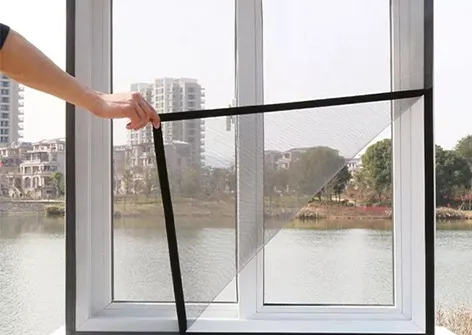
“Cat proof” is a marketing term, not a technical standard. What actually resists claws is a combination of filament material, weave density, and coating — and any supplier claiming a specific strength multiplier should be able to produce a test report behind it.
There Is No Industry Standard for “Cat Proof”
No certification body issues a “cat proof” or “pet proof” rating for insect сетка. The term is a category label that buyers and retailers use to describe mesh built to resist scratching, pushing, and sustained pressure from pets — mainly cats working at a москитная сетка with their claws.
That absence of a standard is exactly why the category is full of loosely supported claims. A search of current pet-screen content turns up repeated statements that pet mesh is “seven to ten times stronger than fiberglass,” appearing across multiple retail and blog sources with no test method, sample size, or lab named. It reads as a fact. It functions as a slogan. Distributors sourcing for hardware chains or private-label programs need something more specific before that number goes on a product page.
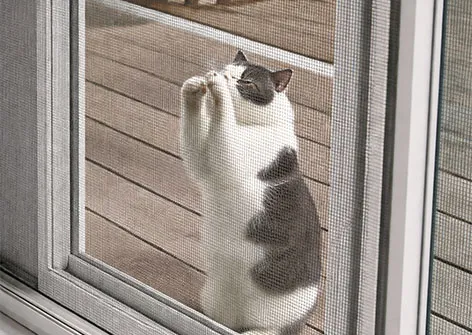
The Three Construction Variables That Actually Change Performance
Three variables determine how a mesh behaves under a cat’s claws, and they can be evaluated independently of any marketing multiplier.
Filament material. Standard insect screen is typically fiberglass yarn. Pet-resistant mesh moves to polyester, PET, or vinyl-coated polyester — materials with different tensile and puncture behavior than fiberglass strand. Fiberglass yarn tends to be stiffer and more brittle under repeated flexing; a coated polyester filament tends to tolerate repeated bending and pressure without breaking down at the same rate. This is a material-class difference, not a single multiplier that applies to every product built from it.
Weave and mesh count. A tighter weave means less open area for a claw tip to catch and pull. Mesh count and weave tightness are set per product and per intended use — a screen built for airflow and visibility trades off against one built for maximum claw resistance. Neither is “better” in the abstract; the right count depends on the installation.
Coating. A vinyl or PVC coating over the base yarn adds abrasion resistance at the point where a claw first makes contact, and it can also affect stiffness and how the mesh recovers after being pushed. Coating formulation, thickness, and adhesion to the base yarn vary by manufacturer and are not visible from a finished sample without a spec sheet or a coating-side test.
Pet-Resistant Mesh: What Smartex Screen Can Confirm
The pet-resistant and functional screen mesh line covers polyester, PET, vinyl-coated polyester, and fiberglass-based options, selected according to the intended market and screen system. Fabric weight, exact mesh count, and strength level are set per model rather than fixed across the whole product line, so they are confirmed at the point of quotation rather than published as one blanket figure.
Roll width and roll length are customizable, and color is available in standard options or matched to RAL or Pantone references for private-label or retail packaging programs. The line is positioned for pet-friendly window and door screens, high-traffic openings, retail screen kits, replacement mesh, and private-label production — the applications most relevant to a hardware importer or DIY retail chain sourcing under its own brand.
Minimum order quantities follow the general screen-mesh MOQ referenced by the company, in the range of approximately 5,000 m², though the confirmed figure depends on material, color, and packaging requirements for the specific order. Paid sample fees for customized product typically fall in the USD 50–200 range as a sample-policy reference, separate from the eventual unit price, which is quotation-based.
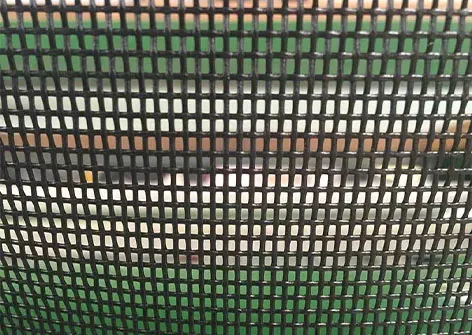
Construction Comparison: Pet-Resistant Mesh vs. Standard Fiberglass Insect Screen
| Параметр |
Standard Fiberglass Insect Screen |
Pet-Resistant Mesh (Polyester / Vinyl-Coated Polyester) |
| Base filament |
Fiberglass yarn |
Polyester, PET, or vinyl-coated polyester filament |
| Typical flex behavior |
More brittle under repeated bending |
Generally more tolerant of repeated flexing and pressure |
| Coating |
Product-specific, often uncoated or lightly finished |
Vinyl/PVC coating is common and adds abrasion resistance at contact points |
| Mesh count / weave |
Set for airflow and visibility |
Set per model; tighter options are available depending on the product |
| Published strength multiplier |
Not applicable |
Not published without a corresponding test report |
| Typical buyer |
General window and door screen replacement |
Pet households, high-traffic retail kits, and private-label pet-screen SKUs |
How to Evaluate a Pet-Resistant Mesh Supplier for a Retail or Wholesale Program
- Request the material and coating spec sheet before the strength claim. Ask what base filament, coating type, and mesh count the “pet-resistant” designation is built on for the specific SKU you are sourcing.
- Ask whether a test report exists for any published strength figure. If a supplier states a multiplier, ask for the test method and the fiberglass baseline it was measured against.
- Confirm color-matching and packaging options separately from the base fabric spec. RAL/Pantone matching and private-label packaging are handled as distinct line items, not automatic inclusions.
- Get the MOQ and sample fee in writing for your exact configuration. Custom color and custom roll dimensions can shift MOQ upward from the standard screen-mesh range.
- Check compliance scope, not just the certificate name. REACH and RoHS chemical-compliance references, where cited by a supplier, apply to specific tested materials and models — confirm the certificate covers the pet-resistant product itself, not the supplier’s product range in general.
Часто задаваемые вопросы
Is there a certified rating for “cat proof” window screen mesh?
No. There is no industry certification specific to pet or cat resistance in insect screen mesh. “Cat proof” and “pet proof” are marketing terms describing mesh built with tougher filament, tighter weave, or added coating compared to standard fiberglass screen.
Is pet-resistant mesh always vinyl-coated polyester?
Not always. The category includes polyester, PET, vinyl-coated polyester, and fiberglass-based options, and the right material depends on the intended application, visibility requirement, and screen system it will be installed into.
Why won’t Smartex Screen publish a specific strength multiplier?
Because no test report supporting a specific multiplier is available for general release at this time. Buyers who need a documented figure for retail or compliance purposes can request one as part of the quotation process.
What is the minimum order quantity for pet-resistant screen mesh?
The general screen-mesh MOQ referenced by the company is approximately 5,000 m², though the confirmed figure for a given order depends on material, color, and packaging. Custom colors typically require a higher volume.
Can this mesh be private-labeled for a retail program?
Yes. Standard or RAL/Pantone-matched colors, custom roll dimensions, and private-label packaging are available as part of the company’s OEM/ODM development scope, confirmed per project.














 15:04
15:04