Ознакомьтесь с другими категориями продукции, включающими решения для наружных ограждений, затенения, москитных сеток для дверей и окон, а также другие решения для различных рыночных и проектных потребностей.
Изучите другие категории продукции для уличных ограждений, солнцезащиты, дверей с москитными сетками, оконных сеток, пергол и решений с ZIP-шторами для различных потребностей рынка и проектов.
Техническая и продуктовая команда Smartex Screen | Insect Screen and Sun-Shading Product Development Team | Updated September 24, 2026
A pool screen enclosure is a project system, not a single roll of fabric. Contractors need to match mesh construction to span, exposure, visibility, insect pressure, cutting plan, seam layout, attachment details, installation labor, and future repair requirements before ordering.
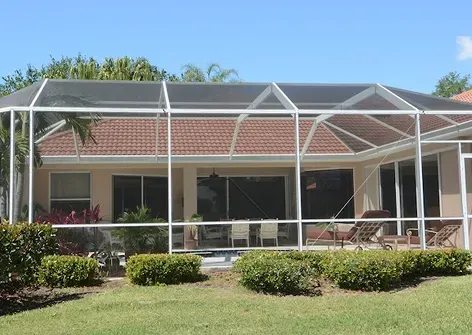
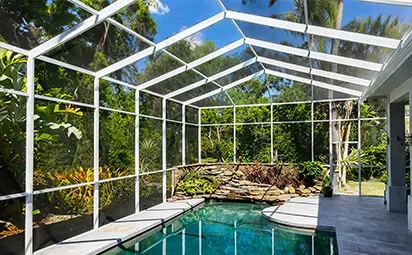
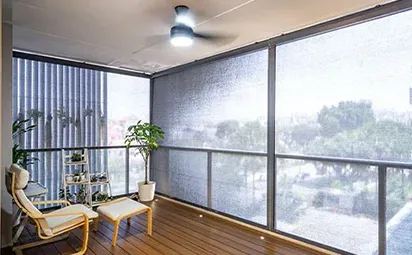
Pool and patio screening mesh selected for enclosure fabrication.
Start with the enclosure conditions
Pool and patio structures expose mesh to sunlight, wind movement, moisture, cleaning, people, pets, and repeated contact. The correct fabric depends on the enclosure geometry and the market requirement. A small residential repair, a screened porch, and a large pool cage should not automatically share one mesh specification.
Record the opening sizes, frame spacing, roof geometry, panel orientation, expected traffic, coastal or humid exposure, cleaning method, and target appearance. Then decide whether the project prioritizes standard insect protection, smaller-insect exclusion, visibility, pet resistance, privacy, solar control, or a combination.
Pool screen mesh examples are model-specific
The Smartex pool and patio screen portfolio includes fiberglass pool screen, pool enclosure screen, 17×14 and 18×14 screen examples, 20×20 no-see-um screen, 20×17 heavy-duty screen, enhanced-visibility options, pet-resistant products, and solar-screen fabrics. These are product families and individual model examples, not one universal specification.
Published example
Published weight example
Planning use
What still needs confirmation
17×14 heavy-duty pool screen
Для конкретной модели
General heavy-duty enclosure comparison
Exact yarn, coating, roll size, and exposure scope
18×14 pool and patio screen
Для конкретной модели
Common pool and patio screening program
Approved fabric weight, width, color, and seam method
20×20 enhanced-visibility screen
Approximately 176 g/m² example
Visibility-focused project comparison
Exact model, test data, and installed appearance
20×20 no-see-um screen
Approximately 215 g/m² example
Smaller-insect exclusion discussion
Exact aperture, wire or yarn diameter, and airflow result
20×20 heavy-duty screen
Approximately 305 g/m² example
Heavy fabric comparison
System compatibility, handling limits, and approved application
The figures above belong to the displayed examples. They should not be copied into a quotation for every pool screen enclosure. Compared with marketplace listings that reduce the decision to “standard” or “heavy duty,” a contractor specification should attach the exact product code, drawing, sample, and acceptance limits.
Span and frame layout affect the fabric decision
Mesh does not carry the same structural role as the aluminum frame, cables, or supports. Large panels can experience more movement and handling stress than small panels, even when the same fabric is used. Review frame spacing, attachment edges, panel dimensions, roof sections, doors, and access panels before selecting a roll width.
Divide the enclosure into wall, roof, gable, door, and service panels.
Record the clear opening and the required attachment allowance for each panel.
Map the roll direction and the most efficient cutting orientation.
Identify seams, joins, corners, and transitions before ordering material.
Approve a representative panel installation before releasing the full quantity.
An edge case is a roof panel with a different angle and roll direction from the vertical walls. Cutting every panel from one assumed orientation can increase waste or produce inconsistent appearance. The cut plan should be approved with the enclosure drawings.
Mesh count, weight, and visibility are connected
Mesh count describes strand density, while fabric weight reflects the mass of the finished construction. Yarn diameter, coating, material, and weave affect the clear opening and open area. A count alone cannot establish visibility, airflow, impact behavior, or suitability for a specific span.
For visibility-focused projects, compare the installed sample from the pool deck, interior living area, and exterior approach. For smaller-insect programs, confirm the exact aperture and do not substitute a general 20×20 label for a tested construction. For pet or high-contact areas, check the model-specific fabric and the frame attachment rather than treating “heavy duty” as a universal performance claim.
Roll width and seams control labor
Roll width should follow the cutting plan, not simply the largest available option. Wider rolls can reduce seams on some panels but may increase handling weight and storage requirements. Narrower rolls may fit a cutting table more easily but create more joins or trim waste.
Before ordering, calculate the number of panels, seam length, trim allowance, expected offcuts, and roll changes. Mark every seam location on the shop drawing. Keep fabric orientation consistent where color, texture, or visibility differs by direction.
Inspect seams for alignment, secure attachment, puckering, and an acceptable visual transition. A seam that passes on a small sample may become visible when repeated across a roof line or long wall run.
UV, moisture, and cleaning exposure
Pool enclosures operate outdoors, but exposure is not identical at every site. Roof fabric receives different sunlight than a shaded wall. Coastal air, chlorinated splash, pressure washing, dust, and algae-cleaning routines can also affect maintenance.
Use product-specific documentation for UV or weathering claims. The Smartex materials reference QUV weathering and selected compliance or building-code-related claims for parts of the portfolio, but the exact model, report, issuing body, and scope must be matched before a claim is printed. Do not state a universal service life for every pool screen.
Installation checks before handover
Confirm the frame is square, stable, clean, and free from sharp edges.
Check spline or attachment components against the selected fabric thickness.
Keep mesh tension even without pulling the frame out of alignment.
Inspect corners, door interfaces, roof transitions, and service openings.
Record panel IDs and any retained material for future repair matching.
Do not solve a frame gap by stretching the mesh harder. A bowed frame, damaged spline, or poorly aligned door can create an opening even when the fabric itself is intact.
Procurement, packaging, and replenishment
A pool screen enclosure order should include the exact mesh code, material, count, weight, roll width, roll length, color, packaging, lot identification, quantity, and destination. Request a retained sample or approved production roll for repeat work.
Protect roll edges and cores during transport. Label mixed widths and colors separately. Keep replacement records tied to the original panel or enclosure section so a repair does not introduce a visibly different construction.
Pool screen enclosure pricing depends on the selected mesh, fabric weight, roll size, frame geometry, seams, access panels, packaging, installation scope, quantity, and destination. Smartex does not publish one universal factory price for every pool-screen model. A useful request includes enclosure drawings, panel sizes, target mesh, quantity, market, packaging, and inspection requirements.
Часто задаваемые вопросы
Is 20×20 always the best pool screen enclosure mesh?
No. It is one family of constructions. Visibility, airflow, insect pressure, weight, handling, and the exact model must be compared.
Can one roll width fit every enclosure panel?
Not necessarily. Panel sizes, roof angles, seam locations, trim allowance, and cutting equipment determine the efficient roll format.
Does heavy-duty mean wind-rated?
No. A fabric description does not replace project-specific structural calculations, frame design, attachment details, or local requirements.
What should be retained for future repairs?
Keep the product code, approved sample, lot reference, color, roll specification, panel map, and installation records.
How should a contractor compare pool-screen suppliers?
Compare exact model documentation, sample consistency, roll dimensions, packaging, quality records, replacement support, and the supplier’s ability to match repeat specifications.
For a pool screen enclosure material program, send the panel schedule, exposure conditions, mesh objective, roll plan, quantity, packaging, and destination through the страницу запроса Smartex Screen.
Об авторе: The Smartex Screen Technical and Product Team supports screen-fabric selection, material customization, samples, packaging, private-label production, quality control, and export coordination for global B2B buyers.
Мы ответим вам в течение 24 часов. Если вопрос срочный, пожалуйста, добавьте WhatsApp/WeChat: +86 186 6025 8307. Или позвоните напрямую по номеру +86 – 532 – 8562 3071.
*Мы уважаем вашу конфиденциальность, и вся информация защищена.
Мы будем использовать вашу информацию только для ответа на ваш запрос и никогда не будем отправлять нежелательные письма или рекламные сообщения.















 10:07
10:07