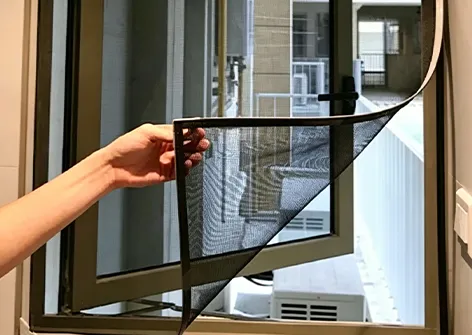
A mosquitera magnética para ventana is a framed fly-screen panel held in the window opening by a magnetic strip instead of screws or tracks. For resellers, the sourcing decision comes down to three variables: frame profile, size program, and packaging format — not installation speed, which is a fixed consumer-facing claim most listings already repeat.
Frame Profile: The Detail Most Listings Skip
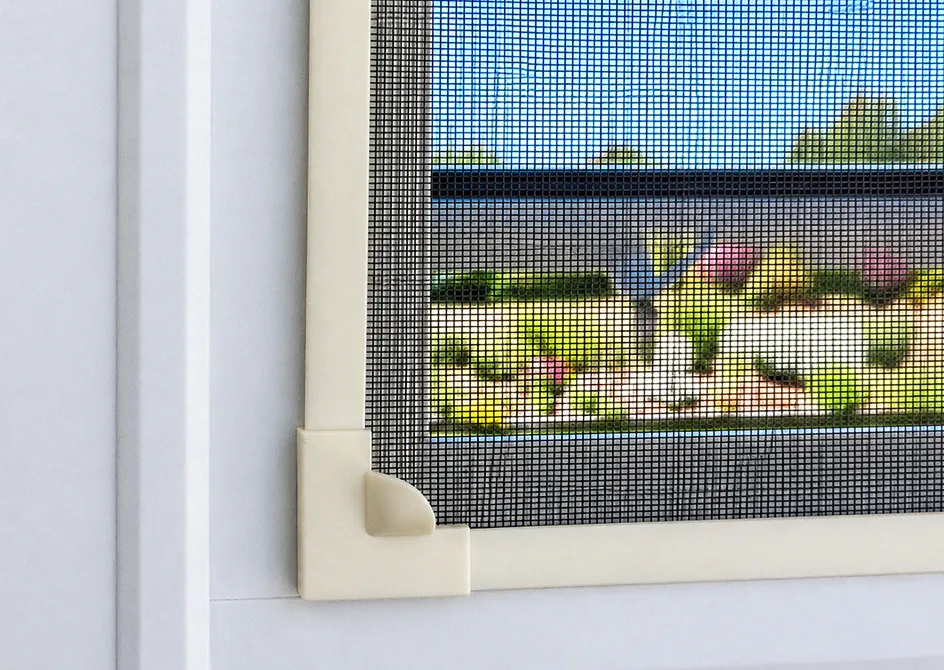
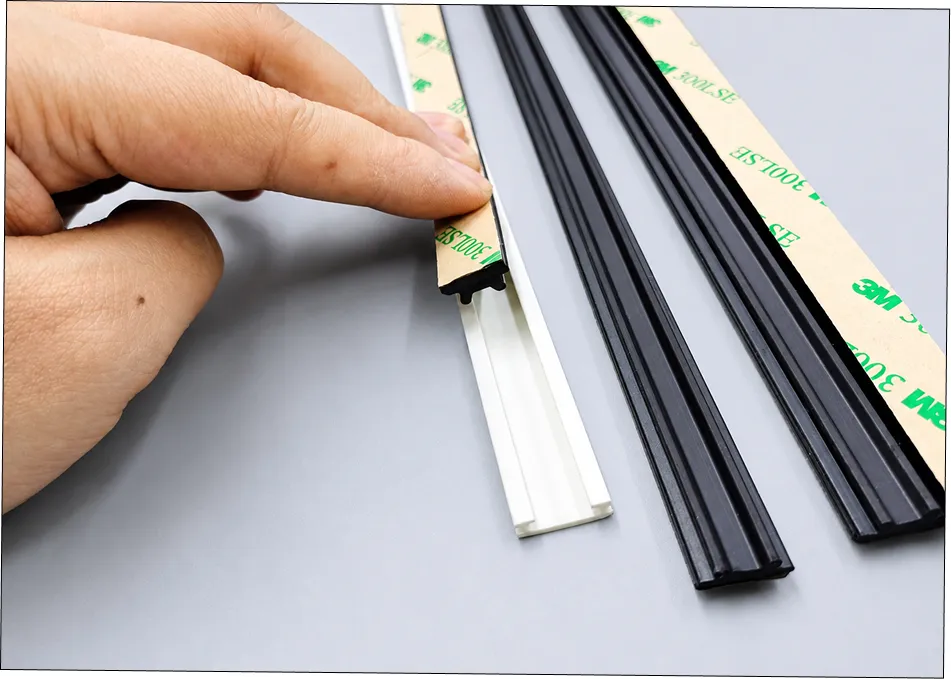
The frame profile — the width of the aluminum or composite strip that forms the screen’s border — determines how the finished screen looks in the window opening and how much material cost sits in each unit. A narrower profile reads as less obtrusive against the glass line; a wider one typically carries more rigidity but adds material weight and per-unit cost.
One framed magnetic window screen model in our current line runs a 6 mm profile. That figure describes this specific model only. Profile width is not standardized across every magnetic screen on the market, and it should not be treated as a category-wide default when writing product copy or comparing suppliers — a supplier quoting a different profile is not necessarily quoting a lower-quality product, just a different build.
For a retail buyer, the profile question usually connects to two downstream issues:
- Perceived quality at retail. A thinner profile can look premium on a shelf card but may need tighter tolerance control during fabrication to stay rigid.
- Cost per unit at volume. Profile width affects aluminum usage, which is one of the larger cost drivers in a finished screen kit.
Buyers evaluating a new supplier should ask for the profile spec in millimeters, not a marketing description like “slim” or “low-profile” — those terms carry no fixed measurement and vary from one factory to the next.
Standard Size Programs vs Made-to-Order
A size program is the set of pre-cut, pre-configured dimensions a supplier keeps in regular production so retail buyers can order without triggering a custom cutting run. This is the detail that actually affects a wholesaler’s ordering pattern, more than installation time does.
Our current framed magnetic screen model ships in nine standard sizes. The exact dimension breakdown for that size run is a quotation-stage detail — we don’t publish a universal size chart here because size programs are configured per order based on the target market’s common window dimensions, and applying one region’s chart to another market creates mismatched inventory.
What buyers should confirm before committing to a size program:
- Whether the nine sizes map to the window dimensions common in the target retail market, or whether a custom size run is needed
- Minimum order quantity per size, since retail buyers sometimes need uneven distribution across the size range rather than equal quantities
- Lead time difference between standard-size stock production and a custom size outside the existing program
Compared with the fits-most-windows framing common in consumer marketplace listings, a size-program approach gives a retail buyer a fixed SKU count to plan shelf space and reorder cycles around, instead of an open-ended custom-cut promise that’s harder to forecast.
Mesh Options for Private-Label Programs
The frame is only half of a mosquitera magnética para ventana kit. The mesh fabric stretched across it determines airflow, visibility, and which market segment the finished product fits. Our screen-fabric range supports several mesh types that can be paired with a magnetic frame kit:
- Standard fiberglass mesh — the common baseline for general retail programs, with mesh count and weight confirmed per order
- High-visibility fiberglass mesh — a finer weave marketed on clearer sightlines, positioned for a premium retail tier
- Pet-resistant mesh — a heavier polyester or vinyl-coated construction for households with cats or dogs; the exact strength rating is a per-model figure that requires the corresponding test report before it can be quoted in retail copy
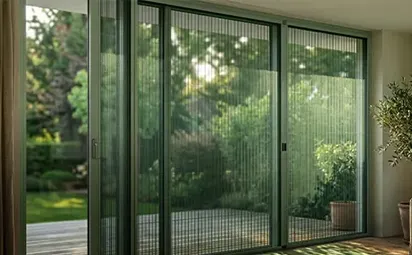
- Pleated mesh — used less often in a fixed magnetic frame, more relevant if a buyer is also sourcing pleated screen door or window systems from the same factory and wants shared mesh sourcing
For a DIY retail chain running multiple price tiers on one shelf set, the practical approach is pairing the same 6 mm frame with two or three mesh grades rather than developing separate frame tooling for each tier. That keeps mold and tooling costs on one frame configuration while the mesh grade does the work of differentiating a $12 SKU from a $22 SKU.
One caution on mesh claims: any strength, puncture-resistance, or multiplier claim (“twice as strong as standard mesh”) needs to trace back to a specific test report before it goes on packaging or a product page. Generic pet-resistant marketing language without a backing figure is a common gap between what a factory can substantiate and what gets printed on retail packaging — worth closing before, not after, a print run.
Magnetic is one of several opening systems in a finished window screen line, and buyers sourcing across a broader catalog often want to see how it stacks up against the alternatives on the same production floor. Unlike marketplace category pages that treat “de mosquiteras para ventanas” as one undifferentiated product, the opening mechanism changes the installation labor, the frame components, and the retail positioning.
| Opening System |
Frame Construction |
Typical Installation |
Retail Positioning |
Private-Label Fit |
| Magnetic (framed) |
Aluminum or composite frame, magnetic strip perimeter |
No tools, frame sits in opening |
Mid-tier, DIY-friendly |
Strong — single frame config, mesh grade differentiates tiers |
| Framed sliding |
Aluminum frame with sliding track hardware |
Screwed or tracked into frame |
Standard hardware-store tier |
Moderate — more SKU variation per window type |
| Retráctil |
Cassette housing with pull-out mesh panel |
Mounted cassette, retracts when not in use |
Premium tier |
Lower volume, higher per-unit margin |
| Roller |
Roller mechanism with vertical or horizontal travel |
Mounted roller unit, screwed |
Mixed — depends on housing finish |
Moderado |
| Plisada |
Folding pleated mesh with side tracks |
Track-mounted, folds to one side |
Premium, larger openings |
Lower volume, project-oriented |
| Extendable |
Adjustable frame that expands to fit a size range |
Tension or clip-fit within opening |
Budget to mid-tier |
Strong for open-stock retail |
This comparison sits at the frame-and-mechanism level, not the individual-model level — component materials, exact frame colors, and mesh compatibility still need confirmation per SKU. What it shows a buyer building a private-label catalog is where a magnetic program fits relative to the rest of the family: it holds a narrower SKU count per size than a sliding-track system while still covering a broad retail tier, which is part of why it works well as an entry point into a private-label window screen line.
Retail Carton and Packaging Considerations
Packaging format is where a lot of sourcing decisions quietly fail after the product itself checks out. A magnetic window screen kit can be packed as:
- Bulk carton — multiple units per box, typically for project or B2B-to-B2B resale rather than retail shelf
- Retail-ready carton — individually boxed or blister-packed with printed graphics, barcode, and instructions for direct shelf placement
- E-commerce packaging — reinforced for parcel shipping, often with less printed branding since the product photo and listing carry the marketing
- DIY-kit format — includes trim tools or cutting guides bundled with the frame and mesh, aimed at buyers assembling to a non-standard opening
A retail chain buyer should specify which of these applies before requesting a quote, since carton engineering, barcode placement, and instruction-sheet language (multi-language instructions are available) all change the unit cost and the production timeline. A bulk-carton quote and a retail-ready quote for the same physical product are not directly comparable line items.
Private-Label and OEM Configuration Path
For a wholesaler or retail chain building a house-brand screen program, the private-label path on a magnetic window screen typically runs through the same development stages as any other finished screen product:
- Spec confirmation — frame profile, size program, mesh grade, and frame color are locked against the retailer’s target price point
- Packaging and branding development — carton artwork, barcode assignment, and instruction-sheet translation are built around the confirmed spec
- Sample production — a paid sample fee in the approximate USD 50–200 range applies to most customized sample requests, separate from the eventual unit price
- Trial order — a smaller production run to validate the full spec and packaging before committing to full-volume MOQ
- Full production — standard production lead time runs approximately 30–45 days once the spec, packaging, and trial order are approved
Simple customization within an existing frame and mesh configuration — new color, new packaging graphics — typically runs 6–8 weeks from confirmation to shipment-ready stock. A moderate development project, such as adjusting the size program or introducing a new mesh grade, runs closer to 10–14 weeks. Full ODM development, where the frame construction itself is being adjusted or a new profile is being tooled, tracks toward the 16–20 week range. These are general planning figures; the exact schedule for a specific program depends on mold requirements, order quantity, and how many sample-approval rounds the spec goes through.
Manufacturing quality control on private-label programs runs under an ISO 9001 quality management framework at the factory level; the certificate scope and current validity should still be confirmed directly with our team before it’s referenced in a retailer’s own compliance documentation, since certification scope varies by product line and shouldn’t be assumed to cover every SKU automatically.
Preguntas frecuentes
What frame profile do magnetic window screens come in?
Profile width varies by supplier and model. Our current framed magnetic screen runs a 6 mm profile; this figure applies to that specific model and shouldn’t be assumed to apply to every magnetic screen on the market.
How many standard sizes are typically available?
Our current framed magnetic model ships in nine standard sizes. The specific dimension breakdown is confirmed at the quotation stage since size programs are built around the target market’s common window dimensions.
Can magnetic window screens be private-labeled?
Yes. Frame color, size program, mesh grade, packaging, and branding can all be configured for a private-label program, following the standard development path from spec confirmation through sample approval to full production.
What’s the minimum order quantity for a magnetic window screen program?
Finished kit MOQ runs approximately 500–1,000 sets as a planning range; the confirmed figure depends on size program and packaging format and should be verified per order.
Are magnetic window screens certified for any specific market standard?
Certification scope depends on the specific model and material combination and needs to be confirmed per SKU before it’s referenced in retail or compliance documentation — it isn’t a blanket claim that applies to every configuration in the line.
How does a magnetic screen compare to a sliding or retractable window screen for a retail program?
A: Magnetic screens generally carry a narrower SKU count per size than sliding-track systems, install without tools, and sit at a mid-tier retail price point, while retractable and pleated systems tend to run at a premium tier with lower volume. The comparison table above breaks down frame construction and retail positioning across the full opening-system family.



















 11:05
11:05