Explore more product categories covering outdoor enclosure, shading, door and window screening, and other solutions for different market and project needs.
Explore more product categories for outdoor enclosure, shading, screen doors, window screens, pergolas, and zip blind solutions for different market and project needs.
Fiberglass Screen: Specifications for Wholesale Buyers
07
2026.09
Fiberglass Screen: Specifications for Wholesale Buyers
12:02
Fiberglass Screen: Specifications for Wholesale Buyers
Smartex Screen Technical and Product Team | Insect Screen and Sun-Shading Product Development Team | Updated September 7, 2026
Wholesale fiberglass screen buying should start with a controlled specification, not a generic mesh name. Confirm mesh count, yarn diameter, coating, weight, roll dimensions, color, intended screen system, packaging, and the inspection method before comparing quotations. The same material family can behave differently when the construction or coating changes.
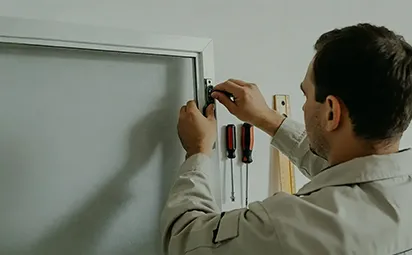
Fiberglass insect screen roll selected for a wholesale specification review.
What does a fiberglass screen specification need to identify?
“Fiberglass screen” describes a product family, not one universal construction. A purchasing record should identify the material, coating, mesh count, yarn diameter, finished thickness, mass per area, roll width, roll length, color, and application. It should also state whether the roll will be cut into window kits, installed in a fixed frame, used in a door, or converted into another screen system.
Specification
What to record
Why a wholesaler needs it
Mesh
Warp x weft count, aperture target, and measuring method
Controls insect exclusion, airflow, visibility, and SKU description
Yarn
Fiberglass construction, diameter, and coating
Changes strength, handling, stiffness, and finished appearance
Finished fabric
Thickness, mass per area, color, and width tolerance
Supports cutting, frame fit, roll yield, and repeat orders
Roll
Usable width, length, winding direction, core, and edge protection
Determines storage, freight, cutting plans, and waste
Documents
Inspection record, lot identity, and applicable compliance documents
Links a claim to a defined model and production batch
Mesh count, aperture, and buyer intent
Mesh count is useful only when it is paired with yarn diameter and a stated measurement convention. Two fabrics with the same nominal count can have different openings, weight, visibility, and airflow. A tighter construction may be selected for smaller-insect control, while a more open construction may support a different balance of ventilation and outward view.
Compared with a retail listing that gives only a roll size, a wholesale data sheet should show the count, yarn, coating, finished dimensions, tolerance, and intended use together. Do not describe a mesh as “universal” unless the finished screen system and market requirements have been tested.
Material and coating affect conversion
Smartex presents fiberglass insect screen mesh with product-specific coating and customization options. Depending on the selected model, buyers may discuss mesh count, roll width and length, color, and the screen system where the mesh will be used. Exact yarn diameter, coating formula, thickness, mass, tensile values, and weathering performance must remain tied to the selected product code and technical documentation.
Coating consistency matters during slitting, spline insertion, sewing, framing, and winding. Inspect the first and last sections of a roll for marks, edge condition, width change, and coating variation. A sample that looks correct in the center of a roll does not by itself prove batch uniformity.
Fiberglass screen options for wholesale programs
The Smartex fiberglass insect screen range is presented for window screens, door screens, replacement mesh, and fabricated products. A wholesale program can specify standard fiberglass mesh, high-visibility construction, stiff screen, or a custom roll format according to the finished application. The related fiberglass stiff screen page presents a separate construction for roller and retractable systems; its figures should not be transferred to standard mesh rolls.
Buyer decision
Questions to answer
Standard window replacement
Does the mesh fit the frame channel, spline, cutting process, and target visibility?
Retail screen kit
What cut size, instructions, packaging, label, and replacement process will the customer receive?
Door or high-traffic use
Does the selected construction support the door format, edge retention, and handling requirements?
Roller or retractable system
Does the exact mesh travel, wind, and retain its edge in the approved cassette and guides?
Roll dimensions, packaging, and logistics
Roll width should follow the cutting layout and the largest panel, not a catalog default. Wider rolls can reduce seams and waste, but they need suitable handling equipment and edge protection. Longer rolls can reduce changeovers, but storage, lot labeling, roll weight, and damage control become more important.
Define the usable width after edge inspection.
Set a roll-length range that matches cutting and shipping limits.
Specify core, winding direction, protective film or wrap, labels, and lot traceability.
Approve a packed sample before fixing the retail or project carton.
For private-label products, the carton and insert should distinguish mesh specification from finished screen size. Include the model code, material description, count, color, roll dimensions, installation format, and measurement responsibility. Do not copy a generic image or specification across different mesh constructions.
Quality-control checks before approving a wholesale lot
Dimensional: measure count, width, thickness, roll length, and mass using the agreed method.
Conversion: cut and install a representative sample in the intended frame, kit, door, or roller system.
Packaging: confirm labels, lot identity, carton protection, instructions, and barcode placement.
Keep the inspection method and acceptance limits with the purchase specification. If a compliance document is referenced, record its title, issuing organization, model scope, issue date, and validity rather than implying that every fiberglass screen carries the same approval. Smartex materials reference compliance systems for selected products, but the exact scope must be confirmed for the ordered model.
Cost, MOQ, and sampling
Fiberglass screen prices are quotation-based. Material, mesh, weight, roll size, color, packaging, order quantity, and shipping terms all affect the quotation. A sample fee, where applicable, is separate from the product price. Ask for the MOQ, sample format, lead time, and approval point in the same request so that the offer can be compared on equal terms.
Smartex supports custom roll dimensions, color options, product development, packaging, private labels, and export coordination. The appropriate request should include the target market, application, annual or trial quantity, required roll format, artwork, inspection method, and any applicable documentation.
Usable roll width, length, core, winding, edge protection, label, and lot traceability.
Finished application, frame or system compatibility, sample test, inspection method, and acceptance limits.
Packaging, private-label artwork, instructions, barcode, MOQ, sample terms, lead time, and quotation basis.
FAQ
Is fiberglass screen the same for every window-screen project?
No. Mesh, yarn, coating, thickness, weight, color, roll format, and the host frame determine whether a construction is suitable.
What is more important, mesh count or yarn diameter?
Neither should be considered alone. Count and yarn diameter together influence aperture, visibility, airflow, weight, and conversion behavior.
Can a stiff screen specification be used for standard fiberglass mesh?
No. Stiff screen is a separate construction for selected roller or retractable applications. Use the product code and approved data for the exact model.
Does Smartex publish a universal wholesale price?
No. The quotation depends on the selected material, dimensions, color, packaging, quantity, customization, and delivery terms.
What should a buyer send for a quotation?
Send the application, mesh target, roll width and length, color, quantity, packaging, destination, artwork, sample requirement, and documentation needs.
For a fiberglass screen wholesale quotation, send your target mesh, roll format, application, quantity, packaging, and inspection requirements through the Smartex Screen inquiry page.
About the author: The Smartex Screen Technical and Product Team supports screen-fabric selection, finished screen-system development, material customization, samples, prototypes, packaging, private-label production, quality control, and export coordination for global B2B customers.

















 12:02
12:02