A roller shutter is a window or door covering made of horizontal slats linked together. The slats roll up into a box above the opening and run down along side guide rails. It can be operated manually or by an electric motor, and it is used for security, privacy, light control and weather protection.
What Makes Something a Roller Shutter?
A shutter belongs in this category because of how it moves. The material, the colour and the price do not decide it. A roller shutter has a flexible curtain of interlocking slats that winds around a horizontal axle. When the shutter opens, the curtain disappears into a headbox. When it closes, the curtain drops between two vertical guides until the bottom bar reaches the sill or the floor.
The rolling movement is what separates roller shutters from hinged, louvred or folding shutters. It also explains the product’s main trade-off. The curtain has to be stored somewhere, so every roller shutter needs room for a headbox, either visible on the façade or built into the lintel.
The same principle shows up under several names. “Rolling shutters” and “roll up shutters” usually describe the same product, and “electric roller shutter” simply means the motorised version. Large commercial roll-up doors for warehouses and shopfronts use the same mechanism at a heavier scale.

The Parts Inside Every Roller Shutter
Whatever the material, a roller shutter is assembled from the same functional parts:
- Slat curtain. Interlocking horizontal profiles that hook or slide into each other, so the curtain can bend around the axle but stays rigid across its width.
- Axle (barrel or tube). The rotating shaft the curtain winds onto. In electric models the motor usually sits inside this tube.
- Headbox (cassette). The housing that stores the rolled-up curtain. It can be surface-mounted, recessed into the wall, or concealed above a window frame.
- Guide rails. Vertical channels on each side that keep the curtain aligned and stop it from swinging in the wind.
- Bottom bar. A heavier end profile that weights the curtain, seals against the sill and often carries the locking point.
- Drive. Either a manual mechanism (strap, crank or spring) or an electric motor with a switch or remote.
Some designs add end stops, locks or ventilation slots between the slats. The core six parts above stay the same.
Which Materials Are Roller Shutters Made Of?
Диапазон slat materialsets the weight, the corrosion behaviour and how large an opening the shutter can practically cover. The table below compares the common options by function rather than by marketing label.
| Slat material |
Typical construction |
Where it is commonly used |
Основное ограничение |
| Roll-formed aluminium with foam fill |
Thin aluminium strip formed into a hollow profile and injected with foam |
Residential windows and patio doors |
Hollow profiles dent more easily than solid ones |
| Extruded aluminium |
Solid aluminium profile pushed through a die |
Higher-security residential and shopfront openings |
Heavier, so larger openings often need a motor |
| ПВХ |
Plastic extruded profile |
Smaller windows, interior or sheltered positions |
Lower rigidity on wide spans; colour can fade in strong sun |
| Galvanised or painted steel |
Steel slats, often in larger profiles |
Commercial roll-up doors, warehouses, garages |
Weight and corrosion care in humid or coastal sites |
| Polycarbonate or perforated slats |
Clear or punched profiles |
Shopfronts that need visibility after hours |
Less privacy and light blocking than solid slats |
Foam-filled aluminium is common for homes because the hollow profile adds an air layer and the foam damps rattling. Solid extruded profiles go to openings where impact resistance matters more than weight.

Manual vs Electric Operation
Manual roller shutters use one of three drives:
- Strap or belt winder: a wall-mounted reel that pulls the curtain up. It suits small, light windows.
- Crank (gear) drive: a removable or fixed handle that turns the axle through a gearbox. It takes less force than a strap and suits mid-size openings.
- Spring-assisted lift: a tensioned spring balances the curtain weight. It is common on manual commercial roll-up doors.
Electric roller shutters use a tubular motor fitted inside the axle. They are controlled by a wall switch, a remote, a timer or a home-automation system. Installers set limits during commissioning so the motor stops at the fully open and fully closed positions. Some systems add obstacle detection, a manual override for power cuts, or battery and solar power for openings without mains wiring. These features vary by model and are not standard on every electric shutter.
| Фактор |
Ручной |
Electric |
| Wiring at the opening |
Не требуется |
Mains supply, or battery/solar on selected models |
| Practical opening size |
Limited by how much curtain weight a person can lift |
Larger and heavier curtains become practical |
| Operation of several shutters |
One at a time |
Grouped or scheduled control possible |
| Behaviour in a power cut |
Unaffected |
Depends on manual override or battery backup |
| Maintenance points |
Straps, cords and springs wear |
Motor, control unit and limit settings |
| Upfront cost |
Нижний |
Higher, plus installation by an electrician |
Choosing a drive in five steps
- Measure the opening width and height. Write down the slat material too, because those numbers set the curtain weight.
- Check whether mains power can reach the headbox. If it cannot, decide between a manual drive and a battery or solar motor.
- Count the shutters on the project. Several large or hard-to-reach openings usually justify motors and grouped control.
- Decide what has to happen during a power cut. This matters most for doors and for any opening people might need as an exit, where local building rules should be checked.
- Confirm which control interface the end customer expects, such as a wall switch, a remote, or integration with an existing smart-home system.
Roller Shutter, Plantation Shutter or Zip Blind?
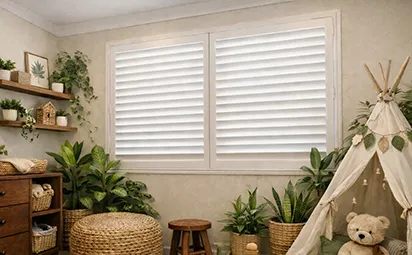
A frequent mistake in sourcing is treating these three products as interchangeable because they all appear under “shutters” or “outdoor shading” in some catalogs. Some supplier websites even list plantation shutters under a “roller shutter” heading. When buyers match on keywords alone, the RFQ can end up describing one product while the quotation prices another.
| Характеристика |
Рольставни |
Plantation shutter |
Штора-плиссе на молнии |
| Moving element |
Rigid slat curtain rolling onto an axle |
Hinged or sliding panels with tilting louvres |
Fabric rolling onto a tube |
| Side guidance |
Rails holding slat ends |
Frame and hinges |
Zip-edged fabric locked into side guides |
| Usual position |
Exterior of window or door |
Mostly interior |
Exterior: windows, patios, balconies, pergolas |
| Light control |
Fully open or closed; ventilation gaps on some slats |
Louvre angle adjusts light gradually |
Fabric openness sets light and view through |
| View when closed |
Blocked (unless clear/perforated slats) |
Partial, set by louvre angle |
Partial view through screen fabric |
| Main purpose |
Security, blackout, weather protection |
Interior décor, privacy, light adjustment |
Shading, glare, privacy, insect control |
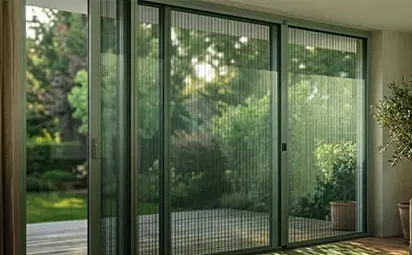
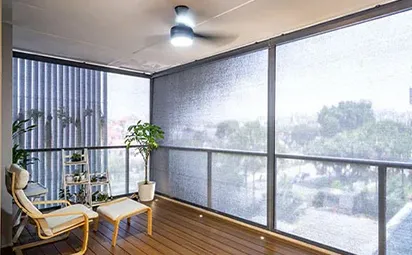
Compared with common fabric-based shading options such as zip blinds, a roller shutter gives up daylight and outward view when closed, and in return provides a hard physical barrier. A zip blind keeps a filtered view and airflow, but fabric is not a security product. Plantation shutters solve a different problem altogether, since they are mainly interior joinery for light and privacy.
The Trade-Offs That Actually Affect a Decision
The benefits are straightforward. A closed roller shutter adds a physical layer against forced entry, blocks light almost completely for bedrooms and media rooms, and shields the glass behind it from rain and windborne debris. The air gap between curtain and window also helps limit heat transfer, although how much depends on the slat profile, the fit and the climate, and no single figure applies to every product.
The drawbacks are the ones that change projects:
- Headbox space. Retrofitting onto an existing window usually means a visible box on the façade. Concealed boxes generally have to be planned into new construction or a major renovation.
- Power and wiring. Electric models need an electrician and a power route to every headbox. On a retrofit project this can cost more than the motors themselves.
- No partial daylight. Unlike louvres or screen fabric, a closed solid curtain does not let light through in a controlled way. Many households end up leaving shutters partly open, which reduces both privacy and security.
- Wind noise and wear. Loosely fitted guides can let the curtain rattle in gusts, and manual straps and springs are wear parts that need replacement over time.
What a B2B Buyer Should Put in a Roller Shutter RFQ
A clear request avoids most quotation mismatches:
- Opening width and height, and how many openings there are of each size
- Mounting type: surface-mounted box, recessed box, or top-of-frame integrated system
- Slat material and profile (roll-formed foam-filled, extruded, PVC, steel)
- Frame, slat and box colours, including any RAL reference
- Drive type and, for electric models, control method and power source
- Target market, so the supplier can address applicable rules. For example, EU CE conformity requirements apply where relevant to powered products sold in that market.
- Packaging format: assembled units, component kits, or project packaging
About price: roller shutter prices are quotation-based. They depend on opening size, slat material, mounting type, drive and control system, colour, packaging, order quantity and shipping terms.
For more information, please contact us.
Часто задаваемые вопросы
Is a roller shutter the same as a roll-up door?
They use the same principle, a slat curtain rolling onto an axle. “Roller shutter” usually refers to window and residential door versions, while “roll-up door” usually means larger commercial or garage openings with heavier slats.
Can an electric roller shutter be opened during a power cut?
Only if the system includes a manual override or battery backup. Many models offer one of these, but not all, so confirm it before specifying shutters for doors or for any opening used as an exit.
Do roller shutters improve insulation?
A closed shutter adds an air layer outside the glass, and foam-filled aluminium slats are designed partly with this in mind. The actual effect depends on the profile, the fit and the climate, so ask the manufacturer for tested values for the specific product.
Can roller shutters be added to existing windows?
Yes, usually with a surface-mounted headbox and face-fixed guide rails. The box will be visible from outside, and electric versions need a power route to each shutter.
How much do roller shutters cost?
Pricing is quotation-based. It depends on size, slat material, mounting, drive type, colour, quantity and shipping terms, so a reliable figure requires a defined specification.




















 09:36

