Explore more product categories covering outdoor enclosure, shading, door and window screening, and other solutions for different market and project needs.
Explore more product categories for outdoor enclosure, shading, screen doors, window screens, pergolas, and zip blind solutions for different market and project needs.
Roller Mosquito Nets: A Sourcing Guide for Screen Brands
Smartex Screen Technical and Product Team | Insect Screen and Sun-Shading Product Development Team | Updated September 5, 2026
Roller mosquito nets work best when the mesh, cassette, guides, bottom rail, and opening dimensions are specified as one system. Screen brands should evaluate stiffness, yarn, coating, roll width, retraction path, edge retention, packaging, and sample-test results before approving an OEM roller-screen program.
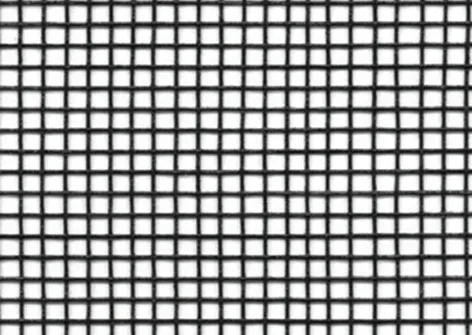
Fiberglass stiff screen selected for roller and retractable screen systems.
“Roller mosquito nets” can describe a roll-up window screen, a side-to-side door screen, or a complete retractable cassette. The term does not define the mesh, operating direction, maximum opening, or cycle life. A supplier quotation should therefore identify the screen format, mesh code, cassette geometry, guide profile, bottom bar, fixing method, and intended market. This keeps a fabric capability from being mistaken for a tested finished product.
What to specify before comparing roller mosquito nets
System item
Specification to define
Why it affects sourcing
Opening
Width, height, orientation, reveal, sill, and obstruction
Sets cassette length, guide alignment, mesh travel, and installation tolerance
Mesh
Material, mesh count, yarn diameter, thickness, coating, color, and roll format
Changes stiffness, visibility, airflow, winding behavior, and cutting method
Hardware
Cassette, guide, bottom rail, latch or magnets, corners, fasteners, and seals
Determines retention, closure, service access, and replacement parts
Operation
Vertical roll-up, horizontal pull, manual action, spring assistance, or motor
Requires a matching force, clearance, and endurance test plan
Commercial pack
Finished unit, semi-assembled kit, cut mesh, or wholesale roll
Controls carton size, instructions, barcode, damage risk, and returns
Why stiffness matters in an insect roller screen
Soft mesh can crease, fold into a guide, or lose its alignment when a roller system is opened at an angle. A stiffer fabric can hold a flatter path, but stiffness also affects winding diameter, cutting force, spline fit, and the hand force felt by the user. The correct choice is the construction that travels through the selected hardware without buckling while still meeting the buyer’s visibility and airflow target.
Compared with generic retail descriptions that call every roll-up fabric “retractable,” an OEM specification should record the mesh in the production cassette. Test the first and last portion of the roll, because coating, edge condition, and winding tension can influence the result.
Stiff screen options from the Smartex range
Smartex Fiberglass Stiff Screen is presented for retractable and roller window or door applications. The product page lists PVC-coated fiberglass, with PET BetterVue available as a separate construction. The displayed options include:
Displayed option
Mesh
Diameter
Thickness
Selection question
Standard Stiff
18×16
0.28 mm
0.27-0.28 mm
Does it maintain the required path and fit the guide or spline?
BetterVue Stiff
18×18
0.23 mm
0.20 mm
Does the visibility target justify the thinner yarn and different handling?
PET BetterVue Stiff
20×20
0.20 mm
0.20 mm
Does the selected door or window system support the intended mesh and retention?
The same page lists roll widths from 0.4 m to 3.2 m and example roll lengths from mini rolls through 30 m, 100 m, 200 m, 400 m, 500 m, and 1,000 m. These are displayed product options, not a universal specification for every roller insect screen. Tie the chosen values to a product code, approved sample, and purchase specification.
The page also references GREENGUARD Gold and ortho-phthalate-free claims for the presented material scope. Compliance wording should remain limited to the exact model and documentation supplied for the order. Do not transfer a fabric statement to a complete cassette system without checking the other components.
Choose the operating direction and cassette location
Vertical roller mosquito nets usually place the cassette above the opening and use side guides or a bottom seal. Horizontal systems often place the cassette at one jamb and require the mesh to travel across the opening. A door program may add a handle, latch, magnetic closure, or bottom track. These layouts have different friction, alignment, service, and packaging requirements.
Draw the opening with finished width, height, reveal depth, sill, handles, locks, and trim.
Mark cassette, guide, bottom rail, fastener, and service-access positions.
Define the minimum and maximum opening for one SKU or split the range into separate SKUs.
Install a production-representative sample and check travel, alignment, closure, and clearance.
Record the approved orientation in the drawing, instruction manual, carton, and online listing.
Opening dimensions and tolerance control
Roller systems are sensitive to out-of-square openings. Measure width at the top, center, and bottom, then measure height at both sides and the center. Record the smallest usable dimension and the deviation between points. The product should not be described as a universal fit if the cassette or guide requires a narrower tolerance band.
For OEM development, make a gauge or fixture that represents the host opening. Check cassette seating, guide parallelism, bottom-bar travel, mesh edge retention, and the force needed to operate the screen. Repeat the checks after the unit has been removed and reinstalled. This exposes fit problems that a flat mesh sample cannot show.
Retraction and endurance test plan
“Smooth retraction” is a test result, not a material adjective. Define the complete test setup: opening size, cassette, guide, bottom rail, spring or motor, handle, installation angle, cycle definition, inspection points, and acceptance limits.
Travel: the mesh reaches the open and closed positions without folding, tracking out, or rubbing an unapproved surface.
Closure: the bottom rail or latch engages consistently, and the side edges do not leave unintended gaps.
Appearance: the mesh remains acceptably flat, without permanent creases, coating damage, or loose edges.
Force: opening and closing effort stays within the product specification across the temperature and orientation range being sold.
Service: guides, cassette access, fasteners, and replacement mesh can be inspected without damaging the host frame.
Keep the test record with the model number and revision. A cycle result for one cassette, mesh, and opening does not establish the life of every roller mosquito net in a product family.
Visibility, airflow, and insect exclusion
Mesh count, yarn diameter, color, coating, and aperture affect the view and air movement through the installed screen. BetterVue-style constructions may suit premium markets that prioritize outward visibility, while a tighter construction may be selected where smaller-insect exclusion is the primary requirement. The tradeoff should be demonstrated in the finished cassette, viewed from both sides under representative light.
Do not use “invisible,” “100% insect proof,” or a universal airflow claim without a defined test. State the intended mesh and application instead. The insect screen sliding-window OEM guide provides a related framework for profiles, tolerances, packaging, and sample evaluation.
Roll format, cutting, and production handoff
Choose a roll width that matches the panel layout and cutting equipment. A wide roll can reduce seams and waste, but it may require different handling and storage. Long industrial rolls reduce changeovers but increase the importance of roll labeling, edge protection, and a controlled cut plan.
Before mass production, cut the selected mesh with the actual tools and install it in the intended cassette. Check edge fray, coating marks, winding direction, roll memory, guide fit, and packaging recovery. Label each roll with product code, mesh, width, length, color, lot, and revision so replenishment orders can match the approved sample.
Packaging and private-label requirements
A retail-ready roller mosquito net needs more than a product photo. The pack should distinguish finished size from maximum opening, show cassette and guide positions, list included parts, identify opening direction, and explain measurement responsibility. If the item is a kit, the instructions should show the exact hardware and mesh orientation supplied in that SKU.
Smartex supports samples, prototypes, customized profiles, packaging, barcode support, multi-language instructions, private-label production, and export coordination. Exact lead time, MOQ, tooling, and price depend on the selected system, materials, dimensions, packaging, quantity, and approval scope, so this category requires a project quotation.
Roller mosquito nets purchasing checklist
System: vertical or horizontal operation, cassette, guides, bottom rail, closure, and service access.
Opening: finished width and height, reveal, sill, out-of-square condition, obstructions, and tolerance.
Testing: travel, closure, force, appearance, edge retention, reinstallation, and defined endurance method.
Commercial: finished unit or roll, packaging, barcode, instructions, private label, replacement parts, MOQ, and quotation.
FAQ
What mesh is best for roller mosquito nets?
Choose the mesh that stays aligned in the selected cassette and guides while meeting the required visibility, airflow, insect-exclusion, thickness, and retention targets. Stiffness alone is not a complete selection rule.
Can any insect screen mesh be used in a retractable system?
No. Mesh thickness, stiffness, coating, edge condition, winding behavior, and guide or spline compatibility all affect operation. Test the exact mesh in the intended hardware.
What opening measurements should an OEM provide?
Provide width at three points, height at three points, reveal depth, sill condition, obstructions, orientation, and the out-of-square difference. Include the target tolerance and finished opening definition.
Are long rolls always better for a screen brand?
No. Long rolls can reduce changeovers, but they need suitable handling, storage, labeling, cutting control, and protection from edge or coating damage. Select the roll plan around the production line.
Does Smartex provide a standard price for roller mosquito nets?
No fixed public price applies to every system. Price depends on mesh, cassette and guide hardware, dimensions, colors, packaging, quantity, tooling, private-label scope, and sample approval.
For an OEM roller mosquito net program, send the opening drawing, operating direction, cassette concept, mesh preference, target size range, test requirements, packaging format, quantity, and destination market through the Smartex Screen inquiry page.
About the author: The Smartex Screen Technical and Product Team supports screen-fabric selection, finished screen-system development, material customization, samples, prototypes, packaging, private-label production, quality control, and export coordination for global B2B customers.




















 18:19
18:19