Explore more product categories covering outdoor enclosure, shading, door and window screening, and other solutions for different market and project needs.
Explore more product categories for outdoor enclosure, shading, screen doors, window screens, pergolas, and zip blind solutions for different market and project needs.
Smartex Screen Technical and Product Team | Insect Screen and Sun-Shading Product Development Team | Updated August 10, 2026
An insect screen sliding window program should be defined by the host-window track, screen frame profile, finished dimensions, adjustment range, mesh, corner and handle details, operating clearance, and packaging. Approve the complete screen in the target window before production; nominal width and height alone cannot control fit, sliding force, rattle, or insect sealing.
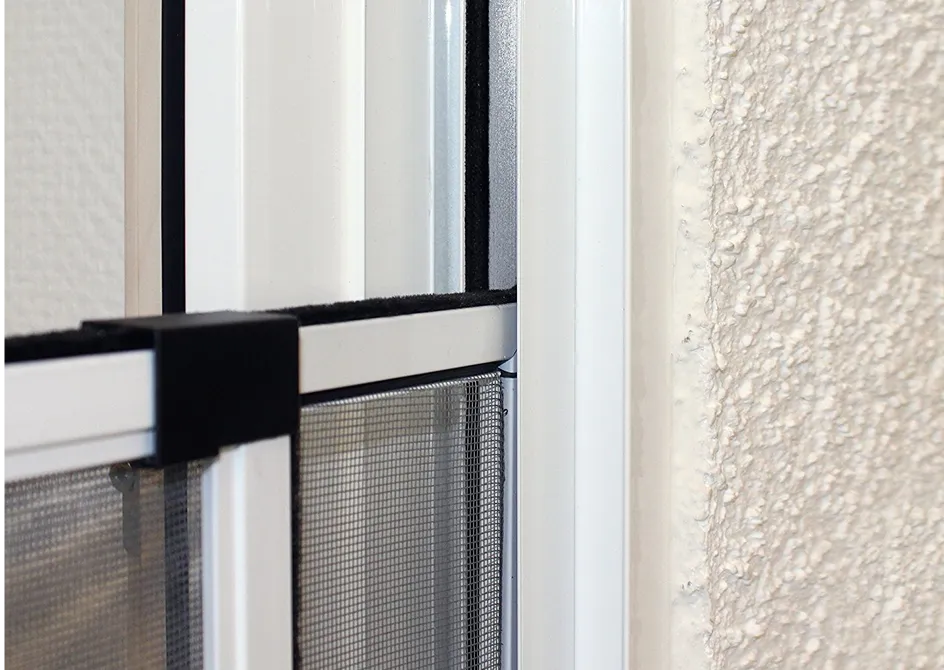
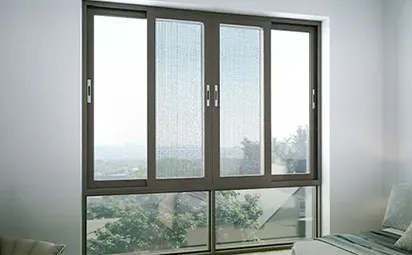
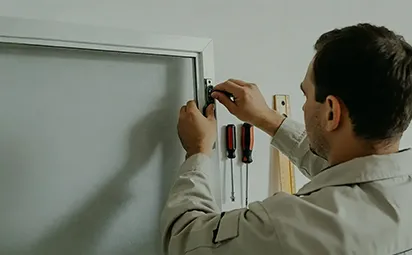
A sliding screen frame fitted against the window track and jamb.
Define the host window before choosing the screen
An insect screen sliding window is part of a window system, even when it is purchased as a separate accessory. The screen frame has to enter the intended channel, clear the sash and hardware, overlap the surrounding frame enough to block insects, and move without binding. A screen that matches the visible opening can still fail if the track depth, insertion method, or corner geometry is wrong.
For general terminology and common screen materials, see the independent window screen overview. OEM dimensions, tolerances, hardware, and performance still need to be controlled by the product drawing and approved sample.
Start with a dimensioned host-window drawing or a controlled physical sample. Mark the inside and outside orientation, screen travel direction, head and sill channels, jamb contact, locking or retention points, drainage paths, and any brush-pile sealing surfaces. For replacement or adjustable products, record the range of window constructions the product is expected to accommodate rather than using one market name such as “standard sliding window.”
The framed sliding screen window page shows the relevant product format. OEM approval should still be based on the buyer’s actual profile, dimensions, installation sequence, and sample test.
Insect screen sliding window specification table
Use the same fields in the request for quotation, engineering drawing, approved sample record, and incoming inspection plan. Values shown as “buyer and supplier to confirm” are intentionally not replaced with generic numbers.
Protection method, accessory control, labels, instructions and carton configuration
Pack-out sample and transport test plan
Smartex Screen supplies framed window screens with standard or customized dimensions, model-specific aluminum, plastic, or composite components, multiple compatible mesh choices, custom colors, and bulk, retail-ready, e-commerce, DIY-kit, or private-label packaging. The exact frame section, adjustment range, and tolerance are defined for the selected insect screen sliding window model.
Measure the track, overlap, and insertion path
A dependable measurement sheet distinguishes the visible opening from the manufacturing size. It should show where each dimension begins and ends. Include track width and depth at the head and sill, available insertion clearance, jamb condition, screen overlap, and the location of obstructions. Measure at multiple points when the host frame may be out of square.
Identify the exact channel intended for the screen and photograph the full window from both sides.
Record section dimensions at the head, sill, and both jambs, using the drawing datum agreed with the supplier.
Measure width at the top, center, and bottom; measure height at the left, center, and right.
Document sash handles, locks, drainage slots, weather seals, frame screws, and projections that affect screen travel.
Confirm how the screen is inserted and removed, including the clearance required to lift, tilt, compress, or adjust it.
State which measured value controls the manufacturing dimension and how out-of-square openings will be handled.
A common error is to send only the smallest opening dimension without the profile section. That may prevent an oversized screen, but it does not prove adequate overlap or retention. Another is to copy finished-screen dimensions from an existing sample whose frame is already bowed or worn. Measure the host window and the sample separately, then reconcile them in the approved drawing.
Adjustment range must preserve retention and sealing
An adjustable insect screen sliding window can reduce the number of retail sizes or accommodate variation in replacement work. The adjustment mechanism, however, has to remain stable across its complete claimed range. At minimum and maximum extension, check frame engagement, squareness, mesh condition, handle access, movement, and the gap at each edge.
Do not express the range only as a marketing size band. Define whether the stated dimensions refer to the screen frame, host opening, or usable fit range. Show the overlap between neighboring sizes in a retail assortment so that an installer is not forced to use a product at an unstable limit.
Do not transfer profile thickness, installation time, or standard-size claims from one screen format to another. Confirm these values against the exact insect screen sliding window product code, host-window interface, and approved drawing.
Choose mesh as part of the assembled screen
Mesh selection affects insect exclusion, airflow, visibility, handling, frame load, and product positioning. Fiberglass mesh is an option for general screening programs. Polyester can be considered when the product brief calls for a different handling or contact profile. High-visibility mesh addresses view requirements, while pet-resistant mesh may suit lower openings or households with repeated contact. Each choice needs a model-specific data sheet and sample.
Ask the supplier to state mesh count, yarn or wire construction, finished weight, color, coating where applicable, and the method used to secure the mesh in the frame. Verify that the fabric remains flat after the screen is adjusted and operated. Excess tension can distort a light frame; insufficient tension can leave waves, reduce perceived quality, or interfere with adjacent hardware.
For a broader material comparison, see the Smartex Screen guide to window screen and fly screen options. The final choice should be linked to a specific assembled-screen sample, not selected from mesh data alone.
Frame, corners, hardware, and finish need separate controls
The frame specification should identify the profile drawing, material, surface finish, color reference, corner construction, mesh-retention method, and any adjustable members. If rollers, glides, springs, handles, latches, end caps, or brush pile are used, put them on a controlled bill of materials. “Equivalent hardware” is not an adequate substitution rule unless its interface and performance criteria are defined.
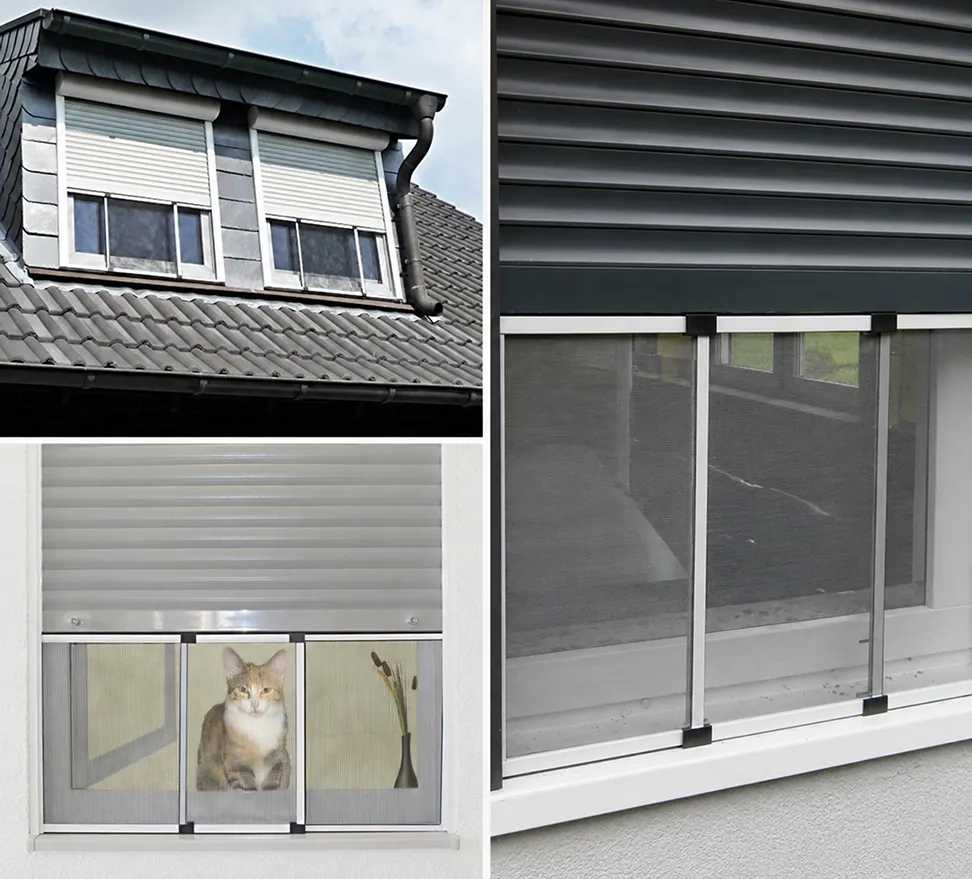
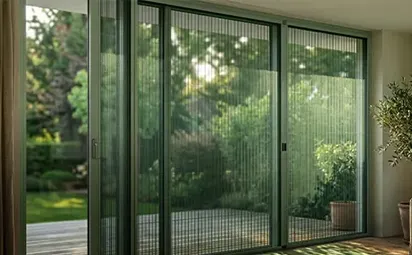
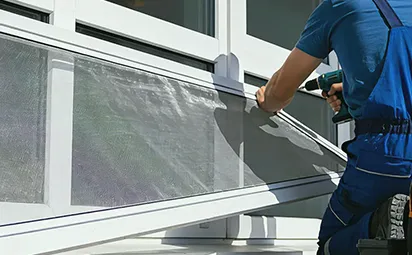
Different host windows require a matched screen profile, adjustment method, and installation detail.
Inspect corners for alignment, gaps, sharp edges, and visible finish damage. Check that handles can be reached without forcing the frame sideways. Any drainage path in the host window should remain functional. Where brush pile or another edge seal is specified, approve its material, exposed height, compression, location, and color rather than referring to it only as “standard.”
Set tolerances through fit and function testing
No single dimensional tolerance or operating-force limit fits every insect screen sliding window. The buyer and supplier should derive these controls from the host-window interface, production process, measurement capability, and functional sample. A tolerance that is easy to inspect but allows binding or loss of overlap is not fit for purpose.
Build the validation around real use:
Finished width, height, diagonals, frame straightness, and corner alignment
Insertion and removal using the approved method
Travel across the full intended opening without binding or unintended release
Rattle, edge gaps, sealing contact, and retention at minimum and maximum adjustment
Mesh flatness and frame distortion after operation
Hardware security and accessibility
Appearance under the agreed inspection lighting and distance
Approve a golden sample only after it has been fitted to the target window or an accurate fixture. Keep the drawing revision, component list, mesh code, color sample, packaging standard, and test record tied to that sample. The related guide on window screen replacement and smooth sliding provides additional installation context. Window screens are intended for insect control, not fall prevention; market-appropriate warnings and instructions should state that limitation.
Packaging is part of the OEM specification
Long, light frames can be damaged without obvious carton punctures. Packaging should prevent bowing, corner impact, surface abrasion, mesh snagging, loose accessories, and pressure from stacked cartons. The correct solution depends on whether screens ship assembled, semi-assembled, or as kits.
For retail and e-commerce programs, confirm barcode location, product name, size communication, orientation marks, hardware count, instruction language, warning text, private-label artwork, and carton dimensions. Instructions should use the same measurement references and adjustment limits as the engineering drawing. A vague size label can create customer returns even when the screen itself meets the factory specification.
Before mass production, inspect a complete pack-out sample and run the agreed handling or transport checks. Refit the unpacked screen to the fixture afterward. This catches frame deformation, displaced hardware, and mesh damage that a visual carton inspection may miss.
OEM development sequence
Send the host-window section, opening schedule, target market, mesh brief, installation method, and packaging channel.
Review the proposed screen profile, adjustment concept, hardware, mesh, and drawing datums.
Produce a functional sample and fit it to the target window or approved fixture.
Correct fit, movement, sealing, appearance, instructions, and packaging before freezing the drawing.
Approve the golden sample, component list, tolerances, inspection plan, artwork, and pack-out.
Verify pre-production units against the complete approval record, then maintain batch identification for repeat orders.
Smartex Screen supports product structure design, CAD and 3D development, prototypes, molds, customized profiles, samples, packaging, instructions, private labels, production, and quality-control coordination. Exact lead time, price, and order quantity depend on the product, tooling, materials, packaging, and sample-approval process. They should be confirmed in the project quotation rather than estimated in a general guide.
FAQ
What measurements are needed for a sliding window insect screen?
Provide width and height at multiple points, head and sill channel dimensions, jamb conditions, insertion clearance, sash overlap, obstructions, screen travel direction, and the drawing datum used for each value. Include profile sections and photographs.
How much adjustment should an adjustable sliding screen have?
There is no universal adjustment range. Define the minimum and maximum host openings, required frame engagement, overlap, retention, sealing, and stability. Test the complete insect screen sliding window at both ends and at the nominal setting.
Which mesh works best in a sliding window screen?
Choose by insect pressure, airflow, visibility, contact risk, frame capability, and target price position. Fiberglass, polyester, high-visibility, and pet-resistant options may be compatible, but the exact model should be approved in the assembled frame.
Can one screen size fit every sliding window?
No. Track geometry, channel depth, sash layout, frame section, insertion method, and opening size vary. An adjustable product can cover a defined range, but it still requires clear interface limits and correct consumer measurement instructions.
What should an OEM buyer approve before production?
Approve the drawing, host-window fit, profile and finish, mesh, hardware, tolerances, operation, edge sealing, instructions, packaging, labels, golden sample, and inspection plan. Record every approved component and revision.
Send the window interface, not just a size list
A useful RFQ includes the host-window profile, measurement references, screen movement, size schedule, adjustment logic, mesh requirements, finish, hardware, packaging channel, quantity, and destination market. Contact Smartex Screen to review a framed sliding window screen program and prepare a model-specific drawing and sample plan.
About the author: The Smartex Screen Technical and Product Team supports screen-fabric selection, finished screen-system development, material customization, sample preparation, prototype development, packaging, private-label production, quality control, and export coordination for global B2B customers.


















 14:34
14:34