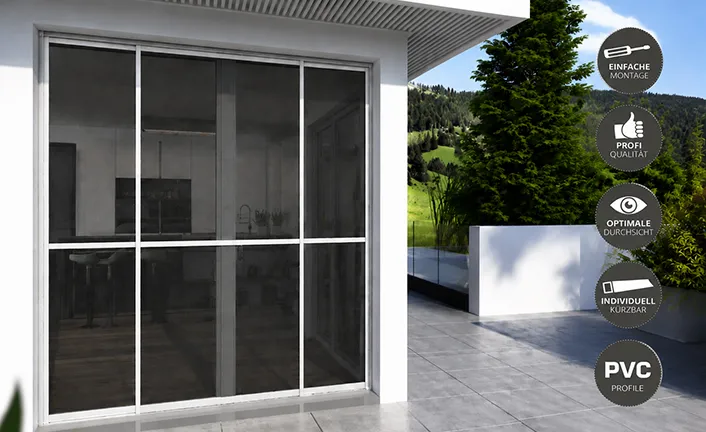
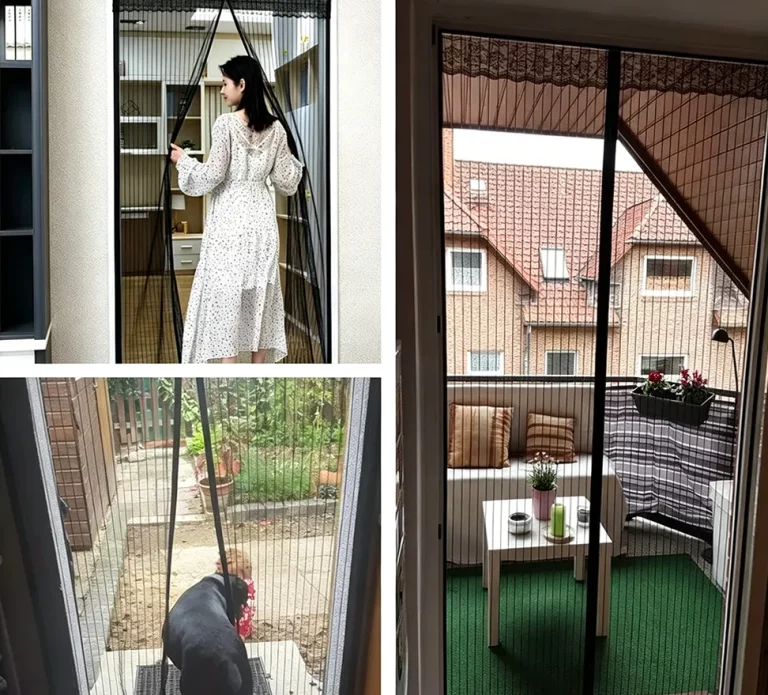
Explore more product categories covering outdoor enclosure, shading, door and window screening, and other solutions for different market and project needs.
Explore more product categories for outdoor enclosure, shading, screen doors, window screens, pergolas, and zip blind solutions for different market and project needs.
Smartex Screen Technical and Product Team | Insect Screen and Sun-Shading Product Development Team | Updated September 22, 2026
A window screen roll is bulk mesh supplied for cutting, splining, fabrication, or retail conversion. OEM buyers should approve the material, mesh count, yarn diameter, coating, fabric weight, usable width, roll length, color, tolerances, winding, labels, packaging, and inspection method before comparing quotations.
Standard fiberglass insect screen roll for window, door, and patio-screen fabrication.
Start with a measurable window screen roll specification
Names such as standard mesh, regular screen, high visibility, stiff screen, and heavy duty are useful product families, but they are not acceptance criteria. Two rolls sold under the same family name can differ in mesh count, yarn diameter, coating pickup, mass, stiffness, shade, edge quality, or winding. Those differences affect cutting yield, spline installation, finished-panel appearance, and repeat orders.
A purchase specification should connect every marketed attribute to a test or comparison. For example, define color by an approved swatch or color standard, not simply “black.” Define roll length by an agreed measurement method and permitted shortage. Define visibility with an approved installed sample rather than an unsupported adjective.
Specification item
What to state on the order
How to verify
Material and coating
Yarn or wire type, coating system, and approved construction
Supplier declaration, applicable test document, and retained sample
Mesh construction
Warp and weft count, yarn diameter, weave, and orientation
Count within a defined area and measure representative yarns
Fabric mass
Target g/m² and agreed tolerance
Condition and weigh specimens of known area
Roll dimensions
Usable width, nominal length, core, outside diameter, and splice limit
Measure width, reconcile length, and inspect winding
Appearance
Color reference, edge condition, allowable marks, and defect limits
Compare under agreed lighting and inspection distance
Pack and label
Wrap, end protection, pallet pattern, SKU, lot, size, and barcode
Approve a packed sample and packing-list format
Product reference: standard fiberglass insect screen roll
The Smartex Standard Fiberglass Insect Screen Roll provides a concrete starting point for a bulk-roll program. Its current product page identifies PVC-coated fiberglass yarn, an 18 × 16 mesh count, 0.011 inch / 0.28 mm thread diameter, and 115 ± 5 g/m² fabric weight. Published roll widths range from 0.4 m to 3.2 m, with mini rolls and 30 m, 183 m, 300 m, and 500 m length options.
These values apply to that product reference, not every fiberglass or functional mesh. Custom roll dimensions, fabric weights, colors, and packaging require a confirmed quotation and approved sample. Buyers sourcing another construction through the wider window screen mesh range should create a separate specification and item code.
Mesh count, yarn, coating, and weight work together
Mesh count describes openings per unit length in two directions. It does not, by itself, state the open area or handling behavior. Yarn diameter and coating change aperture, mass, stiffness, visibility, airflow, and resistance to deformation. A denser-looking sample may result from thicker coated yarn rather than a different count.
For OEM approval, identify which direction runs along the roll. Take count and diameter readings at several positions across the width and along the roll. A single measurement near one edge can miss weaving or coating variation. If a screen is intended for automated cutting or a roller system, include flatness and stiffness checks relevant to the process.
Compared with retail roll listings that emphasize only width and length, a factory specification must describe the fabric construction. Otherwise, a repeat order can match the carton while behaving differently on the cutting table.
Set tolerances around the fabrication process
The correct tolerance is one that protects panel yield and equipment operation. A width tolerance should account for the cutting plan and unusable edges. Weight and thickness tolerances should reflect the approved construction. Roll-length policy should say whether nominal length excludes leaders, damaged sections, or splices.
Usable width: measure between edges that can enter finished production, not the widest loose strand.
Skew and bow: define how far the weave or edge may deviate over a stated distance.
Splices: state whether they are prohibited, limited, marked, or deducted from usable length.
Winding: set limits for telescoping, loose layers, crushed cores, and exposed edges.
A common edge case is a roll that meets overall width but has damaged edges. It may pass a simple tape measurement yet reduce the available nesting width for panels. Acceptance should therefore cover usable width and edge condition together.
Choose roll width and length from the cutting plan
Wider or longer is not automatically more economical. The buyer should model panel sizes, cutting orientation, trim allowance, changeover time, lifting limits, rack dimensions, and machine capacity. A very long roll can reduce changeovers but increase handling risk and the amount affected if one roll has a defect.
List the finished panel sizes and expected order mix.
Add clamping, squaring, trim, and edge-loss allowances.
Compare nesting yield across candidate widths.
Check maximum roll mass, outside diameter, core size, and unwind direction against equipment.
Run a pilot conversion and record actual yield before locking the production roll format.
For retail mini rolls, the calculation changes. Shelf dimensions, parcel limits, consumer handling, fold or crease risk, barcode placement, and instruction space may matter more than factory changeover time.
Packaging must protect the roll and preserve traceability
Packaging is part of the product specification because pressure, moisture, abrasion, and poor pallet support can damage otherwise acceptable mesh. The required pack depends on roll diameter, mass, transport mode, warehouse stacking, destination climate, and whether the roll will be opened in a factory or displayed in a store.
Pack level
Control points
Individual roll
Core condition, protective wrap, end caps or edge protection, closure method, and label position
Carton or bundle
Quantity, size mix, abrasion separation, orientation, gross weight, and handling marks
Do not let stretch film press directly against an unprotected mesh edge. Confirm that cores and end protection support the winding without crushing it. For mixed-container orders, mark every roll and outer pack so warehouse staff can separate widths, lengths, colors, and lots without opening the wrap.
Labels and documents for an OEM program
The minimum roll label normally includes product name, item code, material, mesh construction, color, width, nominal length, quantity unit, lot or production reference, and supplier identification. Retail programs may also require a barcode, destination-language instructions, importer details, recycling marks, and approved claims.
Keep technical documents tied to the correct item code and revision. The European Commission’s RoHS overview explains the restricted-substance framework for electrical and electronic equipment, but it does not prove that a window screen roll falls within scope or complies. Obtain model-specific material declarations or test documents only where the destination and product require them. A certificate for one fabric must not be applied to every mesh.
The general fiberglass reference describes the material category. Commercial acceptance, however, must use the selected product’s approved specification, current documents, and batch controls.
Sampling and incoming quality checks
Approve a production-representative roll, not only a hand sample. A small swatch cannot demonstrate winding, roll length, edge condition, telescoping, splice control, label accuracy, or pallet protection. Retain a signed sample and specification revision that both parties can reference during repeat orders.
Incoming inspection should separate identity checks, dimensional checks, appearance checks, and performance checks. Record lot numbers before unwrapping. Sample rolls from more than one pallet position, then measure construction and dimensions using agreed methods. Convert material on the actual cutting and splining process when production behavior is a critical requirement.
Useful records include roll-level measurements, defect photographs, disposition decisions, and traceability from finished panels back to incoming lots. The related fiberglass screen wholesale specification guide provides additional material-selection checks for buyers comparing fiberglass constructions.
Price, MOQ, and order planning
Smartex does not publish a universal price for window screen rolls. A quotation depends on the material, mesh count, yarn and coating, weight, width, length, color, packaging, labeling, order volume, mixed-SKU plan, and shipping terms. Screen-mesh MOQ examples shown in company materials are general guidance only; the exact requirement must be confirmed for the selected item.
Before requesting a quotation, send the application, target market, annual demand, trial quantity, specification table, desired widths and lengths, colors, packaging format, labels, destination, and inspection requirements. This gives the supplier enough information to quote the same product the buyer intends to approve.
Usable width, nominal length, core, winding direction, outside diameter, roll mass, splices, edges, skew, bow, and defect limits.
Individual wrap, end protection, carton or bundle, pallet pattern, stack limits, container plan, and moisture controls.
Roll label, barcode, lot reference, packing list, technical documents, revision control, inspection plan, and retained sample.
Trial quantity, production quantity, quotation basis, MOQ, lead time, shipping terms, destination, and claim boundaries.
FAQ
What mesh count should a standard fiberglass window screen roll use?
It depends on the approved product and application. The referenced Smartex standard fiberglass roll uses an 18 × 16 construction, but other insect, visibility, pool, pet, or roller-screen products require their own specification.
Should buyers order the longest available roll?
Not automatically. Balance changeover reduction against roll mass, equipment limits, defect exposure, warehouse handling, and actual cutting yield.
How should roll width be accepted?
Define the usable width, measurement method, tolerance, edge condition, and sampling points. The widest loose strand is not a reliable production-width measure.
Can a material certificate cover every screen roll?
No. Confirm the exact product, model, tested material, issuing organization, report number, validity, destination, and scope before using a compliance claim.
What should be approved before mass production?
Approve the specification, production-representative roll, converted panel result, color, winding, label, individual pack, pallet arrangement, documents, and inspection method.
About the author: The Smartex Screen Technical and Product Team supports screen-fabric selection, material customization, sample preparation, packaging design, private-label production, quality control, and export coordination for global B2B buyers.



















 10:17
10:17