A manual store à fermeture éclair suits smaller openings, retail and DIY channels, and sites without power at the head box. A motorized zip blind suits wide or high openings, pergola enclosures, and projects where an electrician is already on site. For a distributor range, the practical answer is often both, split by opening size and sales channel.
Why Zip Blind Advice Differs From Ordinary Blind Advice
Most manual-versus-motorized guides in search results are written about indoor roller blinds. A zip blind behaves differently. Its fabric edges carry a zip-style strip that runs inside two side guides, so the fabric is held along both edges instead of hanging free.
That retention is what gives a zip blind its value outdoors: the fabric stays in the track for shading, privacy and insect control, and the guides support wind management. It also means the operator, whether a hand mechanism or a motor, is moving fabric that is held in tension inside the guides, not just lifting a free-hanging panel. Compared with common indoor roller blinds, the size at which hand operation becomes uncomfortable arrives sooner, and rules of thumb from indoor blind articles do not transfer cleanly.
Keep that in mind when a customer quotes advice they read about living-room blinds.

Manual vs Motorized Zip Blind: Side-by-Side
| Facteur |
Manual zip blind |
Motorized zip blind |
| Manœuvre |
By hand. The exact mechanism depends on the model and should be confirmed for the selected product |
Electric motor in the head box. Control method depends on the motor and control system chosen |
| Power at the opening |
Non obligatoire |
Power supply has to be planned at the head box before installation |
| Dimensions de l'ouverture |
Limited by the effort needed to raise and lower the fabric. Some New Zealand and Australian dealers note manual zip-track blinds are typically specified up to about 4 m wide |
Better suited to large and high openings. Maximum size is still model-specific |
| Pose |
Installer only |
Installer, plus electrical connection carried out according to local wiring rules |
| Wear points |
Hand mechanism, fabric, zip edge, side guides |
All of the manual list, plus motor, limit settings, controls and wiring |
| Field service |
Mechanism parts and fabric replacement |
Adds motor diagnosis, limit resetting and spare-motor stocking |
| Compliance paperwork |
Documents for fabric and components as applicable |
Adds documentation for the motor and controls. For the EU market, CE conformity requirements apply where relevant |
| Sales channel fit |
DIY stores, e-commerce, retail kits, small residential jobs |
Project contractors, pergola builders, hospitality, higher-end residential |
| Packaging and shipping |
No electrical parts. Easier to pack in retail-ready format |
Electrical components, controls and local-language instructions travel with each unit |
| Prix |
Quotation-based. No motor or controls in the bill of materials |
Quotation-based. Motor and control choice moves the price noticeably |
Your own cut-off depends on fabric weight, drop height and the specific model’s mechanism.
When a Manual Zip Blind Is the Better Call
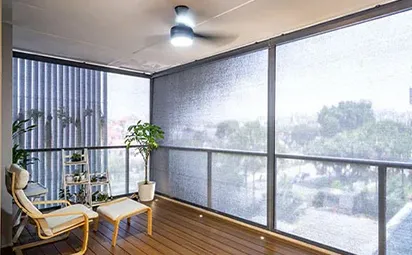
1.Smaller openings. Windows, balcony sections and narrow patio openings where one person can raise the blind without strain.
2.No power at the head box. Retrofits on finished walls, rental properties, or sites where running cable would mean opening up cladding or ceilings.
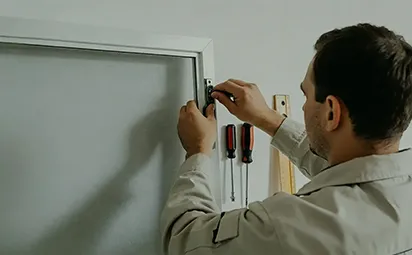
3.DIY, retail and e-commerce channels. The end customer can install without booking an electrician, and a product with no electrical parts is simpler to pack in retail-ready format with multi-language instructions.
4.Price-led product lines. Where the line competes on entry price, removing the motor and controls removes the largest variable in the cost.
Where manual falls short: on wide or tall openings the operating effort becomes the complaint, especially for users with limited reach or strength, or when the blind is mounted high on a pergola. Ask at quotation stage whether the selected model’s head box can accept a motor later. If it cannot, a future upgrade means replacing more than the operator.

When Motorized Earns Its Extra Cost
Motorized Zip operation pays off where hand operation is awkward or where several blinds serve one space:
- Large and high openings, where a manual mechanism would be slow or tiring to operate.
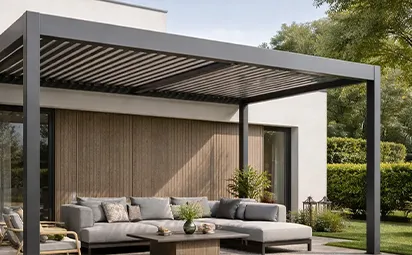
- Pergola enclosures. Aluminum pergolas can be specified with zip blind integration on the sides. If the pergola itself is motorized, power is already being planned for the structure, so adding motorized blinds costs less in wiring than it would on a bare wall.
- Hospitality and commercial outdoor areas, where staff open and close several blinds every day.
- Hard-to-reach openings over planters, balustrades or steps.
Where motorized falls short: the electrical connection has to be planned before walls, soffits or pergola beams are closed up. The installation needs a person qualified for electrical work under local rules. There are more parts that can fail, and if a motor fails with the blind lowered, the opening stays covered until someone services it. For export lines, you also need to keep electrical documentation matched to each motor model and destination market.
Two Mistakes We See in Zip Blind Specifications
Deciding the operator after the site survey. Power at the head box is a construction decision, not a product option. If the customer chooses motorized after the cladding or pergola roof is finished, the cable route may no longer exist. Settle the operation type at the same time as the opening measurements.
Assuming motorization improves wind performance. It does not. Wind behaviour comes from the fabric, the zip edge and the side guides. No zip blind is completely windproof. A motorized blind can actually be left lowered by a schedule or remote while nobody is on site, so agree with the installer how the blinds will be raised when strong wind is forecast.
How to Split a Range Between Manual and Motorized SKUs
For importers and distributors building a zip blind line, this sequence keeps the range manageable:
- Group your openings by size. Pull widths and drops from your past quotations or dealer enquiries and sort them into bands. You are done when every recent enquiry sits in one band.
- Set a width cut-off for manual. Pick the width above which you quote motorized only. Check it against the selected model’s limits instead of copying a dealer figure from another market.
- Assign channels to each version. Manual for retail, DIY and e-commerce; motorized for project and pergola work. Mark any channel that needs both.
- Share fabric and colours across both versions where the model allows. Fabric colour and frame and guide colour can be standard or customized, so a common colour card cuts the number of fabric references your dealers hold.
- Choose the motor and control system per destination market. Collect the electrical documents for that exact motor before the first order ships, including CE conformity documentation for EU sales where applicable.
- Test with samples and a trial order of each version. Check operating effort on your largest manual size and the limit settings on the motorized version before committing to volume.
- Fix packaging per channel. Retail-ready cartons, barcodes and multi-language manuals for the manual line; project packaging with installation information for the motorized line.
Smartex Screen Zip Blind Specifications
The table lists what we can confirm across our zip blind range. Values that depend on the model are flagged as such.
| Paramètre |
Smartex Screen zip blind range |
| Types de produits |
Store zip, zipscreen, store à coulisse zip, store screen zip d'extérieur, stores zip pour terrasse, balcon et pergola |
| Manœuvre |
Manual or motorized, depending on the model |
| Toile |
Toile d'ombrage extérieure spécifique au produit |
| Dimensions |
Sur mesure, adaptée à l'ouverture et au projet |
| Fabric colour |
Standard ou sur mesure |
| Frame and guide colour |
Standard ou sur mesure |
| Emplacements d'installation |
Fenêtres, patios, balcons, pergolas, fermetures extérieures, ouvertures de projet |
| Fonctions |
Protection solaire, réduction de l'éblouissement, intimité, protection contre les insectes, gestion du vent |
| Intégration d'une pergola |
Optional zip blind integration on our aluminum pergolas where specified |
| Private label support |
Custom packaging, barcodes, multi-language instructions |
Our side of the work covers sample production, trial orders, private-label packaging, quality inspection and export coordination, so a distributor can source both the manual and motorized versions of a line from one manufacturing partner.
To learn more, please contact us.
FAQ
Can a manual zip blind be upgraded to motorized later?
It depends on the model. Some head boxes are built for one operator type only. Ask whether the selected model accepts a motor before you stock the manual version, and plan power at the head box if an upgrade is likely.
How wide can a manual zip blind be?
There is no single limit. Some NZ and Australian dealers indicate about 4 m wide as a typical upper specification, but the real limit depends on fabric, drop and the model’s mechanism. We confirm it for each model at quotation.
Does a motorized zip blind need an electrician?
Mains-powered motors need an electrical connection carried out according to local wiring rules, which in many markets means a qualified electrician. Check the regulations in the market where the blinds will be installed.
How much does a manual or motorized zip blind cost?
Pricing is quotation-based. It depends on the model, fabric, finished size, frame and guide colour, motor and control choice, packaging, customization level, order quantity, shipping terms and destination market. Send opening sizes and quantities for a quote.
What is the MOQ for zip blinds?
We do not publish a fixed MOQ for zip blinds. It varies by model, fabric, colour, packaging and customization, and is confirmed with the quotation.
What is the lead time?
Our general guidance for standard production is approximately 30 to 45 days. Simple customization takes approximately 6 to 8 weeks, and full ODM development approximately 16 to 20 weeks. Actual schedules are confirmed per order.
Are zip blinds windproof?
No. Zip blinds support wind management because the fabric stays in the side guides, but no zip blind is completely windproof, manual or motorized. Raise the blinds when strong wind is expected.



















 08:49
