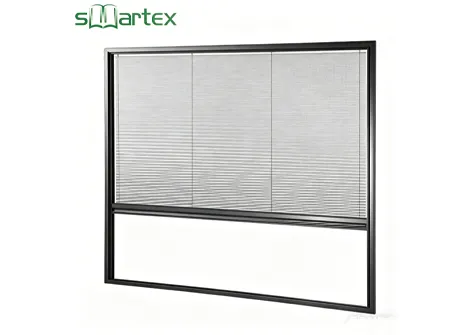
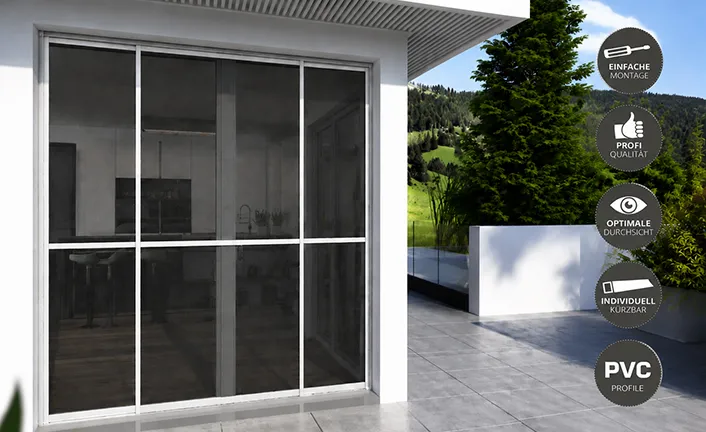
Open windows bring in fresh air, but they can also invite flies, mosquitoes, gnats, and spiders. A poor-fitting product leaves gaps, tears early, or blocks too much light. The solution is to match the right insect barrier to the opening, user, climate, and sales channel.
The best window screen is the one that fits the window type, seals the full opening, allows useful airflow, and matches how often the user needs access. Choose magnetic or adhesive products for simple DIY use, fixed frames for stability, roller systems for compact storage, pleated systems for flexible control, and stronger materials for pets or large openings.
A good insect screen must do more than cover a hole. It should keep insects outside while allowing fresh air and daylight to pass through. The frame must sit flat. The corners must stay closed. The material should not sag after a few weeks.
For a retailer or distributor, the product also needs:
- Clear sizing
- Simple instructions
- Safe packaging
- Consistent colors
- Reliable accessories
- Stable quality between production batches
Public-health guidance supports the basic purpose of these products. The CDC recommends using screens on windows and doors and repairing holes to help keep mosquitoes outdoors. The U.S. EPA also explains that open windows can support natural ventilation. A properly fitted barrier allows people to enjoy this ventilation with less risk of a pest entering.
Before choosing a product, ask seven practical questions:
- What kind of window or door will receive it?
- Is drilling allowed?
- How much frame clearance is available?
- Must the user open the product every day?
- Which insects are common in the local market?
- Are children or pets likely to touch it?
These questions matter more than a long list of marketing claims.
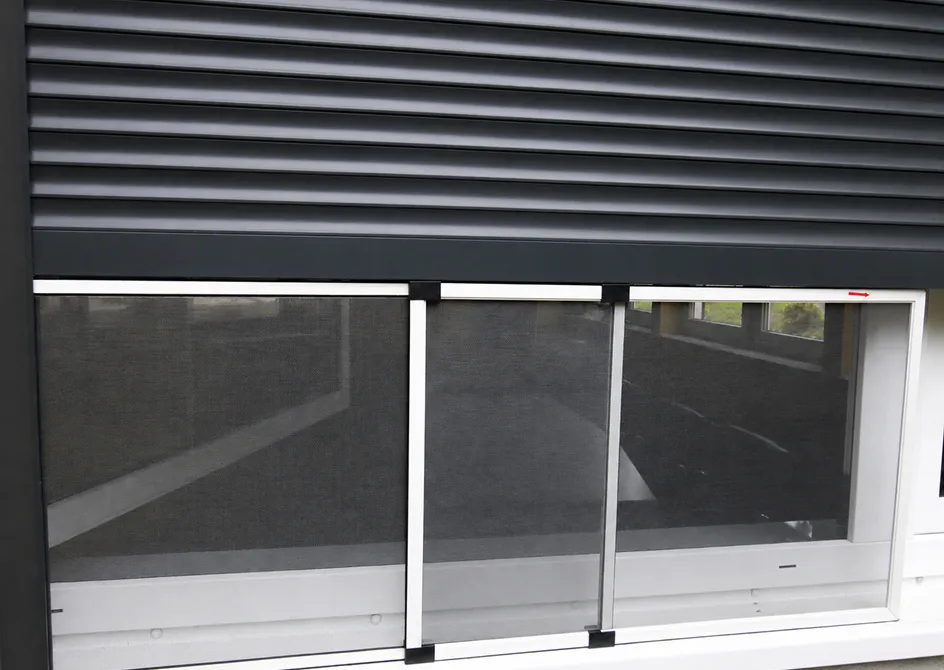
Which Screen Fits Each Window Opening?
Start with the opening, not the material.
A casement window swings inward or outward. A sliding window moves sideways. An awning window opens from the bottom. A roof window sits on a slope. Each style creates different requirements for access, sealing, frame depth, and installation.
| Window or Opening |
Practical Screen Option |
Main Reason |
| Standard Casement |
Magnetic, fixed-frame, roller, or pleated unit |
Several mounting methods are possible |
| Sliding Window |
Magnetic or adjustable frame |
Easy fit around moving panels |
| Awning Window |
Slim magnetic or custom fixed frame |
Limited installation clearance |
| Roller-Shutter Window |
Ultra-slim magnetic or flat aluminium frame |
Must fit behind the shutter |
| Skylight |
Pleated product or zipper net |
Suitable for sloped openings |
| Floor-to-Ceiling Windows |
Large custom system |
Requires stronger framing and accurate sizing |
| Balcony Door |
Door-specific retractable or magnetic product |
Frequent walk-through access |
| Patio Door |
Pleated, sliding, or retractable system |
Suitable for large |
A screen window that works in a bedroom may be unsuitable for a skylight. A simple mosquito net can meet a temporary need, while a framed product normally creates a neater long-term finish.
For a screen for doors, the opening direction matters even more. Buyers must consider how often people walk through the opening, whether children use it, and whether the product needs a magnetic return, sliding action, or retractable cassette.
As a manufacturer, we normally ask buyers to provide:
- Clear opening width and height
- Window-frame photographs
- Opening direction
- Available mounting depth
- Handle and hinge positions
- Preferred installation method
- Finished-product or local-assembly requirements
This simple review reduces sample errors and makes custom window screens easier to develop.
Is a Magnetic Fly Screen Better Than a Self-Adhesive Mosquito Net?
A magnetic fly screen uses a magnetic closure or removable magnetic frame around the window opening. It can be removed for cleaning and placed back into position. Some versions swing open, while others lift away as one complete panel.
This format works well for:
- Apartments
- Rental homes
- DIY retail chains
- Hardware stores
- Supermarkets
- E-commerce platforms
- Private-label brands
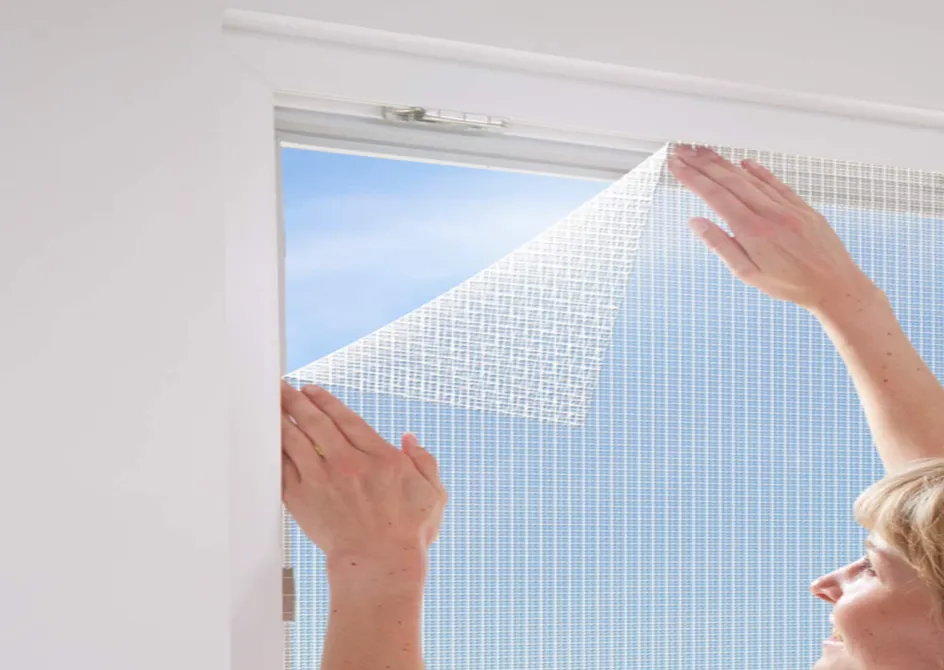
A frameless mosquito net is even simpler. The end user cuts the mesh fabric and attaches it to self-adhesive hook-and-loop strips.
Official tesa insect-protection guidance describes fly screens that use adhesive strips and removable fixing systems. Its premium product information also explains that the net can be cut to size, removed, washed, and stored between seasons.
Use the term tesa carefully. It is a brand name, not a general name for every adhesive strip. When a kit does not contain branded tape, the correct wording is usually:
- Self-adhesive hook-and-loop tape
- Fastening tape
- Adhesive fixing strip
- Removable mounting tape
- Loop tapes
Clear wording prevents false brand claims and tells the customer exactly what is included.
A magnetic model normally offers a cleaner outline and better repeated access. An adhesive net costs less and fits into a smaller retail box. Neither option is always better.
Choose according to:
- Target retail price
- Expected product life
- Frequency of window access
- Frame surface
- Installation skill
- Seasonal removal
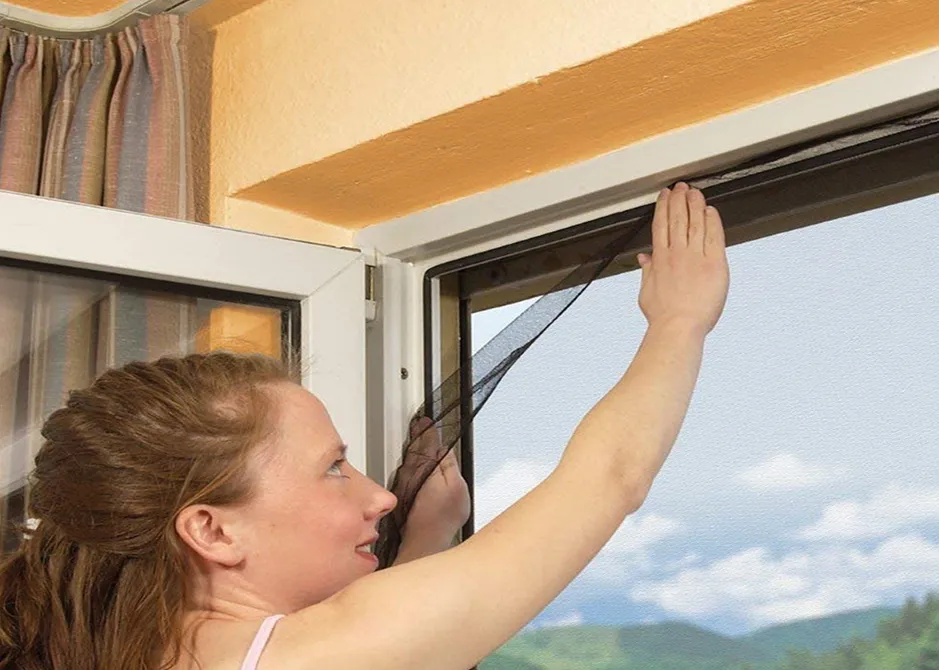
Which Mesh Is Best: Fiberglass, Polyester, Pet Proof, or Stainless Steel?
Material selection affects strength, visibility, airflow, handling, and price.
Standard fiberglass is flexible, light, and widely used in residential products. The British spelling fibreglass is common in the United Kingdom and some European markets, so both terms may appear naturally in product content.
A charcoal fiberglass surface often looks less noticeable than a bright material. For this reason, charcoal fiberglass mesh is widely considered for normal residential windows where outward visibility matters.
Polyester works well when the product needs:
- A softer fabric
- Pleated construction
- Better resistance to repeated folding
- Higher tear resistance
- Flexible DIY handling
A pet proof option normally uses stronger yarn, a heavier coating, or a denser material to resist contact with claws. However, the material alone is not enough. The screen frame, corners, spline, magnetic strips, and mounting points must also remain secure.
Stainless steel mesh and other wire mesh products provide a firmer metal barrier. They may suit premium, commercial, high-strength, or special residential applications. They also require more careful cutting, safe edge treatment, and stronger framing.
When Should You Choose an Adjustable Window Screen or Fixed Frame?
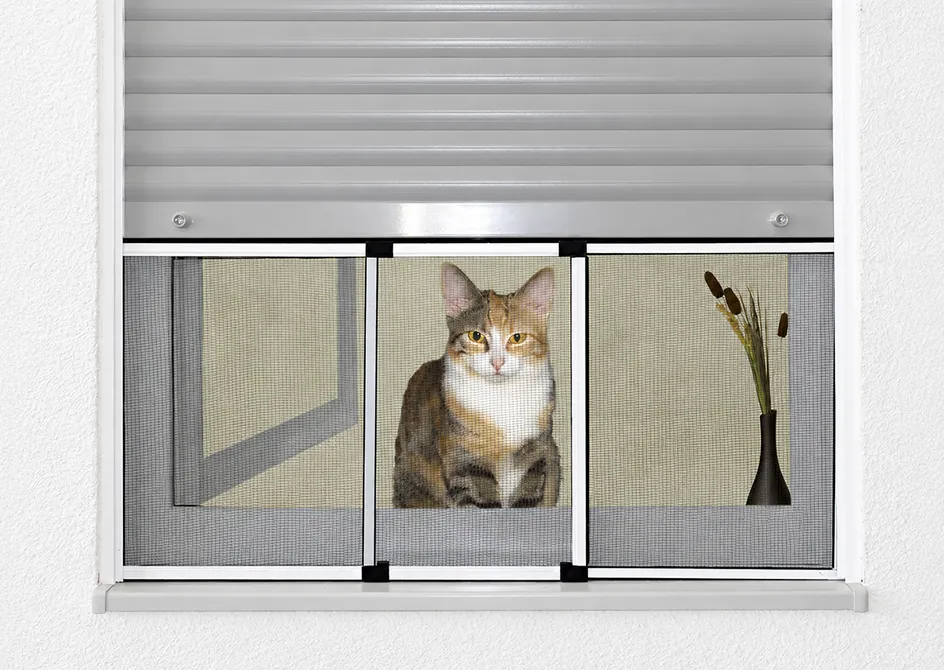
An adjustable window screen expands to fit a range of widths. It can work well with double-hung windows, temporary installations, seasonal use, and retail programs that need fewer size options.
A diy adjustable product can reduce the need for:
- Cutting
- Drilling
- Measuring several profile parts
- Corner assembly
- Professional installation
Some consumers search for a marvin adjustable window screen, but a brand-specific search phrase should not be used as a generic product name. Distributors should describe the structure and sizing range accurately instead.
A fixed screen frame creates a cleaner fit and more stable long-term position. It may use an aluminium frame, molded corners, brackets, clips, hooks, or spline.
A white frame matches many common PVC windows. Brown, gray, black, and wood-look finishes may suit other local markets.
For example, the Smartex SMT-W-002 kit is presented with:
- A powder-coated frame
- 1mm profile thickness
- PVC-coated glass-fiber netting
- Adjustable no-drill brackets
- A published maximum size of 1.6 × 1.6 m
These specifications apply to the SMT-W-002 model rather than every fixed product.
Fixed systems are a strong choice for replacement screens, project supply, and local fabrication. Adjustable products are often easier for mass retail and e-commerce.
When Do You Need Window Screen Repair or Replacement?
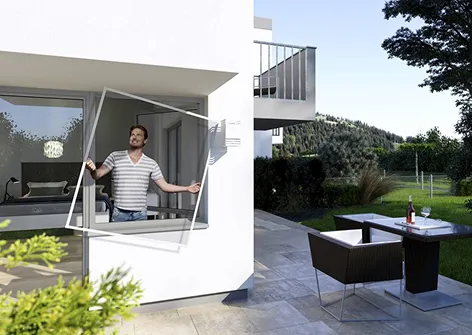
Window screen repair should begin with a simple inspection.
A small clean tear may accept repair tape. Loose spline may only need to be refitted. A loose magnetic strip may need surface cleaning and new adhesive. A bent profile or broken corner may require a full window screen replacement.
Replacement window screens are normally the better choice when:
- The material has become brittle
- Several holes are present
- The frame is bent
- Corners are broken
- The material has pulled away from the profile
- The product no longer seals the opening
- The coating has degraded
- The existing design no longer fits the window
Keep the old product as a reference. Note the profile shape, material thickness, corner construction, and mounting method.
FAQ:
What is the easiest fly screen to install?
A cut-to-size adhesive net is usually the simplest. It is easily attached with fastening tape and needs few tools.
A magnetic product is also simple and provides better repeated access. The easiest option depends on whether the user needs to open the panel regularly.
Can I install an insect screen without drilling?
Yes. Adhesive nets, magnetic frames, adjustable inserts, and some bracket-mounted frames can be installed without drilling.
Check the frame surface, available depth, product weight, and local safety requirements before choosing this installation method.
Is fine mesh always better?
No. Fine material can stop smaller insects, but it may reduce airflow and visibility.
Choose it when very small insects are a real local problem. Use a more open construction when ventilation and outward view are the main priorities.
What is the best screen for a home with pets?
A stronger polyester or metal option is often more suitable than a light standard product.
The attachment system must also be strong. Even durable material can fail when the corners, spline, magnetic strips, or frame are weak.
Can one product fit every window?
No. Window operation, handles, hinges, shutters, frame depth, and opening dimensions all affect the fit.
Magnetic products can cover many common applications, but roof windows, large openings, unusual frames, and commercial projects may need a special design.


















 17:23
17:23