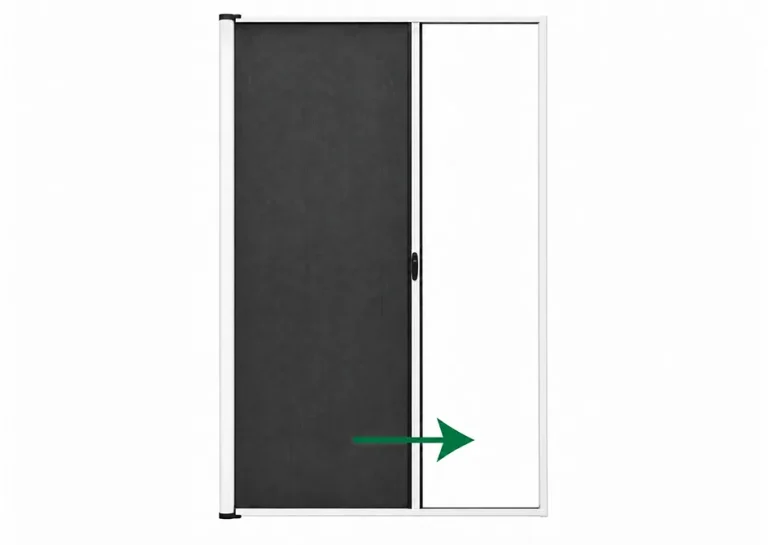
Choose pool cage screen by position, not by label. Use 17×14 or 18×14 on walls where airflow and view matter, 20×20 no-see-um where small insects are the complaint, heavier fabric on roof and door zones, and 80% or 90% solar screen only on sun-facing panels. Read fabric weight per model.
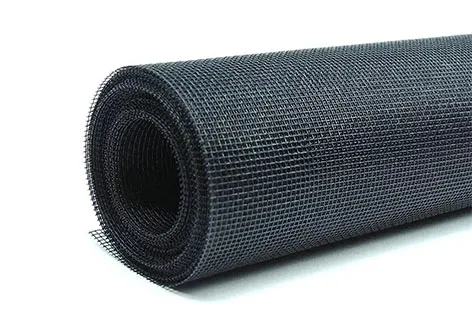
There is no single best screen for a pool enclosure
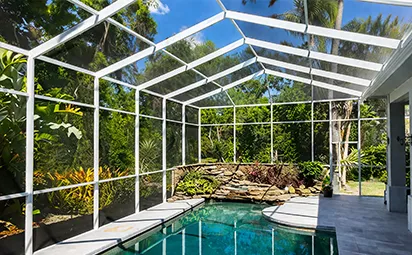
A pool cage is several jobs under one frame. The roof takes direct sun and falling debris. Wall panels decide the view and the breeze. Doors and lower panels get bumped by people, pets and pool equipment. One mesh seldom handles all three well, which is why “the best screen for a pool enclosure” gets a different answer from every installer you ask.
Pool and patio mesh in our range: models and numbers
Smartex Screen was established in 2005 and weaves and coats its own screen fabric. The pool and patio line uses fiberglass, polyester or vinyl-coated polyester, depending on the model. The table lists publicly displayed examples. Each row is one product, and none of the figures applies to the line as a whole.
| Model example |
Mesh count |
Displayed weight |
Notes |
| Pool screen, standard and heavy-duty versions |
17×14 |
Confirm per version |
General-purpose count for large openings |
| Enhanced-visibility heavy-duty |
17×14 |
approx. 133 g/m² |
Lightest displayed example in the line |
| Pool screen |
18×14 |
Confirm per model |
Close to 17×14 in opening shape |
| Heavy-duty polyester screen |
20×17 |
Confirm per model |
Finer than 17×14, rectangular opening |
| No-see-um screen |
20×20 |
approx. 215 g/m² |
Displayed wire diameter approx. 0.013 inch |
| Enhanced-visibility heavy-duty |
20×20 |
approx. 176 g/m² |
Square opening, lighter than the other 20×20 examples |
| Heavy-duty screen |
20×20 |
approx. 305 g/m² |
Heaviest displayed example in the line |
| Pet-resistant pool screen |
Model-specific |
Model-specific |
Strength data comes from the model’s test report |
| Solar screen, 80% and 90% options |
Model-specific |
Model-specific |
Confirm what the percentage measures |
Which mesh goes where? A zone-by-zone map
| Zone |
What it faces |
Mesh to shortlist |
Check before ordering |
| Roof panels |
Direct sun, debris |
20×20 heavy-duty (approx. 305 g/m²), 20×17 heavy-duty polyester |
Weathering test report for that exact model |
| Side walls |
Breeze and sightlines |
17×14 or 18×14; 17×14 enhanced-visibility (approx. 133 g/m²) |
Weight and open-area data for the model |
| Doors, lower panels, pet areas |
Contact, claws, equipment |
Pet-resistant pool screen; heavy-duty options |
Test report before repeating any strength claim |
| Sun-facing panels |
Glare and heat load |
80% or 90% solar screen |
What the percentage means and how it was tested |
| Zones where tiny insects are the complaint |
No-see-ums |
20×20 no-see-um (approx. 215 g/m²) |
Airflow and view trade-off for the model |
Nothing stops a specifier from using different meshes on one enclosure. Each is a separate roll, so the order simply splits by zone. The roof row is where fabric weight deserves the closest look, because that panel carries the most sun and debris load; the table is a starting shortlist, and the spec sheet for the model decides.
17×14 against 20×20: what you give up
The first number is threads per inch in one direction and the second is threads per inch in the other. A 17×14 mesh therefore has a rectangular opening, and a 20×20 mesh has a square, smaller one.
The smaller opening is the reason no-see-um screen exists: it is the option for buyers whose complaint is tiny insects getting through. The cost is that more threads per inch leave less open area, so airflow and view drop compared with 17×14 or 18×14 of similar construction. No single percentage applies to every model, so ask for open-area data on the specific pair you are comparing.
Which way to lean depends on the complaint. If the complaint is no-see-ums, a 17×14 wall panel will not fix it. If the complaint is a stuffy enclosure, putting 20×20 on every panel will make it worse. Mixing counts by zone avoids both.

Mesh count does not tell you the fabric weight
Three 20×20 products in our displayed examples weigh approximately 176, 215 and 305 g/m². That is a spread of roughly 130 g/m² at the same mesh count. A buyer comparing “20×20” quotes line by line may be comparing three different fabrics.
A usable quote comparison lists four items per line: mesh count, fabric weight, material and roll size. Weight is also not a strength rating.
Where 80% and 90% solar screen belongs
Solar screen is offered in 80% and 90% options. It belongs on specific panels, usually the ones that face the afternoon sun, rather than across the whole cage. The trade-off is the one you would expect: a screen made to cut solar load also cuts light and view, so a full-cage installation changes how the enclosure feels. Ask the supplier what the percentage refers to and what test basis stands behind it before you put the number in a catalog.

Six steps to specify a pool cage screen order
- Split a typical enclosure into zones: roof, walls, doors and lower panels, sun-facing panels.
- Shortlist one mesh per zone from the tables above, written as count, weight and material.
- Request the spec sheet for each model. For any claim you plan to repeat, such as Florida Building Code-related references, GREENGUARD Gold, QUV weathering tests, REACH, RoHS or CE, request the report itself and read which exact model it covers, who issued it, its number and whether it is still valid. Our catalog references these for parts of the pool-screen portfolio, and scope is confirmed model by model.
- Order samples. Some products and customized samples carry a sample fee, with the FAQ referencing approximately USD 50 to 200. That figure is sample policy and not a product price.
- Confirm roll width and length, which can be customized, and the MOQ. A publicly presented example for screen mesh is approximately 5,000 m², and it varies by material, model, color, packaging and customization.
- Confirm lead time. Website guidance puts standard production at approximately 30 to 45 days and simple customization at approximately 6 to 8 weeks, to be confirmed per order.
Pricing is quotation-based. Mesh count, fabric weight, roll width and length, color, packaging, customization level, order quantity, shipping terms and destination market all move the number.
FAQ
What mesh count is used for a pool cage?
In our pool and patio range, 17×14 and 18×14 are the general-purpose counts for large openings. 20×17 and 20×20 are finer options, with 20×20 no-see-um offered for small-insect protection.
Can one enclosure use more than one mesh?
Yes. Each mesh is a separate roll, so the order splits by zone. Typical splits are heavier fabric on the roof, a lighter or enhanced-visibility mesh on the walls, and solar screen on sun-facing panels.
Does a higher mesh count mean a stronger fabric?
No. Three 20×20 examples in our range sit at roughly 176, 215 and 305 g/m². Count describes the opening, while weight and material describe the fabric. Strength claims need a test report for the specific model.
Is 80% or 90% solar screen right for the whole cage?
It is specified for particular panels. Check what the percentage measures and the test basis, then decide how much light and view you are willing to trade away on each panel.
What does pool cage screen cost per roll?
Pricing is quotation-based and depends on mesh count, fabric weight, roll size, color, packaging, customization, quantity, shipping terms and destination. We do not publish a price range.
Can you customize mesh count and weight for private label?
Custom mesh count, weight, stiffness, roll dimensions, packaging, barcodes and multi-language instructions are part of our OEM and ODM scope. Website guidance for development runs approximately 6 to 8 weeks for simple customization, 10 to 14 for moderate development and 16 to 20 for full ODM, all confirmed per project.



















 08:57