Window screen mesh is the roll-level insect-screen fabric behind a finished window screen — sold as fiberglass, polyester, or vinyl-coated material in a defined weight, mesh count, and roll width, before anyone cuts it to a window frame. For an importer or hardware chain, the buying decision happens at the roll: material, mesh count logic, stiffness, and roll dimensions.
What “Window Screen Mesh” Actually Refers To
The term covers two distinct commercial products that get conflated in consumer content:
1.Bulk roll mesh — fabric sold by the roll, in custom widths and lengths, meant to be cut down by a distributor, hardware chain, or fabricator into finished screens, DIY repair kits, or retail-packaged panels.
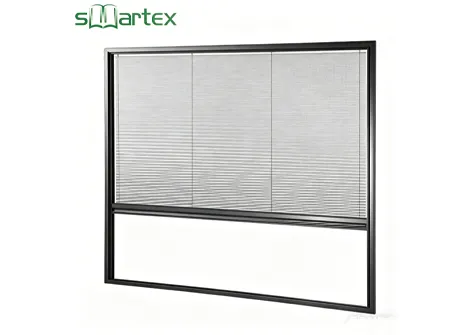
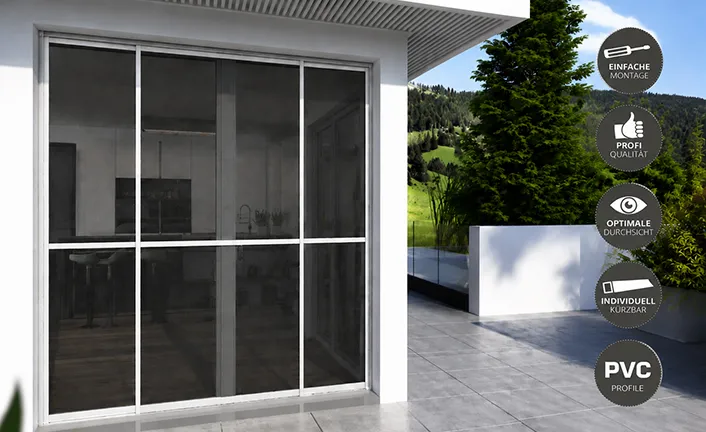
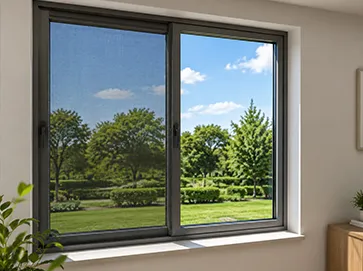
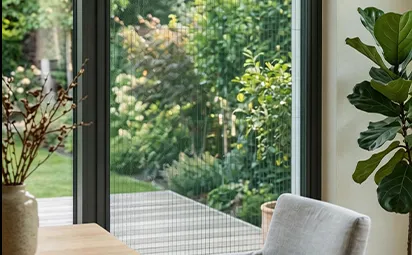
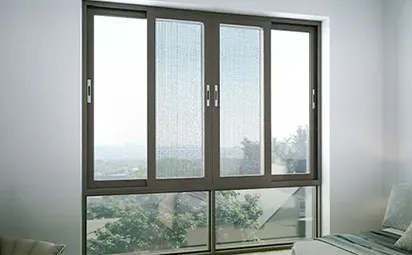
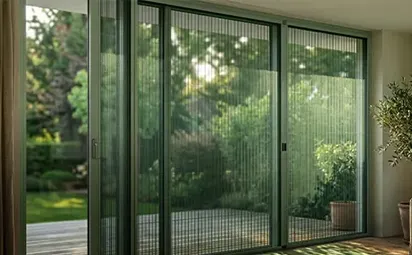
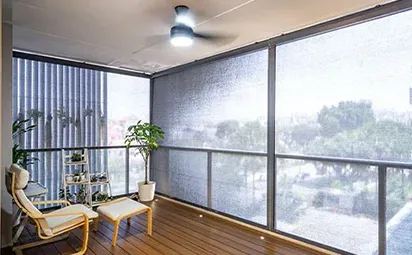
Finished window screen systems — pre-assembled frames (sliding, magnetic, retractable) where the mesh is already fitted.
Material Families, and Where Fiberglass Sits
Screen mesh fabric is produced across a few material families — fiberglass, polyester, PVC-coated polyester, and vinyl-coated variants — and the right one depends on the end application (fixed window screens versus pleated systems versus pool enclosures use different fabric logic entirely). This article focuses on fiberglass mesh, which is the material family most commonly stocked for standard fixed and roller window screens.
Within our fiberglass line, the relevant products are:
- Standard fiberglass insect screen
- Fiberglass window screen mesh
- Fiberglass stiff insect screen
- Roller screen mesh
- High-visibility insect screen
- Self-cut fiberglass window screen (retail/DIY format)
- Custom screen mesh rolls
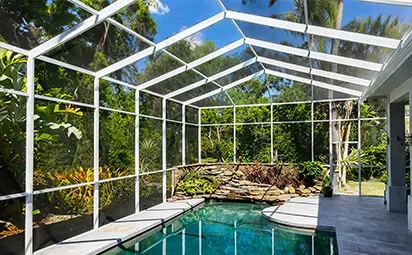
Fiberglass yarn takes a coating and holds a mesh pattern without curling at the cut edge the way some polyester weaves do, which is one reason it remains the default for standard fixed-frame and roller window screens. It is not automatically the right material for every screen type — pool and patio applications, for example, draw from a separate product line with different weight and mesh-count profiles, and that line shouldn’t be treated as interchangeable with window-grade fiberglass mesh.
Mesh Count Logic: What It Controls and What It Doesn’t
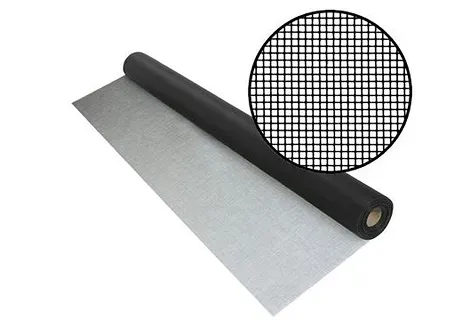
Mesh count — the number of strands per linear inch — is the spec most buying guides lead with, and it’s also the one most frequently used as a stand-in for “quality” when it isn’t. Mesh count on its own tells you strand density. It does not tell you fabric weight, wire diameter, coating type, or tensile behavior — all of which shift independently of count and all of which affect how the fabric performs and how it cuts.
This is the edge case worth flagging directly: two rolls can carry the same mesh count and behave completely differently in a cutting line, because weight and coating formulation aren’t fixed by count alone. If a specification sheet lists only mesh count, that’s an incomplete spec for a purchase order — weight and coating need to be confirmed separately.
For our fiberglass line, weight for custom options can fall within approximately 80–140 g/m², depending on the specific product selected. Exact mesh count, yarn diameter, and coating formula are confirmed per product at the specification stage — we don’t publish one blanket figure across the whole fiberglass category, because it varies by which of the seven products above you’re ordering.
Stiff Fabric Versus Standard Fabric
This is a real fork in the sourcing decision, not a marketing distinction. Standard fiberglass window screen mesh is flexible and installs into a spline channel the way most fixed-frame residential screens are built. Stiff mesh is a different product engineered to hold its shape without a full spline-and-channel install — relevant for roller systems and certain retrofit or repair applications where the fabric itself needs to carry some rigidity.
Our stiff fiberglass insect screen is referenced at approximately 0.28 mm thickness. That figure applies to the stiff product specifically — it is not the thickness of the standard flexible fiberglass mesh, and the two shouldn’t be quoted against each other as if they’re the same fabric at different price points. If a hardware chain is stocking both a standard-install screen line and a roller-screen line, those are two different mesh purchases, not one SKU cut two ways.
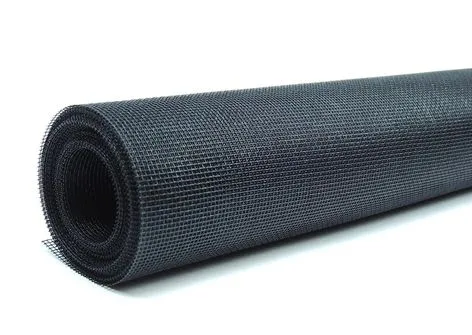
Roll Dimensions and Coating: What Has to Be Fixed Before Ordering
This is the section most consumer guides skip entirely, because a homeowner never sees a roll — they see a finished screen. An importer does see the roll, and these are the variables that determine whether it fits your downstream cutting, packaging, or retail format:
- Roll width — customizable, and needs to match your cutting equipment or the panel sizes you’re fabricating downstream, not just the widest option available.
- Roll length — customizable; longer rolls reduce per-unit changeover on a cutting line but increase per-roll freight weight and handling, which is a freight-cost tradeoff worth running before locking a length.
- Color — available in standard colors, with custom color matching to RAL or Pantone references for private-label or brand-matched programs. Custom-color fabric runs on a separate, higher-volume MOQ tier than standard-color stock (see below), so color decisions should be finalized before quoting, not after.
- Coating formulation — affects how the fabric handles on automated cutting and packaging lines, and is specified per product rather than assumed constant across the fiberglass line.
- Edge/cut behavior for self-cut retail formats — if the mesh is going into a self-cut fiberglass window screen retail SKU, the packaging format and roll segmenting need to be agreed with the factory as part of the order, not treated as a standard afterthought.
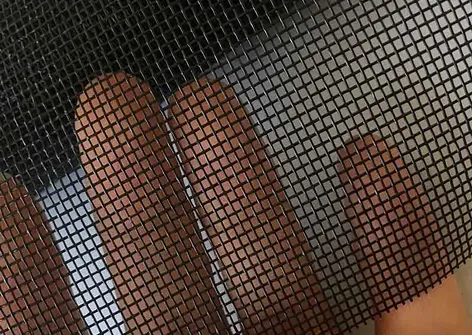
Spec Reference Table
| Parameter |
Fiberglass Window Screen Mesh (This Line) |
Confirm at Order Stage |
| Material |
Fiberglass yarn with a product-specific coating |
Coating formula for each SKU |
| Weight (Custom Options) |
Approximately 80–140 g/m² |
Exact weight for the selected product |
| Standard Fabric |
Flexible fabric for spline-channel installation |
Mesh count for each SKU |
| Stiff Fabric |
Approximately 0.28 mm thick |
Applicable to the stiff product only |
| Mesh Count |
Product-specific and customizable |
Yarn diameter and tensile data |
| Roll Width |
Customizable |
Cutting-line compatibility |
| Roll Length |
Customizable |
Freight weight per roll |
| Color |
Standard colors plus custom RAL/Pantone colors |
Custom-color MOQ tier |
| Intended Systems |
Fixed window screens, roller screens, retractable systems and DIY kits |
System-specific compatibility |
MOQ and Ordering Structure for This Category
Screen mesh MOQ for standard rolls runs at approximately 5,000 m². Custom-color fabric — where a hardware chain wants brand-matched or RAL/Pantone-specific color — moves to a separate, higher tier of approximately 10,000–20,000 m², because color matching typically requires a dedicated production run rather than a partial batch. These are the current published tiers; exact figures should be confirmed against the specific material, mesh count, and coating combination before a purchase order is issued. Paid sample fees, where applicable to a customized specification, run in the range of roughly USD 50–200 — that’s a sampling-policy figure, not a signal for finished product pricing, which stays quotation-based across model, mesh spec, roll dimensions, color, packaging, and destination market.
Where This Differs From a Per-Window Buying Guide
Compared to consumer-facing screen guides that walk through matching a screen to a single window opening, a roll-level sourcing decision has to account for cutting-line compatibility, freight weight per roll, color MOQ tiers, and coating consistency across a production run — variables that only matter once you’re buying in volume rather than one panel at a time.
FAQ
Is fiberglass window screen mesh the same product as pool and patio screen mesh?
No. They’re separate product lines with different weight ranges and mesh-count logic. Pool and patio mesh is built for outdoor enclosure applications and shouldn’t be quoted or specified using window-screen mesh figures.
Does a higher mesh count always mean a better screen?
Not on its own. Mesh count indicates strand density, not fabric weight, wire diameter, or coating — two rolls at the same count can perform differently depending on those other variables, which need to be checked separately.
What’s the difference between standard and stiff fiberglass mesh?
Standard mesh is flexible and installs into a spline channel. Stiff mesh (approximately 0.28 mm) is a different product built to hold shape without full spline installation, used for roller systems and certain retrofit formats — the two aren’t interchangeable specifications.
Can roll width and length be customized for our packaging format?
Yes, both are customizable. They need to be specified based on your cutting equipment and downstream packaging or retail format, and confirmed before an order is placed.
















 09:24
09:24