An moustiquaire réglable repose sur une monture télescopique qui coulisse à l'intérieur d'une fourchette de tailles, et non sur une seule mesure fixe. Pour une gamme destinée à la vente au détail, le véritable choix de conception ne porte pas sur “ quelle taille ”, mais sur le nombre de fourchettes à proposer, ainsi que sur la combinaison monture-maillage la plus résistante à chaque extrémité de la gamme.
Comment fonctionne réellement la gamme d'extension ?
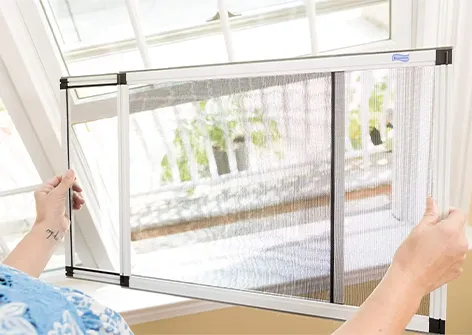
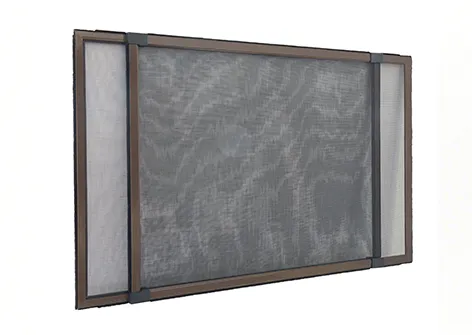
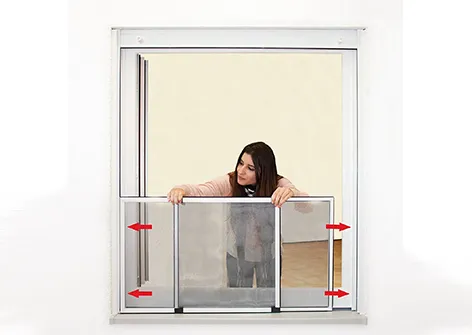
Une moustiquaire à cadre fixe est découpée pour s'adapter à une seule ouverture. Une moustiquaire réglable, ou extensible, utilise deux profilés de cadre ou plus qui se chevauchent et se verrouillent à la longueur souhaitée, généralement à l'aide d'un tendeur à ressort ou d'un mécanisme coulissant à clip qui appuie le cadre contre le montant de la fenêtre. C’est cette zone de chevauchement qui permet au produit de s’adapter à des ouvertures légèrement irrégulières — un véritable avantage pour les acheteurs du commerce de détail qui ne peuvent pas prévoir à l’avance les dimensions exactes des fenêtres de chaque client.
Ce chevauchement a toutefois un coût. Plus un rail de cadre s'étend, moins il reste de chevauchement à pleine extension, et plus l'ajustement par friction s'affaiblit. C'est la raison mécanique pour laquelle les écrans réglables sont vendus par plages de tailles plutôt que sous la forme d'un produit à variation continue : au-delà d'une certaine extension, le cadre ne maintient plus sa tension de manière fiable, et un autre jeu de cadres (plus long) doit prendre le relais.
Notre catalogue de produits actuel propose des moustiquaires extensibles et des kits de moustiquaires à monter soi-même dans la rubrique « Systèmes de moustiquaires prêts à l'emploi » ; le matériau du cadre, les dimensions et le type de maillage sont personnalisables à la commande, et ne sont pas figés dans une fiche technique unique. Nous ne publions pas de valeur universelle concernant la plage d'extension applicable à tous les modèles, et un acheteur sous marque de distributeur ne devrait pas non plus le faire : la plage d'extension possible dépend du profil spécifique du cadre et du mécanisme de verrouillage utilisés par un fournisseur donné. C'est pourquoi il s'agit d'une confirmation à établir lors de la phase de devis, et non d'un élément pouvant être standardisé à partir d'une simple page de catalogue.
Le matériau du cadre et la plage d'extension ne constituent pas des choix indépendants l'un de l'autre
Les acheteurs du secteur de la grande distribution considèrent parfois le matériau du cadre comme un simple choix esthétique : l'aluminium donne une impression de plus grande qualité, tandis que les composites ou le plastique renforcé sont moins chers. C'est vrai, mais cela ne rend pas justice à l'aspect mécanique du cadre.
Une plus grande amplitude d'extension sollicite davantage le profilé du cadre : une plus grande surface de contact pour maintenir le frottement, une plus grande résistance à la déformation sous la pression du ressort du tendeur, et une plus grande résistance au gauchissement si l'écran reste exposé au soleil pendant des mois. Cadres à profilés en aluminium tolèrent une bande d'extension plus large avant que la courbure ne devienne visible. Les cadres en profilés composites ou en plastique sont plus légers et moins coûteux à mouler, mais ils conviennent mieux aux bandes d'extension plus courtes, où la charge élastique et les contraintes thermiques restent plus faibles.
Cela a une incidence sur la manière dont un programme de gamme de tailles est élaboré. Si une chaîne de magasins souhaite proposer trois références couvrant les ouvertures petites, moyennes et grandes, c’est la référence destinée aux grandes ouvertures qui aura le plus probablement besoin d’un matériau de cadre plus rigide — même si les références plus petites de la même gamme utilisent un profilé composite moins coûteux. Le fait de prescrire un seul matériau de cadre pour l’ensemble d’une gamme de tailles afin de simplifier l’emballage peut, sans qu’on s’en rende compte, pousser la référence la plus grande au-delà des limites de résistance de ce matériau.
Choix du maillage pour les écrans extensibles
La toile en elle-même ne modifie pas le mécanisme d’extension, mais elle influe sur le comportement du cadre lorsqu’il est entièrement déployé. Une ouverture plus large du cadre fait en sorte qu’une plus grande surface de toile soit soumise à la tension sur l’ensemble du cadre ; ainsi, le poids du tissu et la rigidité du tissage déterminent l’ampleur de l’affaissement ou du gonflement observé à la taille maximale de la gamme.
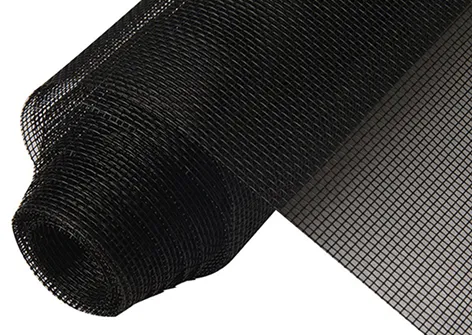
Notre gamme de toiles anti-insectes en fibre de verre, ainsi que nos options en polyester et en toile plissée, s’adaptent toutes aux systèmes de moustiquaires prêts à poser. Le nombre de mailles, le grammage et les dimensions des rouleaux sont définis sur commande, et non pas fixés à une valeur unique dans l’ensemble du catalogue. Dans le cadre d’une gamme de moustiquaires ajustables, cela signifie que les caractéristiques techniques d’une référence compacte ne doivent pas nécessairement correspondre à celles de la référence la plus grande de la même série de tailles : l’utilisation d’un tissu plus lourd ou plus rigide sur le plus grand format de cadre constitue un moyen légitime de limiter l’affaissement sans modifier le matériau du cadre.
Par rapport aux kits d'écrans de taille unique, une gamme d'écrans réglables comporte cette variable supplémentaire : le choix de la maille et du cadre doit être évalué pour chaque tranche de taille, et non une seule fois pour l'ensemble de la gamme de produits.
Élaboration d'une matrice de tailles pour une gamme de produits destinés à la vente au détail
Les pages des concurrents, qu’il s’agisse de détaillants ou de marques, pour cette catégorie s’articulent généralement autour de trois gammes de tailles fixes vendues sous forme de lots, avec peu d’explications sur la manière dont ces gammes ont été définies par rapport au matériau de la monture ou au choix de la maille. Le tableau ci-dessous présente les variables qu’un acheteur en gros doit préciser pour chaque niveau — il ne s’agit pas de chiffres définitifs, car les points de rupture exacts des plages d’extension, les dimensions du profil de la monture et les tolérances des mécanismes de verrouillage sont spécifiques à chaque modèle et doivent être confirmés par rapport à la gamme de produits du fournisseur sélectionné.
| Niveau d'assortiment |
Mécanisme d'extension |
Matériau de la monture et ajustement |
Recommandation concernant le maillage |
Conditionnement type |
Source des tailles |
| Compact (ouvertures plus petites) |
Profilé télescopique avec tendeur à ressort |
Profilés en composite ou en plastique pouvant être usinés dans cette gamme |
Treillis en fibre de verre standard |
Carte blister de vente au détail ou carton à monter soi-même |
Veuillez confirmer la plage d'extension exacte lors de l'établissement du devis |
| Milieu de gamme |
Profilé télescopique avec ressort ou clip coulissant |
En aluminium ou en composite renforcé, selon le modèle |
Maille en fibre de verre/polyester standard ou plus épaisse |
Carton de vente au détail ou carton d'emballage en vrac |
Veuillez confirmer la plage d'extension exacte lors de l'établissement du devis |
| Élargi (ouvertures plus grandes) |
Profilé télescopique avec une zone de chevauchement plus large |
Les profilés en aluminium offrent généralement une plus grande stabilité |
Une maille plus épaisse ou plus rigide pour réduire l'affaissement sous tension |
Emballage en vrac ou emballage sur mesure |
Vérifier la plage d'extension et la rigidité du châssis lors de l'établissement du devis |
Une mise en garde s’impose ici : une moustiquaire à cadre magnétique de notre catalogue est décrite avec un profil de 6 mm, une installation d’environ 15 minutes et neuf tailles standard — mais ces spécifications concernent un produit à cadre magnétique fixe, et non un modèle à cadre télescopique réglable. Les pages de catégories qui mélangent les données de dimensions et de profilés pour différents mécanismes d’ouverture (magnétique, extensible, coulissant) peuvent facilement conduire à appliquer par erreur les caractéristiques d’un produit à un autre. Un tableau des dimensions destiné à la vente au détail doit se limiter au mécanisme spécifique qu’il décrit.
Ce qui manque aux multipacks classiques
La plupart des lots promotionnels vendus au détail partent du principe que la fourchette de prix du client s'inscrit clairement dans l'une des trois tranches. Deux situations viennent contredire cette hypothèse, et il convient d'en tenir compte dans un plan d'assortiment plutôt que de les considérer comme des retours aléatoires :
- Les ouvertures situées exactement à la limite entre deux plages de tailles, là où la référence la plus petite est à son extension maximale (ajustement par friction le plus faible) et où la référence la plus grande est à son extension minimale (engagement du tendeur le plus lâche) — ces deux cas constituent les conditions les plus défavorables pour ce produit, et non les meilleures.
- Les ouvertures non rectangulaires ou légèrement de travers, courantes dans les logements anciens, où les profilés à recouvrement plat d’un châssis télescopique ne permettent pas de compenser un montant de travers, contrairement à un châssis fixe découpé sur mesure.
Aucun de ces deux problèmes n'est résolu en ajoutant un quatrième niveau de taille. La solution consiste à définir la plage indiquée pour chaque niveau en prévoyant une marge de sécurité inférieure à la limite mécanique réelle du cadre, plutôt que de présenter l'extension mécanique maximale comme la plage utilisable.
Certifications et champ d'application de la conformité
Certaines références de notre gamme de produits de protection d’écran sont accompagnées de documents attestant leur conformité aux réglementations REACH et RoHS, ainsi que de déclarations de conformité CE pour certains articles. Ces références s'appliquent à des produits et matériaux spécifiques et ne s'étendent pas automatiquement à l'ensemble du catalogue de systèmes de moustiquaires ; il est donc nécessaire de vérifier le certificat exact, l'organisme émetteur et le modèle testé pour chaque moustiquaire extensible ou produit en maille que l'acheteur souhaite acquérir. Nous sommes titulaires des certifications ISO 9001 et ISO 14001 au niveau de l’entreprise, ainsi que d’un audit de conformité sociale amfori BSCI, qui couvrent le système de fabrication plutôt que le statut de conformité d’un produit en particulier.
Quantité minimale de commande (MOQ), frais d'échantillonnage et calendrier de développement
Les frais liés aux échantillons de produits sur mesure se situent généralement entre 50 et 200 dollars américains. Pour les kits de moustiquaires prêts à l'emploi, la quantité minimale de commande (QMC) est généralement comprise entre 500 et 1 000 ensembles, tandis que la fourniture de tissu de couleur personnalisée pour la toile elle-même correspond à une QMC distincte, comprise entre 10 000 et 20 000 m². Une personnalisation simple d’une combinaison existante de cadre et de maille prend généralement entre 6 et 8 semaines ; un nouveau profil de cadre ou un nouveau mécanisme d’extension s’inscrit dans une fourchette de développement modéré de 10 à 14 semaines. Il s’agit là de chiffres indicatifs : les délais applicables à une commande spécifique dépendent de l’outillage du cadre, de la correspondance des couleurs et des exigences d’emballage confirmées lors du devis.
FAQ
Un seul cadre de moustiquaire réglable peut-il réellement couvrir toute la plage indiquée pour un lot de plusieurs pièces ?
Il peut rester dans la plage indiquée, mais ses performances ne sont pas identiques aux extrémités de cette plage : l'ajustement par friction est le plus serré près de l'extension minimale du cadre et le plus lâche près de son extension maximale. Une plage indiquée avec une marge inférieure à la limite mécanique réelle du cadre offrira une performance plus constante pour les différentes tailles de fenêtres rencontrées en pratique.
Faut-il changer le matériau du cadre selon les différentes tailles d'une gamme à trois niveaux ?
Ce n'est pas toujours le cas, mais cela devrait souvent être ainsi pour les plus grandes tailles. Les profilés en aluminium supportent généralement des bandes d'extension plus larges avec moins de déformation que les profilés en composite ou en plastique ; c'est pourquoi la référence la plus grande d'une gamme de tailles est celle qui a le plus besoin d'un matériau plus rigide, même si les références plus petites utilisent un matériau plus léger.
Le profilé de 6 mm et les neuf dimensions standard indiquées pour un écran magnétique s'appliquent-ils également aux écrans extensibles ?
Non. Ces caractéristiques techniques correspondent à un produit à cadre magnétique fixe de notre catalogue et ne s'appliquent pas à un cadre télescopique extensible, qui utilise un mécanisme différent et une logique de dimensions différente.
Quel est le montant minimum de commande pour un programme de moustiquaires de fenêtre réglables en marque de distributeur ?
Pour les kits finis, la quantité minimale de commande (QMC) est généralement comprise entre 500 et 1 000 ensembles ; une couleur de tissu personnalisée entraîne une QMC distincte, comprise entre 10 000 et 20 000 m². Les chiffres exacts dépendent de l'outillage des cadres et de l'emballage et doivent être confirmés lors de l'établissement du devis.




















 09:18
09:18