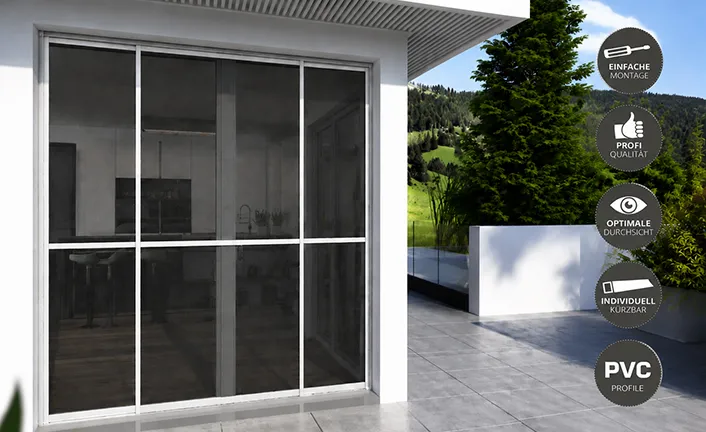
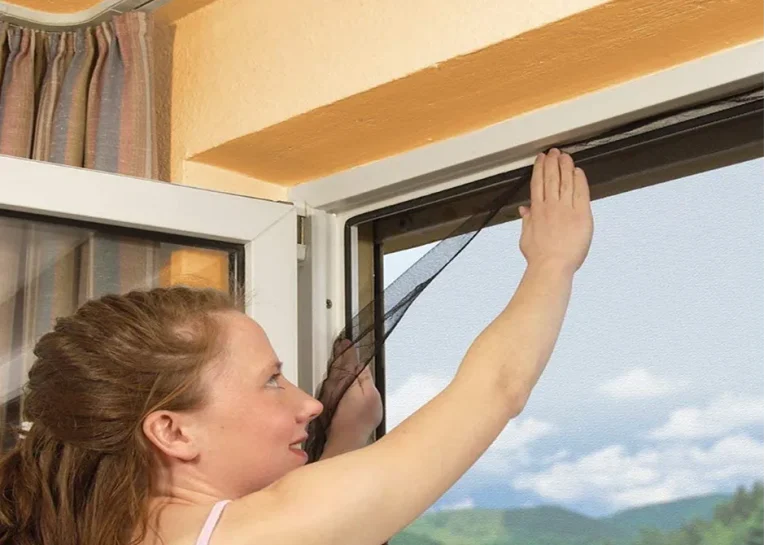
A store à fermeture éclair, souvent appelé « zipscreen », est un store extérieur de type enrouleur dont les bords de la toile circulent à l'intérieur de rails latéraux grâce à un système de fixation par fermeture éclair. Par rapport à un store d'extérieur traditionnel, cette conception permet de maintenir la toile plus tendue et de mieux la contrôler. Les acheteurs doivent choisir ce système en fonction de la taille d’ouverture, du tissu, de la résistance au vent requise, du mode de commande, des conditions d’installation et de l’utilisation prévue (terrasse, balcon, pergola ou façade).
Article Outline
- Qu'est-ce qu'un store « Zip Blind » et comment fonctionne un « Zipscreen » ?
- Pourquoi choisir un store « Zip » plutôt que des stores traditionnels ?
- Quel tissu choisir pour vos stores d'extérieur ?
- En quoi une bande de renfort améliore-t-elle la résistance au vent ?
- Stores à enrouleur manuels ou motorisés : lesquels choisir ?
- Où peut-on installer des stores à enrouleur extérieurs ?
- Comment la personnalisation OEM/ODM peut-elle contribuer à améliorer la gamme de stores à glissière ?
- Frequently Asked Questions
Qu'est-ce qu'un store « Zip Blind » et comment fonctionne un « Zipscreen » ?
Un store à enrouleur est un système de protection solaire extérieur vertical composé de trois éléments principaux : un caisson supérieur, une toile et des glissières latérales. Une bordure spéciale, soudée ou fixée, longe les deux côtés de la toile. Cette bordure se déplace à l'intérieur de la glissière latérale, créant ainsi un système de maintien continu lorsque le store monte et descend.
C'est là la principale différence entre un store Zipscreen et un simple store à enrouleur. Dans de nombreux systèmes traditionnels, seuls le rouleau supérieur et la barre inférieure contrôlent le tissu. Avec un système à glissière, les bords restent également guidés. Il en résulte un aspect plus lisse et un meilleur contrôle du tissu lors d'une utilisation normale en extérieur.
Chez Smartex, nous fabriquons des produits pour l'extérieur produits « zip-screen » destinés aux distributeurs, aux fournisseurs d'équipements d'extérieur, aux entrepreneurs et aux marques OEM/ODM. Notre gamme actuelle comprend des modèles manuels et motorisés, des toiles de protection solaire et des options en PVC transparent pour des applications telles que les terrasses, les balcons, les pergolas, les espaces commerciaux et les ouvertures architecturales.
Un système de stores classique peut comprendre :
- Cassette en aluminium
- Glissières en aluminium
- Bords en tissu fixés par une fermeture à glissière
- Rail inférieur
- Manivelle manuelle ou moteur
- Matériel de fixation
- Télécommande ou système de commande en option
- Tissu en PVC anti-solaire, occultant ou transparent
Il convient de toujours vérifier les composants exacts en fonction du modèle et du cahier des charges du projet.
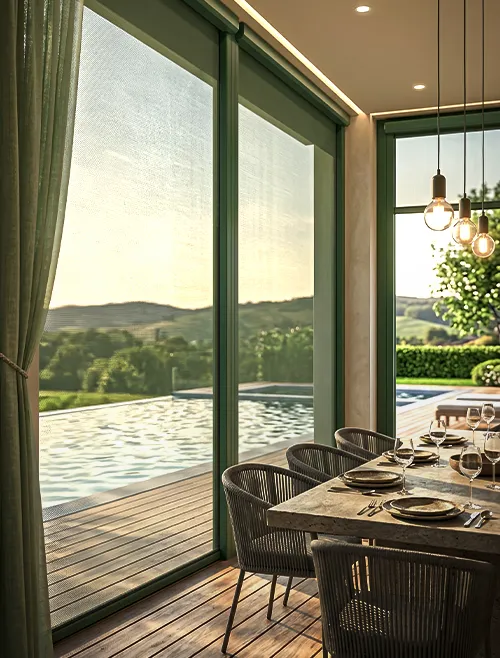
Pourquoi choisir un store « Zip » plutôt que des stores traditionnels ?
Le principal avantage réside dans le contrôle du tissu.
Les stores traditionnels peuvent très bien convenir à de nombreuses applications, mais une toile extérieure suspendue librement présente moins de points de fixation. Sur un Zipscreen, les deux bords restent guidés à l'intérieur des rails latéraux. Cela permet à la toile de rester bien alignée et confère à l'installation un aspect épuré et homogène.
Pour un importateur ou un distributeur spécialisé dans les produits destinés à la vie en plein air, cette différence peut mettre en avant plusieurs avantages du produit à la fois :
| Feature |
Store suspendu traditionnel |
Zip Blind |
| Rétention des bords latéraux |
Limité ou inexistant |
Guidage latéral continu |
| Aspect du tissu |
Peut se déplacer plus librement |
Une apparence plus ferme et mieux maîtrisée |
| Utilisation en extérieur |
Dépendant du modèle |
Conçu autour de canaux de guidage extérieurs |
| Potentiel de barrière contre les insectes |
Il peut subsister des jeux latéraux |
Un meilleur contrôle du périmètre lorsqu’il est correctement conçu |
| Adaptabilité aux grandes ouvertures |
Cela dépend du modèle |
Systèmes de fermeture à glissière adaptés à chaque projet disponibles |
| Motorisation |
Disponible |
Option courante |
| Intégration d'une pergola |
Possible |
Convient parfaitement à une installation en encastrement latéral |
Un store à fermeture éclair est donc une solution intéressante lorsque l'acheteur recherche davantage qu'un simple ombrage. Il peut s'intégrer dans un concept d'aménagement extérieur favorisant la vie en plein air, l'intimité, la protection solaire et la protection contre les insectes.
Cela ne signifie pas pour autant que chaque produit soit résistant aux intempéries ou adapté à toutes les conditions de vent. Les performances face au vent dépendent des dimensions, de la toile, du profilé de guidage, des fixations, du support d’installation et du système testé. Pour les projets européens, cette distinction revêt une importance particulière, car la réglementation européenne définit des classes de performance pour les stores extérieurs dont la toile coulisse dans des rails de guidage latéraux.
C'est pourquoi nous conseillons aux acheteurs professionnels de demander les caractéristiques techniques précises du système plutôt que de se fier à des termes tels que “ coupe-vent ”.”
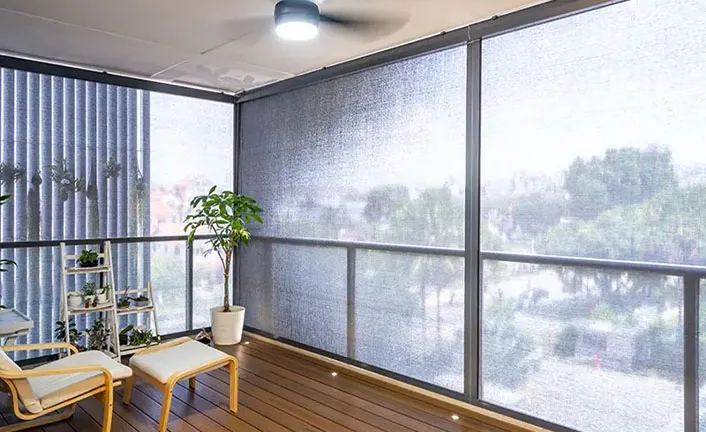
Quel tissu choisir pour vos stores d'extérieur ?
Le tissu influe à la fois sur l'aspect et les performances d'un store d'extérieur.
Un client peut souhaiter bénéficier d'une protection solaire efficace tout en conservant une vue sur l'extérieur. Un autre peut rechercher davantage d'intimité. Un restaurant peut avoir besoin de panneaux transparents pendant les mois les plus frais. Un distributeur de pergolas peut souhaiter proposer plusieurs options de toiles afin de couvrir différentes gammes de prix.
Smartex propose actuellement une gamme de tissus comprenant des modèles aux indices d'ouverture de 1%, 3% et 5%, des tissus occultants et des options en PVC transparent.
Voici une méthode simple pour les comparer :
| Choix du tissu |
Objectif type de l'acheteur |
Visibility |
Ombrage / Intimité |
| Tissu solaire à mailles ouvertes 1% |
Meilleure protection contre le soleil et meilleure préservation de la vie privée |
Lower |
Higher |
| Tissu solaire à mailles ouvertes 3% |
Utilisation en extérieur équilibrée |
Medium |
Moyen-élevé |
| Tissu solaire à mailles ouvertes 5% |
Meilleure visibilité vers l'extérieur |
Higher |
Moderate |
| Tissu occultant |
Contrôle optimal de la lumière et de l'intimité |
Très faible |
High |
| PVC transparent |
Abri résistant aux intempéries avec vue |
Très élevé |
Faible protection contre le soleil |
Le pourcentage d'ouverture ne doit pas être considéré comme le seul indicateur de performance. La couleur, l'épaisseur du fil, le revêtement, la structure globale du tissu et l'orientation de l'installation peuvent également influencer les performances en matière d'éblouissement, de visibilité, de chaleur et de protection contre les UV.
Les dispositifs de protection solaire extérieurs peuvent s'avérer utiles, car ils interceptent le rayonnement solaire avant qu'il n'atteigne les vitrages. Les recommandations du ministère américain de l'Énergie indiquent que les pare-soleil extérieurs et autres dispositifs de protection solaire peuvent réduire les apports thermiques solaires indésirables, tout en contribuant à limiter l'éblouissement et à améliorer le confort en été.
Pour le développement de produits B2B, posez-vous les questions suivantes :
- Quel niveau de visibilité vers l'extérieur est nécessaire ?
- La vie privée est-elle plus importante que la visibilité ?
- Le client a-t-il besoin d'une protection solaire ?
- Un brise-vue transparent est-il obligatoire ?
- Le tissu sera-t-il soumis à une forte exposition aux rayons UV ?
- Ce produit est-il destiné à être utilisé sur une façade, une terrasse, une pergola ou à l'extérieur d'un café ?
- Le projet nécessite-t-il le respect d'une norme documentée en matière de résistance au feu, de résistance au vent ou de performances des matériaux ?
Le meilleur tissu est celui qui est adapté à l'usage auquel il est destiné, et non pas simplement le plus foncé ou le plus épais.
En quoi une bande de renfort améliore-t-elle la résistance au vent ?
La glissière à fermeture éclair est l'élément essentiel du système.
Le bord du tissu est maintenu dans un guide au lieu de pendre librement. Lorsque le store se déplace, le bord doit glisser dans le guide tout en restant bien maintenu. Cela permet de limiter les mouvements du tissu et rend le produit plus adapté aux utilisations en extérieur qu’un store équivalent non soutenu.
Ce qu'il faut retenir pour les acheteurs, c'est que la résistance au vent fait partie intégrante de l'ensemble du système.
Cela dépend :
- Largeur et hauteur d'ouverture
- Type de tissu
- Conception des canaux de guidage
- Structure de la cassette
- Rail inférieur
- Éléments de fixation
- Support de pose
- Mécanisme motorisé ou manuel
- Installation quality
Stores à enrouleur manuels ou motorisés : lesquels choisir ?
Les deux ont leur place.
Un store à enrouleur manuel fonctionne généralement à l'aide d'une manivelle. Il est moins coûteux, ne nécessite aucun raccordement électrique et convient particulièrement aux petites ouvertures résidentielles ou aux projets où le budget est limité.
Un système de fermeture à glissière motorisé offre un confort d'utilisation accru, notamment pour :
- Grandes ouvertures
- Plusieurs blinds
- Logements haut de gamme
- Restaurants
- Projets de maison connectée
- Installations de grande hauteur
- Façades commerciales
Sur certains marchés, les acheteurs utilisent le terme “ motorise ”, tandis que sur d'autres, ils préfèrent “ motorize ”. Le concept du produit reste le même : il s'agit d'ajouter un système de motorisation permettant aux utilisateurs de monter ou d'abaisser le store à l'aide d'un interrupteur mural, d'une télécommande ou d'un contrôleur compatible.
| Facteur |
Manual |
Motorized |
| Coût initial |
Lower |
Higher |
| Travaux d'électricité |
Non obligatoire |
Généralement obligatoire |
| Confort d'utilisation |
Good |
Très bien |
| Grandes ouvertures |
Dépendant du modèle |
Souvent privilégié |
| Commande multi-unités |
Limited |
Plus facile |
| Commande intelligente |
No |
Possible selon le moteur |
| Maintenance |
Mécanisme simple |
Composants du moteur et du système de commande concernés |
La motorisation permet d'obtenir un produit haut de gamme, mais le moteur doit être adapté à la taille du store, au tube, au poids et au couple requis.
C'est un domaine dans lequel les acheteurs doivent éviter de partir du principe que tous les moteurs sont interchangeables.
Où peut-on installer des stores à enrouleur extérieurs ?
L'un des principaux atouts de ce système réside dans la diversité de ses applications en extérieur.
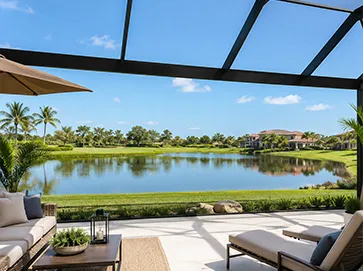
Terrasses et espaces extérieurs
Une terrasse peut devenir inconfortable lorsque le soleil tape fort et que l'éblouissement est intense. Un store extérieur permet d'ajuster l'ombrage sans créer de paroi fixe.
Sur le marché australien, les acheteurs utilisent souvent des termes tels que « alfresco », « stores d'extérieur » ou « solutions australiennes pour la vie en plein air ». La terminologie varie, mais les questions relatives à l'achat restent les mêmes : dimensions d'ouverture, exposition, tissu, rails de guidage, fonctionnement et conditions d'installation.
Balcons
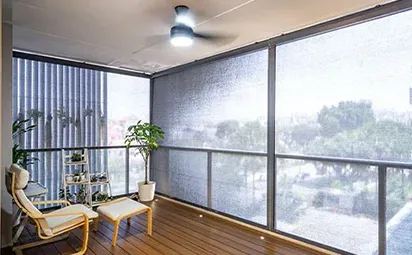
Le balcon est l'un des cas d'utilisation les plus courants d'un système à fermeture éclair verticale. Le store permet d'apporter de l'ombre et davantage d'intimité tout en conservant un aspect moderne.
Pour les balcons exposés, il convient d'accorder une attention particulière à la classification au vent et aux exigences en matière de fixation.
Pergolas et vérandas
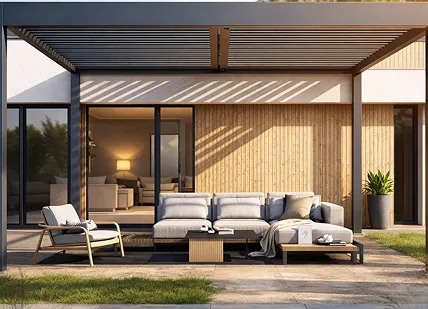
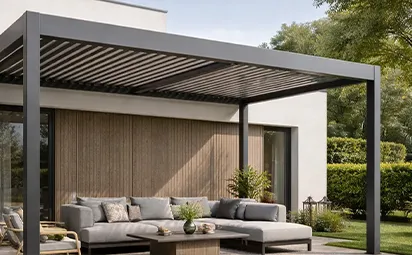
Les stores à fermeture éclair peuvent s'intégrer à pergolas en aluminium pour créer un espace extérieur plus modulable. Smartex propose également une pergola en aluminium équipée de stores à fermeture éclair en polyester servant de parois latérales.
Une pergola équipée de stores latéraux permet aux utilisateurs de fermer certaines parties de la structure lorsqu'ils le souhaitent, tout en laissant l'espace ouvert le reste du temps.
Cafés et restaurants commerciaux
Du PVC transparent ou certains tissus de brise-vue permettent de délimiter un espace de terrasse sans pour autant masquer complètement la vue sur la rue. Smartex met notamment en avant les cafés et les restaurants comme applications idéales pour ses brise-vue en PVC transparent à fermeture éclair.
Comment la personnalisation OEM/ODM peut-elle contribuer à améliorer la gamme de stores à glissière ?
Les acheteurs en gros ont rarement besoin d'un seul modèle.
Un distributeur peut souhaiter :
- Un modèle d'entrée de gamme
- Un écran à fermeture éclair de milieu de gamme
- Une version haut de gamme motorisée
- PVC transparent pour les cafés
- Tissus de protection solaire pour les projets résidentiels
- Configurations des paravents latéraux pour pergolas
C'est là que le développement OEM/ODM prend tout son sens.
En tant que fabricant chinois de moustiquaires et de systèmes de protection extérieure contre les insectes, nous travaillons avec des distributeurs de matériaux de construction, des fournisseurs de fenêtres et de portes, des enseignes de bricolage, des entrepreneurs en bâtiment, des entreprises spécialisées dans l'aménagement extérieur et des marques de distributeur.
Pour un zip personnalisé Dans le cadre du programme d’athlétisme en plein air, le développement peut se concentrer sur :
- Dimensions
- Géométrie de la cassette
- Profil du guide
- Choix du tissu
- Aération du tissu
- Finition du profilé
- Fonctionnement manuel ou motorisé
- Packaging
- Image de marque
- Documents d'instructions
- Configuration spécifique au projet
Une gamme de qualité ne doit pas se contenter de reproduire ce qui existe déjà dans les annonces en ligne de stores.
FAQ
Quelle est la différence entre un store à fermeture éclair et un store d'extérieur classique ?
Un store à fermeture éclair maintient les deux bords du tissu à l'intérieur de glissières de guidage. Un store traditionnel suspendu librement peut ne pas offrir un maintien continu des bords. La structure à fermeture éclair permet d'obtenir un aspect plus lisse et un meilleur contrôle du tissu, en particulier dans les applications en extérieur.
Un Zipscreen est-il totalement coupe-vent ?
Aucun store extérieur ne doit être présenté comme étant « totalement résistant au vent » sans réserve. La résistance au vent dépend des dimensions du store, du tissu, des rails de guidage, des fixations, de l'installation et du système testé. Pour les projets nécessitant une classification précise, demandez quelle est la norme d'essai applicable et la classe de résistance au vent.
Peut-on motoriser un store à fermeture éclair ?
Oui. Les systèmes Zip peuvent fonctionner à l'aide d'une manivelle ou d'un moteur électrique. Les acheteurs souhaitant motoriser un store doivent vérifier la tension, les caractéristiques du moteur, le mode de commande, les dimensions et les exigences du marché de destination avant de passer commande.
Quel tissu convient le mieux pour un store à fermeture éclair d'extérieur ?
Cela dépend du projet. Les toiles pare-soleil permettent de trouver un équilibre entre ombrage et visibilité ; une densité plus élevée offre davantage d'intimité et une meilleure protection solaire ; les toiles occultantes assurent un contrôle plus efficace de la lumière ; le PVC transparent est utile lorsque la visibilité et l'étanchéité sont prioritaires.
Peut-on installer des stores à glissière sur des pergolas ?
Oui. Les stores à glissières sont couramment utilisés comme écrans latéraux verticaux pour les pergolas. Il convient de vérifier les dimensions de l'ouverture, les surfaces de fixation, la configuration des profilés, le tissu et les exigences en matière de résistance au vent pour le système de pergola concerné.
Les stores à glissière sont-ils adaptés à une installation par soi-même ?
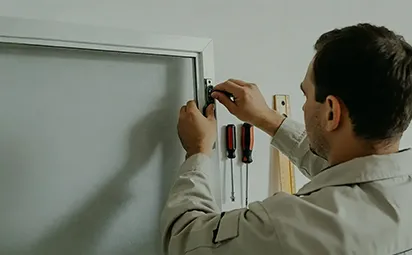
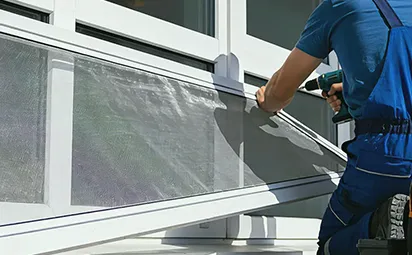
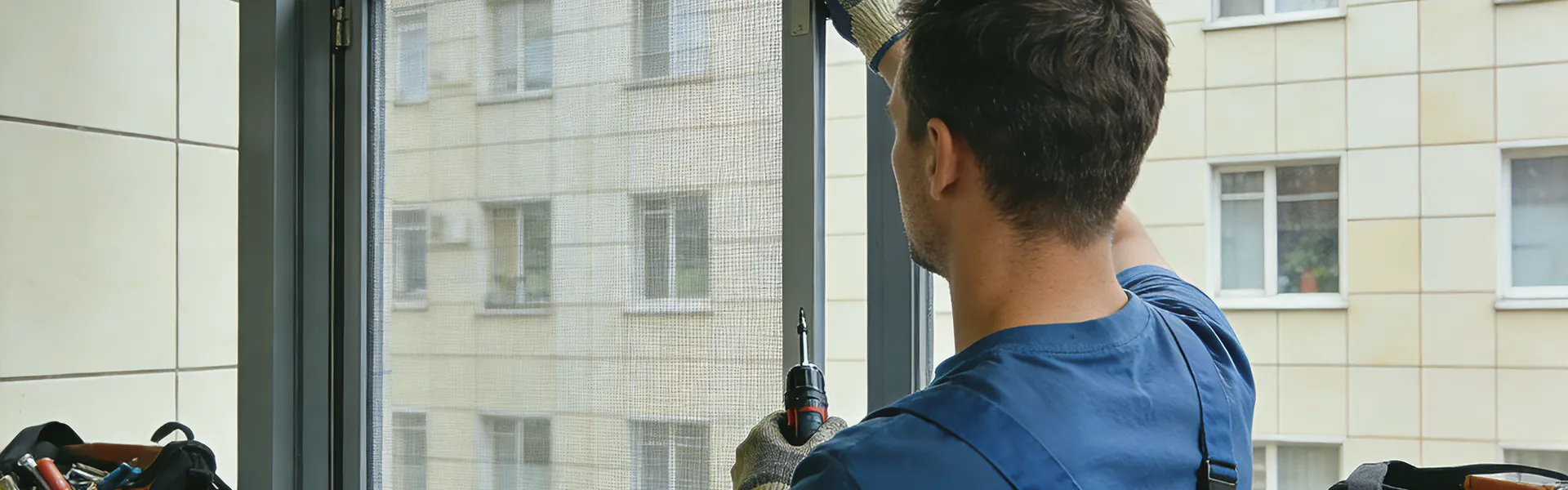
Certains produits peuvent être conçus pour une installation par le bricoleur, mais les systèmes extérieurs de grande taille, motorisés ou apparents bénéficient souvent d’un relevé et d’une pose réalisés par des professionnels. Un guide ou une cassette mal installés peuvent nuire au bon fonctionnement et aux performances face au vent. Pour faciliter le bricolage, le fournisseur doit concevoir l’emballage, les instructions et le matériel de fixation, et définir des dimensions adaptées à une installation non professionnelle.
















 11:04
11:04