Explore more product categories covering outdoor enclosure, shading, door and window screening, and other solutions for different market and project needs.
Explore more product categories for outdoor enclosure, shading, screen doors, window screens, pergolas, and zip blind solutions for different market and project needs.
Smartex Screen Technical and Product Team | Insect Screen and Sun-Shading Product Development Team | Updated August 8, 2026
Pool screen mesh should be specified by mesh count, material, finished weight, roll dimensions, and documented outdoor performance. An 18×14 fiberglass screen suits many general enclosure bays, while 20×20 limits smaller insects. Heavy-duty polyester options address higher contact risk, but structural wind load must be verified for the complete enclosure, not inferred from mesh count alone.
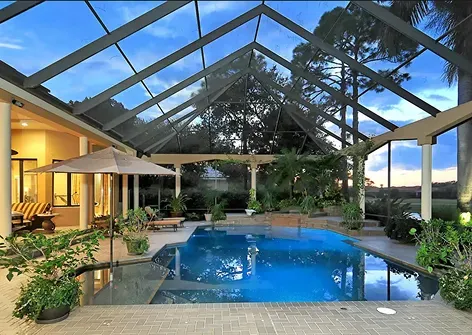
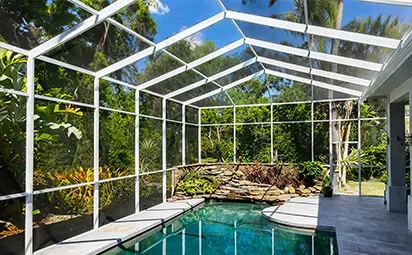
A pool enclosure application using dark screening across roof and wall bays. Media source: Smartex Screen media library, ID 2359.
Start with the enclosure, not a generic “best mesh” claim
A contractor choosing pool cage screen has to reconcile four separate demands: insect exclusion, airflow and visibility, exposure at the site, and the labor required to panel the frame. One mesh cannot maximize all four. A tighter weave may improve small-insect exclusion, but it also changes open area and the load transferred to the frame under wind. A heavier product may resist contact better, yet it can require different handling and spline selection.
Record the enclosure geometry before requesting material. Include the width and height of every wall and roof bay, frame-groove dimensions, existing spline size, roof pitch, coastal or inland exposure, access restrictions, and whether the work is new construction or rescreening. For a replacement job, photograph damaged areas and note whether failure began at the fabric, spline, frame edge, or a high-contact zone. That distinction keeps a frame or installation problem from being misdiagnosed as a mesh problem.
The pool patio screening enclosure range provides a useful application reference, while the final material schedule should still be tied to the measured bays and local project requirements.
Pool screen mesh specifications compared
The figures below are product examples in the Smartex Screen source library, not universal values for every screen carrying the same mesh count. Confirm the current technical data sheet and approved sample before ordering.
Screen option
Typical selection reason
Published Smartex example
Points to verify
18×14 fiberglass
General pool and patio enclosure screening where airflow and visibility remain important
18×14 is listed in the pool and patio range
Finished weight, yarn diameter, roll width, UV test scope, and bay suitability
20×20 no-see-um
Smaller-insect pressure where a tighter weave is required
Approximately 215 g/m² for one no-see-um example; another example lists about 0.013-inch wire diameter
Open area, airflow, wind response of the installed panel, and exact model identity
20×20 heavy-duty
Projects requiring a heavier screen construction
Approximately 305 g/m² for one displayed model
Material construction, handling, spline fit, test method, and roll dimensions
20×17 heavy-duty polyester
Higher-contact locations or projects specifying polyester construction
20×17 vinyl-coated polyester is included in the range
Tensile and tear test results, coating, finished weight, and application limits
Tuff-type or pet-resistant screen
Lower wall bays, doors, or other areas exposed to repeated contact
Available as product categories; no universal strength multiplier is approved
Exact construction, test report, visibility, installation method, and warranty terms
A 17×14 enhanced-visibility heavy-duty example is listed at approximately 133 g/m², and a 20×20 enhanced-visibility example at approximately 176 g/m². Those values illustrate why mesh count alone is not a weight or strength specification. Two fabrics with a 20×20 count can use different yarns, coatings, and finished weights.
Mesh count, aperture, and airflow are related but not interchangeable
Mesh count identifies the number of openings along two directions of the fabric. It does not, by itself, state the clear aperture. Yarn or wire diameter reduces the space remaining between adjacent strands. Buyers comparing two 20×20 products should therefore request both count and diameter, together with the method used to measure them.
For general pool and patio work, 18×14 pool and patio screening is a practical comparison point. A 20×20 no-see-um option is relevant when smaller insects are the controlling concern. The tighter choice should still be reviewed for visibility, airflow, pressure behavior, and cleaning conditions at the actual site.
A common procurement mistake is to compare product names instead of samples and data sheets. “Tuff,” “heavy-duty,” and “pet-resistant” describe intended positioning, but they do not establish a shared test threshold across suppliers. Put measurable fields in the request for quotation and ask the supplier to identify the exact model behind every result.
Wind exposure and roof spans require assembly-level decisions
Pool enclosure screen UV protection and wind performance cannot be reduced to a mesh-count ranking. The installed result depends on the fabric, panel dimensions, orientation, spline engagement, frame condition, fasteners, roof geometry, workmanship, and applicable local requirements. A laboratory result for fabric does not automatically qualify an enclosure assembly.
For each exposed project, obtain the required design criteria from the project engineer, enclosure-system supplier, or local authority. Then request model-specific evidence from the mesh supplier. If a document references QUV testing, Florida Building Code requirements, or another standard, confirm the report number, tested model, test method, issue date, validity, and whether it covers material, a component, or the complete system. Smartex Screen’s public materials reference several compliance systems, but the supplied source library does not support applying them universally to every pool mesh.
Large roof bays deserve separate review even when wall bays use the same fabric. Do not assume that a wider roll or fewer seams makes a roof panel structurally acceptable. Span, edge retention, installation access, and the approved enclosure design remain controlling factors.
Roll width affects seams, waste, and installation labor
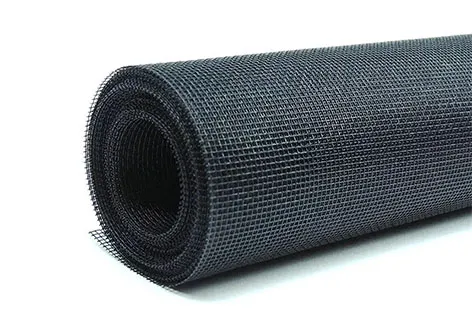
Pool and patio fiberglass screening supplied in roll format. Media source: Smartex Screen media library, ID 844.
Roll dimensions are model-specific and customizable. Plan them from a bay schedule rather than selecting the widest available roll by default. Wider material can reduce seams on large openings, but it may increase roll weight, handling difficulty, staging space, and offcut loss.
List the net width and height of every panel, separated into wall, door, and roof groups.
Add the installation allowance required by the frame and spline process; do not treat the visible opening as the cut size.
Create a cut plan for each candidate roll width and compare total length, offcuts, seam count, and crew handling.
Confirm roll length, core size, package dimensions, gross weight, splice policy, and labeling before shipment.
Keep spare material from the same approved batch for repairs where color and appearance consistency matter.
For contractors, a slightly higher material yield can be less valuable than predictable handling on elevated roof panels. For importers, pallet and container utilization may change the preferred roll configuration. The specification should make that tradeoff visible instead of treating roll width as an isolated number.
A contractor-ready RFQ and sample approval checklist
Use one controlled specification sheet for quotations, sampling, and incoming inspection. At minimum, record:
Product model and intended application
Fiberglass, polyester, or vinyl-coated polyester construction
Mesh count and yarn or wire diameter
Finished weight and agreed tolerance
Roll width, roll length, core, splice limit, and edge condition
Color and approved physical sample
Relevant tensile, tear, weathering, or other test methods and reports
Packaging, labels, batch identification, and traceability
Exact document scope for any compliance claim
Quantity, mixed-model requirements, destination, and delivery terms
Inspect the sample in the intended frame before mass production. Check spline engagement, recovery after handling, edge distortion, visibility in daylight, color against the frame, and whether the crew can tension the panel without creating waves. For rescreening work, test a representative roof and wall bay rather than approving only a small tabletop swatch.
Incoming inspection should compare the purchase specification, approved sample, roll label, and measured material. Record any deviation by roll and batch. Smartex Screen supports custom roll dimensions, material adjustment, sampling, packaging, private labels, and quality-control coordination; the heavy-duty fiberglass pool screen page is another relevant starting point for project discussions.
Price and order information must remain model-specific
Smartex Screen does not publish a universal selling-price range for pool screen mesh. Quotations depend on material, mesh count, fabric weight, roll dimensions, color, packaging, customization, order quantity, shipping terms, and destination. Request pricing against a completed specification and cut plan; otherwise, two quotations may describe materially different products.
The company source library gives approximately 5,000 m² as a general screen-mesh MOQ example, but the actual requirement varies by model, color, packaging, and customization. Confirm the current MOQ in the quotation rather than treating that figure as a fixed threshold.
FAQ
Is 18×14 or 20×20 better for a pool enclosure?
Neither is universally better. An 18×14 option is a useful general pool and patio starting point, while 20×20 is relevant for smaller-insect exclusion. Compare aperture, airflow, visibility, finished weight, site exposure, and the approved enclosure design before choosing.
Does a tighter mesh automatically provide greater wind resistance?
No. A tighter weave changes airflow and pressure behavior, but wind suitability belongs to the installed enclosure assembly. Panel dimensions, spline, frame, fasteners, roof geometry, workmanship, and the governing project requirements all matter.
What is the best screen for a pool enclosure with pets?
Use a verified pet-resistant or heavy-duty option in the contact-prone bays, then confirm its material, test data, visibility, and installation requirements. Do not rely on an unsupported strength multiplier or assume the same mesh is necessary across every roof and wall panel.
Can pool screen mesh include UV or code-related documentation?
Documentation may be available for selected products, but its scope must be checked. Ask for the exact report or certificate, tested model, standard, issuing organization, dates, and whether it applies to the mesh material or the complete enclosure system.
How should contractors order the correct roll width?
Build a bay schedule and cut plan, add the required installation allowance, and compare waste, seams, roll handling, and packaging. Confirm model-specific roll dimensions with the supplier because the source library does not establish one universal width.
Prepare the specification before requesting samples
Send the enclosure drawings or bay schedule, exposure conditions, target mesh count, material preference, roll plan, packaging needs, and required documentation with the inquiry. The Smartex Screen Technical and Product Team can then match available models and samples to a defined project instead of quoting from a product name alone. Contact Smartex Screen to review a pool or patio screen specification.
About the author: The Smartex Screen Technical and Product Team supports screen-fabric selection, finished screen-system development, material customization, sample preparation, packaging, private-label production, quality control, and export coordination for global B2B customers.

















 11:14
11:14