Explore more product categories covering outdoor enclosure, shading, door and window screening, and other solutions for different market and project needs.
Explore more product categories for outdoor enclosure, shading, screen doors, window screens, pergolas, and zip blind solutions for different market and project needs.
Moustiquaire extérieure : choisir la maille pour les conditions météorologiques difficiles
22
2026.08
Moustiquaire extérieure : choisir la maille pour les conditions météorologiques difficiles
10:10
Moustiquaire extérieure : choisir la maille pour les conditions météorologiques difficiles
Smartex Screen Technical and Product Team | Équipe de développement des produits de moustiquaires et d’ombrage solaire | Mis à jour le 22 août 2026
Le choix d’une moustiquaire extérieure commence par l’exposition, et non par une appellation générique de maille. Les enclos de piscine, patios, porches et autres projets en plein air doivent être spécifiés selon le nombre de mailles, le matériau, le grammage du tissu, la taille des ouvertures, l’exposition aux UV et aux intempéries, la visibilité, le format en rouleau et le système de cadre qui maintiendra la moustiquaire.
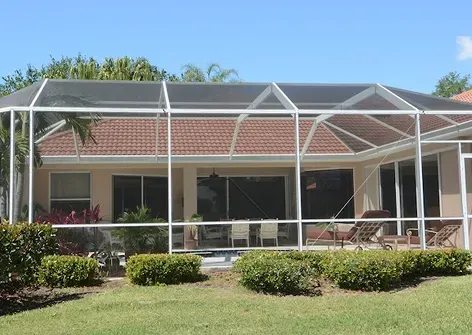
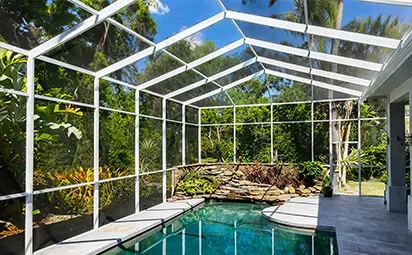
Protection de piscine et de patio issue de la médiathèque Smartex Screen.
Smartex fournit maille de moustiquaire pour piscine pour les enceintes de piscine, les patios, les porches, les moustiquaires extérieures, les applications contre les no-see-ums, les applications résistantes aux animaux de compagnie et les formats de contrôle solaire. Parmi les exemples de produits figurent des structures en fibre de verre, en polyester et en polyester enduit de vinyle. Le bon choix dépend de l'ouverture finie, de l'exposition locale, de la méthode d'installation et du niveau de performance que l'acheteur doit revendiquer.
Matrice de spécification des moustiquaires extérieures contre les insectes
Conditions du projet
Spécification à comparer
Ce qu'il faut vérifier avant de commander
Fort ensoleillement et longue exposition quotidienne
Matériau, revêtement, couleur, grammage du tissu et périmètre des essais climatiques
Preuves UV ou de vieillissement spécifiques au modèle, teinte cible et plan de remplacement
Vastes travées de piscine ou de terrasse
Nombre de mailles, grammage du tissu, largeur du rouleau, disposition des coutures et tension du cadre
Essai de panneau pleine taille, tenue des bords, méthode de couture et manipulation lors de l’installation
Ouvertures exposées au vent
Géométrie du système fini, ancrage du cadre, tension de la maille et taille de l’ouverture
Critères de l’ingénieur projet ou de l’installateur ; la maille seule ne constitue pas une classification de résistance au vent
Petits insectes volants
Aperture, mesh count, yarn or wire diameter, and airflow effect
Side-by-side insect exclusion and visibility checks in the intended frame
Retail replacement or replenishment
Roll width, roll length, packaging, label, and SKU traceability
Cut plan, carton protection, barcode data, instructions, and lot records
1. Match mesh count to the insect and airflow requirement
Mesh count describes the openings in the warp and weft directions. A tighter mesh can help address smaller insects, but it can also change airflow, visibility, weight, cutting behavior, and installation effort. Do not treat a higher count as a universal upgrade. Compare the actual aperture and the finished panel in the opening where it will be used.
For outdoor projects, common product examples in the Smartex range include 17×14, 18×14, 20×17, and 20×20 constructions. A 20×20 no-see-um example is listed at approximately 215 g/m², while other enhanced-visibility and heavy-duty examples have different weights. These are model examples, not one universal specification for every outdoor insect screen.
2. Select material and weight for the complete system
Fiberglass, polyester, and vinyl-coated polyester can behave differently during cutting, tensioning, folding, shipping, and replacement. Fabric weight affects handling and may affect how easily a wide panel stays aligned during installation. The frame channel, spline or fastener, corner joint, and seam method must be compatible with the selected fabric.
Ask for a labeled sample tied to a product code. Record material, mesh count, weight, color, width, roll length, tolerance, and intended application. The Smartex pool screen mesh specification guide provides a useful starting framework for comparing mesh counts, weights, roll formats, and sourcing questions.
3. Treat wind performance as a system question
A screen fabric does not create a universal wind rating by itself. Wind behavior depends on opening dimensions, frame spans, anchors, posts, corners, tension, seams, surrounding structure, and local design requirements. A heavy mesh can still fail at a weak attachment point, while a lighter mesh may be appropriate for a smaller, well-supported panel.
Record the opening width, height, span, frame layout, and support spacing.
Define the local exposure and the installer or engineer acceptance criteria.
Build a production-representative panel with the intended mesh, frame, seam, and fasteners.
Inspect tension, edge seating, corners, deflection, and removal after installation.
Keep the approved drawing and test record attached to the product code.
Do not turn a mesh description into a structural promise. Project documentation should state exactly what was evaluated and what remains the responsibility of the enclosure design.
4. Balance UV exposure, rain, and cleaning
Outdoor insect screen programs should define exposure rather than simply using “weather resistant” as a blanket claim. Consider direct sun, shade cycles, salt air, pool chemicals, dust, rain, cleaning frequency, and seasonal storage. Color and coating choices can affect appearance and maintenance, but the applicable evidence must be tied to the selected model.
For repeat orders, retain a reference sample and define acceptable changes in color, weave, coating, edge condition, and dimensions. If a weathering or UV test is requested, specify the test method, laboratory or internal procedure, exposure duration, evaluation criteria, and exact material scope before using the result in product literature.
5. Choose visibility and privacy deliberately
Pool and patio buyers often compare insect exclusion with outward visibility and glare control. Mesh count, yarn diameter, color, fabric weight, and solar-screen construction all affect the view through the finished panel. A black or charcoal fabric may present a different visual result from a light fabric even when the nominal mesh count is similar.
Review samples from inside and outside in daylight and evening conditions. Compare the proposed outdoor insect screen with the buyer’s current standard mesh in the same frame size. This small test often reveals differences that a roll label cannot show.
6. Plan roll width, seams, and installation labor
Roll width should follow the panel layout, not only the supplier’s standard list. A wider roll may reduce seams or waste on a large enclosure, while a narrower roll may be easier to handle and pack. The best choice depends on panel dimensions, seam location, shipping limits, cutting equipment, and installer workflow.
Before mass production, convert a sample roll using the actual tools and frame components. Check cutting accuracy, edge fray, tension, seam appearance, corner fit, and packaging recovery after transport. Record the cut plan so later replenishment orders use the same assumptions.
7. Build a maintenance and replacement plan
Outdoor screens eventually need cleaning, localized repair, or replacement. A practical program identifies compatible repair material, spare roll dimensions, color references, lot records, and instructions. Retail and project buyers should know whether the product is supplied as a roll, cut panel, finished framed screen, or replacement kit.
For private-label products, keep the carton, online listing, installation guide, and replacement SKU aligned. State the intended use, limitations, dimensions, included parts, care instructions, and a clear contact path for future orders.
There is no single best mesh for every outdoor project. Select by insect size, UV and weather exposure, span, visibility, airflow, frame system, installation method, and replacement plan.
Is 20×20 mesh always better for outdoor screening?
No. A tighter mesh can support smaller-insect exclusion, but it may change airflow, visibility, weight, and handling. Compare the complete panel in the intended opening.
Does heavy-duty mesh provide a wind rating?
No. Wind performance belongs to the complete enclosure system, including frames, anchors, spans, seams, and supports. The mesh specification should not be used as a structural rating.
What should a buyer request for a pool or patio screen sample?
Request a labeled sample with the product code, material, mesh count, weight, color, roll dimensions, tolerance, intended application, and any requested weathering or installation test method.
Can Smartex supply customized outdoor insect screen rolls?
Smartex supports model-specific roll dimensions, mesh constructions, colors, packaging, samples, private-label development, and export coordination. Send the opening layout, application, preferred mesh, quantity, packaging, and destination for a quotation.
Smartex Screen helps contractors, distributors, retailers, and private-label brands compare outdoor insect screen materials and finished systems. Share your project span, exposure, mesh target, roll plan, and packaging requirements through the Page de demande de renseignements sur Smartex Screen.
About the author: L'équipe technique et produit de Smartex Screen accompagne ses clients B2B internationaux dans le choix des toiles de projection, le développement de systèmes de projection finis, la personnalisation des matériaux, la réalisation d'échantillons et de prototypes, le conditionnement, la production en marque de distributeur, le contrôle qualité et la coordination des exportations.














 10:10
10:10